2018 – Successful year for Vietnam’s tourism industry
The arrival of the 15 millionth foreign visitor of 2018 in Ha Long city, in the northern province of Quang Ninh, marks a successful year for the tourism industry.
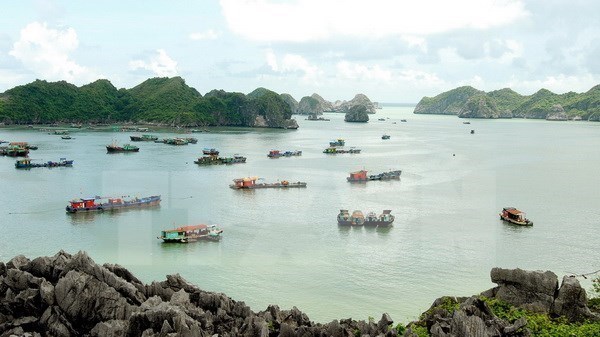 Cat Ba island in northern port city of Hai Phong (Source: VNA)
Hanoi (VNA) – The arrival of the 15 millionth foreign visitor of 2018 in Ha Long city,
in the northern province of Quang Ninh, marks a successful year for the tourism
industry.
This year, the country is estimated to serve some 15.5 million-15.6 million foreign tourists and 80 million domestic travellers, generating 620 trillion VND (26.66 billion USD) in tourism revenue.
The number of international tourist arrivals surged three-fold from 5 million in 2010 to over 15 million in 2018. The remarkable growth reflects the great efforts made by all players in the sector, particularly the large network of local travel agencies and strategic tourism investors nationwide.
The success has also been attributed to the large-scale and intensified efforts of tourism authorities to promote the country overseas. To aid such efforts, the Vietnam National Administration of Tourism (VNAT) has adopted a system of indicators to evaluate a destination and a tourism code of conduct; designed various plans to strengthen the management of travel agencies and tour guides; and raised awareness of the importance of quality among tourism service providers, local administrations, and tourism authorities.
According to the VNAT, to meet the demands of visitors from different markets, Vietnam has developed a diverse range of tourism products that make use of the country’s advantages, including cultural tours, sea-based tours, eco-tours, adventure tours, luxurious resort vacations, and more.
In recent years, a range of popular holiday destinations like Ha Long, Phu Quoc, and Da Nang have helped develop the popular imagery of Vietnam, promoting the national tourism among international visitors and becoming the main drivers of the industry’s growth.
Also this year, the country has won a series of international awards, recognising it as a safe and friendly destination. Vietnam was named the “Asia’s Leading Destination” for the first time at the 2018 World Travel Awards in Hong Kong this September. Two months later, it was honoured with the title of “Asia’s best golf destination in 2018” at the Golf World Travel Awards.
In 2019, Vietnam expects to welcome some 103 million visitors, including around 18 million foreigners and 85 million domestic travellers, up 15 percent and 6 percent, respectively, from 2018.
Early December, Prime Minister Nguyen Xuan Phuc approved the establishment of a state-run tourism development fund, worth about 300 billion VND (12.9 million USD), which will be used for building plans, financing tourism promotion activities, and boosting the tourism growth.
The PM has also given nod to a project which looks to restructure the industry in an attempt to turn it into a spearhead economic sector and make Vietnam one of the most developed tourism nations in Southeast Asia.
The project has set a target of 45 billion USD in tourism revenue by 2025, with exports through tourism reaching 27 billion USD.
The sector is hoped to contribute more than 10 percent to GDP and create 6 million jobs, including 2 million direct jobs. At the same time, it expects to serve 32 million foreign tourists and more than 130 million domestic visitors in 2025. –VNA
This year, the country is estimated to serve some 15.5 million-15.6 million foreign tourists and 80 million domestic travellers, generating 620 trillion VND (26.66 billion USD) in tourism revenue.
The number of international tourist arrivals surged three-fold from 5 million in 2010 to over 15 million in 2018. The remarkable growth reflects the great efforts made by all players in the sector, particularly the large network of local travel agencies and strategic tourism investors nationwide.
The success has also been attributed to the large-scale and intensified efforts of tourism authorities to promote the country overseas. To aid such efforts, the Vietnam National Administration of Tourism (VNAT) has adopted a system of indicators to evaluate a destination and a tourism code of conduct; designed various plans to strengthen the management of travel agencies and tour guides; and raised awareness of the importance of quality among tourism service providers, local administrations, and tourism authorities.
According to the VNAT, to meet the demands of visitors from different markets, Vietnam has developed a diverse range of tourism products that make use of the country’s advantages, including cultural tours, sea-based tours, eco-tours, adventure tours, luxurious resort vacations, and more.
In recent years, a range of popular holiday destinations like Ha Long, Phu Quoc, and Da Nang have helped develop the popular imagery of Vietnam, promoting the national tourism among international visitors and becoming the main drivers of the industry’s growth.
Also this year, the country has won a series of international awards, recognising it as a safe and friendly destination. Vietnam was named the “Asia’s Leading Destination” for the first time at the 2018 World Travel Awards in Hong Kong this September. Two months later, it was honoured with the title of “Asia’s best golf destination in 2018” at the Golf World Travel Awards.
In 2019, Vietnam expects to welcome some 103 million visitors, including around 18 million foreigners and 85 million domestic travellers, up 15 percent and 6 percent, respectively, from 2018.
Early December, Prime Minister Nguyen Xuan Phuc approved the establishment of a state-run tourism development fund, worth about 300 billion VND (12.9 million USD), which will be used for building plans, financing tourism promotion activities, and boosting the tourism growth.
The PM has also given nod to a project which looks to restructure the industry in an attempt to turn it into a spearhead economic sector and make Vietnam one of the most developed tourism nations in Southeast Asia.
The project has set a target of 45 billion USD in tourism revenue by 2025, with exports through tourism reaching 27 billion USD.
The sector is hoped to contribute more than 10 percent to GDP and create 6 million jobs, including 2 million direct jobs. At the same time, it expects to serve 32 million foreign tourists and more than 130 million domestic visitors in 2025. –VNA





You should also see

PM meets veteran soldiers, young volunteers, frontline workers serving Dien Bien Phu Campaign
Prime Minister Pham Minh Chinh attended a meeting in the northern province of Dien Bien on April 17 with veteran soldiers, young volunteers and frontline workers who directly participated in the Dien Bien Phu Campaign in 1954.



See more
 Travel
Vietnam Airlines to double flight frequency for 70th anniversary of Dien Bien Phu Victory
Vietnam Airlines will operate three flights daily between Hanoi and Dien Bien from May 3 to 8, in response to the northwestern province's upcoming grand celebration of the 70th Dien Bien Phu Victory anniversary (May 7, 1954-2024).
 Travel
Sun World Ba Na Hills - A fairyland in Da Nang
Ba Na Hills is a clear testament to the role of the private economy in the development of tourism in Da Nang as well as the city’s economy as a whole. Sun World Ba Na Hills was honoured in 2023 at the World Travel Awards as “Asia’s Leading Theme Park”.
 Travel
Da Lat night train service offers unique tourist experience
The Da Lat - Trai Mat railway night services, launched on April 14, promise a new experience for passengers to gain a better sense of the enchanting beauty of Da Lat at night - a popular mountain resort town in the Central Highlands province of Lam Dong.
 Travel
“Golden” chance to start domestic tourism boom
The upcoming National Reunification Day (April 30) and May Day (May 1) holidays, which spans five days from April 27 to May 1 and marks the start of the peak season, will provide a "golden" chance for the tourism sector to promote growth through domestic and international travelling activities.
 Travel
VITM 2024 offers over 10,000 tourism products to visitors
More than 10,000 tours and tourism products at promotional prices were offered to visitors at the Vietnam International Travel Mart (VITM) 2024 which wrapped up in Hanoi on April 14.
