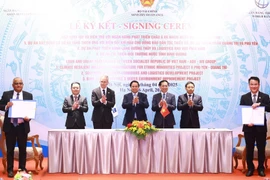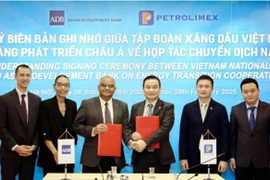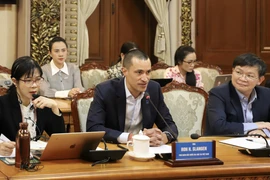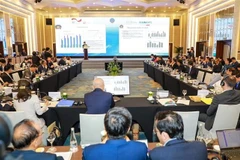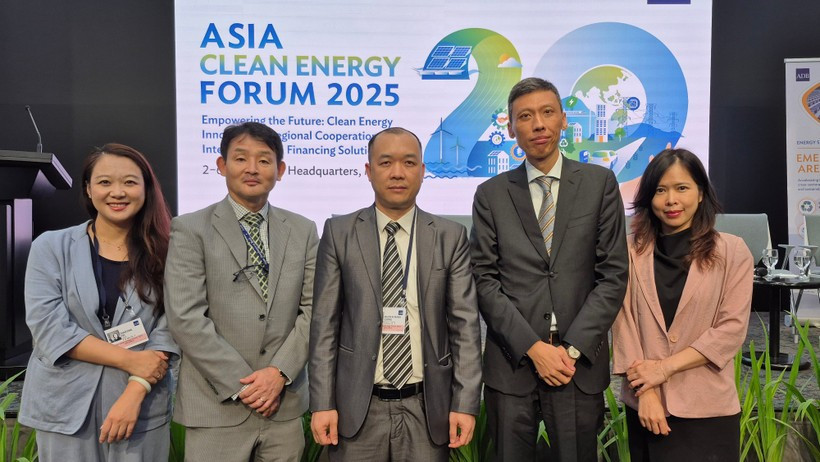
Hanoi (VNA) - The Asian Development Bank (ADB) and the Global Energy Alliance for People and Planet (GEAPP) on June 12 announced a grant agreement to establish Enhancing Access to Battery Energy Storage System (BESS) for Low-carbon Economies (ENABLE), a platform dedicated to accelerating battery storage deployment across the Asia – Pacific region.
The initiative pools financial and human resources from ADB, GEAPP, and like-minded development partners to fast-track BESS projects throughout the region. The ADB-managed funding package includes 500,000 USD from the Smart Energy Innovation Fund (SEIF) under the Clean Energy Financing Partnership Facility, complemented by 250,000 USD from GEAPP.
“ENABLE addresses key barriers by providing technical expertise, project development support, and innovative financing solutions that will help countries integrate more renewable energy into their grids,” said Cindy Cisneros-Tiangco, Director of Emerging Areas, ADB’s Energy Sector Group.
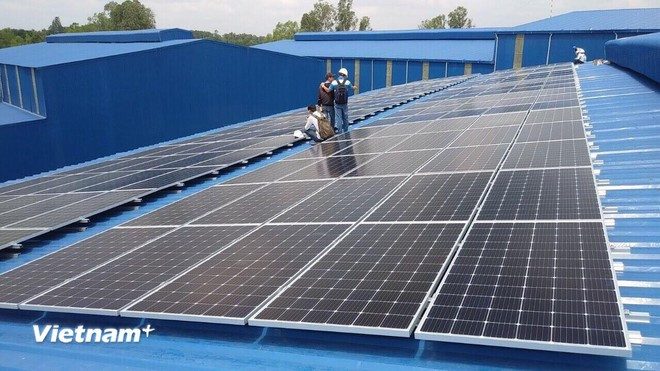
With energy demand growing rapidly across the region, battery storage becomes a critical technology to ensure stable, reliable, and clean power systems, she said, adding the need is urgent in the Asia – Pacific. The renewables capacity in the region is expected to grow by nearly 430 GW from 2023 to 2028, with solar installations set to account for two-thirds of the growth, primarily driven by large-scale utility projects. With this significant expansion of renewable energy, BESS solutions are essential for grid stability and renewable energy optimisation.
Vietnam’s latest power development plan, approved in May 2023, sets a target to more than double maximum generation capacity to 150GW by 2030, up from 69GW in 2020. This plan marks a decisive shift away from coal-fired power, aiming to achieve nearly half of total generation capacity from renewable sources. The country has emerged as one of the renewable energy leaders in the region, with total installed capacity reaching 21GW. However, the country continues to face power shortages due to inadequate transmission infrastructure and limitations in integrating renewable energy into the national grid.
By 2030, Vietnam aims for 49% of total electricity capacity from solar and wind energy. But to achieve that goal, it is necessary to establish BESS, said Nguyen Manh Cuong from the Ministry of Industry and Trade’s Institute of Energy. Over the past two years, GEAPP has supported crucial studies on frequency regulation, replacing coal-fired power plants with renewable energy and BESS in the northern region, as well as developing detailed blueprints for how BESS and solar power can strengthen the national power system. The newly launched ENABLE platform, he said, will help reduce policy gaps and bring BESS into the Vietnamese electricity market.
Kitty Bu, Vice President of Southeast Asia at GEAPP, emphasised that through ENABLE, GEAPP is helping address the critical battery storage gap that could constrain the region’s clean energy potential.
“Our approach is distinctive–we use philanthropic capital to reduce risk and mobilise greater investment from the private sector. Our collaboration with the ADB enables us to address market barriers systematically and create conditions where BESS becomes an attractive, mainstream investment opportunity throughout the region,” she said.
The ENABLE platform will focus on accelerating BESS deployment through technical assistance, pilot project preparation, and capacity-building initiatives for key stakeholders across the energy sector. It will help address key barriers to BESS adoption, including lack of technical understanding, high capital costs, concerns about cost impacts on consumers, and limited access to concessional financing–all critical for the region to achieve its green transition goals.
Over an initial three-year period, ENABLE will prioritise Vietnam, Mongolia, and Cambodia, with a customised approach based on each country’s stage of BESS development. With plans to scale up, the platform aims to expand its reach to additional countries in the region over time. Initial focus areas include private-led grid-scale BESS integration studies, policy frameworks, procurement guidelines, technical standards, application of digital tools like artificial intelligence, and innovative business models for storage deployment. Countries will receive targeted support for integrating BESS with their growing renewable capacity./.