Agricultural businesses trained on EVFTA

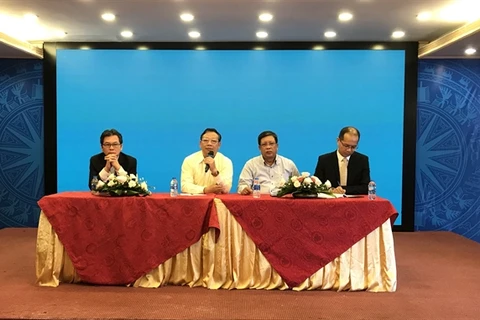
A training workshop called “Agricultural Production and Trade Companies - Actions to Access the EU-Vietnam Free Trade Agreement (EVFTA)” took place in Hanoi on July 30, gathering together officials from the sector, representatives of relevant organisations, and businesses.
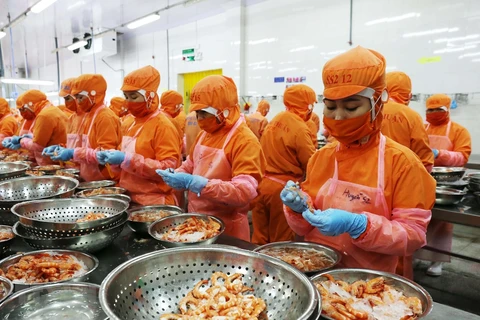
Agricultural businesses trained on EVFTA ảnh 1Processed lychee are canned for export (Photo: VNA)

Hanoi (VNA) - A training workshop called “Agricultural Productionand Trade Companies - Actions to Access the EU-Vietnam Free Trade Agreement(EVFTA)” took place in Hanoi on July 30, gathering together officials from thesector, representatives of relevant organisations, and businesses.

Opening the workshop, Le Thanh Hoa, deputy director of the AgriculturalProduct Processing and Market Development Department at the Ministry ofAgriculture and Rural Development (MARD), also introduced the Agreement on theApplication of Sanitary and Phytosanitary (SPS) Measures.

He said bilateral and multilateral FTAs to which Vietnam is a party,including the EVFTA, all have regulations on SPS measures, including details oncommitments set for Vietnamese farm produce exported to EU member countries.

Pham Dong Quang, former deputy director of MARD’s CultivationDepartment, said the challenges for Vietnamese farming exports to the EUinclude regulations on origin, safety, animal and plant quarantine, and intellectualproperty protection, as well as issues related to fair trade and sustainableproduction.

Farming in Vietnam is of small scale and lacks links, he said, whileproducers remain unfamiliar with recording product origin information. Theseresult in exports facing the risk of trade protection measures being applied bythe EU.

He recommended local companies carefully read the agreement to boost productionfor better links in value chains, increase investment in processing, and applyinternational standards in business management.

The official also suggested they apply sustainable production standardsfollowing importers’ requests, develop organic farming, and improve humanresources.

Experts have said Vietnam’s agricultural sector will be one of thebiggest winners from the EVFTA, as a reduction in tariffs will increase demandand boost exports to Europe’s large, high-spending consumer market.

According to EU figures, trade in agricultural products represents 11.75percent of the total two-way trade between Vietnam and the EU./.
VNA
See more

Tran Ngoc Quan, Trade Counsellor and head of the Vietnam Trade Office in Belgium and the EU (Photo: VNA)

Belgian firms suggested to expand presence in Vietnamese market

Entering 2026 – the first year of implementing the Vietnam – EU Comprehensive Strategic Partnership, the Vietnam Trade Office in Belgium and the EU views this as a pivotal time to inject new momentum into trade ties, said Trade Counsellor Tran Ngoc Quan.

Saigon Marina IFC, an emerging landmark, reflects Ho Chi Minh City’s pioneering spirit.

Saigon Marina IFC – The light of Ho Chi Minh City’s new icon

Saigon Marina IFC, an emerging landmark, reflects Ho Chi Minh City’s pioneering spirit. Designed to become an International Financial Centre, this new architectural icon along the Saigon River is envisioned not only as a premium commercial complex, but as a central platform supporting financial institutions, international investors and cross-border capital flows in the years ahead.

Shoppers at a supermarket in Hung Yen (Photo: VNA)

Retailers see tax compliance, AI as key to survival in 2026 survey

The annual survey, conducted at the end of 2025 among retail and food and beverage (F&B) sellers nationwide, found that businesses are shifting their focus from rapid growth to operational efficiency, cost control and legal compliance amid increasingly stringent regulatory standards.

Visitors shop at Glorious Spring Fair 2026 (Photo: VNA)

Spring Fair 2026 opens broader prospects for Vietnam–UAE trade cooperation

For Vietnam, the UAE serves not only as a consumer market but also as a gateway to the Middle East and North Africa. Vietnamese agricultural products such as cashew nuts, pepper, cinnamon and rice have steadily gained market share, while aquatic products, including tra fish and tuna, are increasingly present in the UAE’s hospitality sector.

Bao Viet Bank's employee counts Vietnamese banknotes at a transaction counter in Hanoi. (Photo: VNA)

Credit quota reform, tighter capital rules may widen gap among banks

Yuanta Vietnam Securities estimates that to achieve GDP growth above 10%, credit growth would need to exceed 16%. This suggests bank credit is no longer expected to be the main growth driver, with greater reliance on fiscal policy, public investment and capital markets.

Commercial Counsellor Do Viet Phuong, Head of the Vietnam Trade Office in Cambodia. (Photo: VNA)

Spring Fair 2026 offers ample room to deepen Vietnam–Cambodia trade ties

Cambodia holds substantial potential for cooperation in agro-processing and exports, especially in key products such as rice, cashew nuts and rubber. In recent years, the country’s cultivation area and agricultural output have grown steadily, providing a stable raw material base for processing industries.

Vietnam is projected to have approximately 2.4 million SMEs, accounting for over 98% of the country’s total enterprises. (Photo: cafef.vn)

Banks offer diverse solutions to support SMEs

With an increasingly significant role in the economy, the small and medium-sized enterprise (SME) sector is becoming a key segment in the credit growth strategies of many banks and the banks have been taking diverse solutions to support the enterprises.