Agriculture students succeed in planting grass to absorb toxins in soil

A group of students from the Vietnam Academy of Agriculture have successfully tested growing a type of grass that can effectively absorb toxins from fertilisers and pesticides that pollute soil and water.

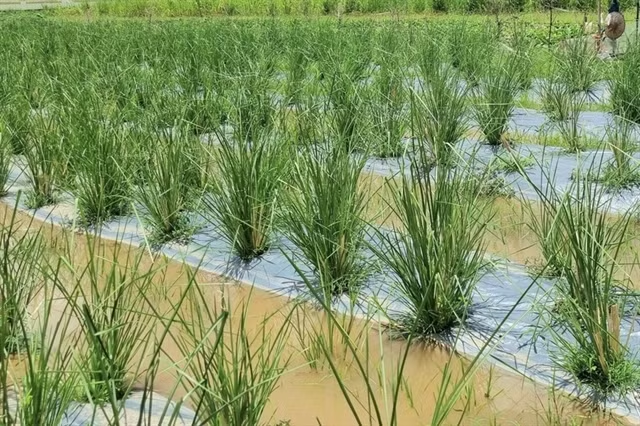
Vetiver grass (Photo: giaoducthoidai.vn)

Hanoi (VNS/VNA) - A group of students from the Vietnam Academy of Agriculture have successfully tested growing a type of grass that can effectively absorb toxins from fertilisers and pesticides that pollute soil and water.

The seven students, Vu Hoai Nam (team leader), Nguyen Minh Xuan, Nguyen Trung Hung, Nguyen Ngoc Thanh, Nguyen Thi Quynh Sa, Nguyen Do Hoang Tung and Tran Duc Duy, name the grass vetiver.

Excessive use of pesticides and other chemicals is a challenge for agriculture, leading to soil degradation and soil pollution and the toxicity can last within the earth, so that plants then re-absorb those toxins.

The research team found that, although there has been a shift to specialised crop cultivation in recent years, many 'dead land' areas are appearing more frequently in the northern mountainous region.

In addition to the overuse of pesticides in farming, unsafe fertiliser sources also cause micro-organisms in the soil and water around the farming areas to gradually die.

So the need for a safe and effective solution to 'clean' up crop growing areas in the northern mountainous areas is an imperative, because it is the agricultural sector that brings in the main incomes.

Nam told giaoducthoidai.vn that the perennial vetiver grass has the ability to effectively absorb toxic minerals from unsafe fertiliser sources or the overuse of pesticides.

“In addition, with its deep and widespread root system, as a giant grass it also has the effect of preventing erosion when grown in areas with steep slopes,” said Nam.

“And with its strong vitality, vetiver grass can survive even in the dry season and does not require much effort to care for.”

The grass also acts as an indicator of soil health, so when planted, it can also be used as a sign of the conditions underground, whether it is fresh or polluted and whether it is suitable for planting.

“With those great attributes, growing vetiver grass in specialised crop growing areas in the northern mountainous provinces to minimise toxic mineral residues in the soil and water environment is a reasonable and necessary solution,” the student said.

According to the team leader, the solution is safe, simple and effective. The grass is being grown in the northern mountainous provinces, specifically in the rose growing area in Lai Chau province.

Because of it being indicator of soil pollution, the grass help farmers recognise when the farming environment is no longer suitable for crop growth and plant elsewhere.

Planting vetiver grass is easy and does not require high-quality human resources or modern equipment, as the grass grows fast and requires little in the way of investment in terms of skills or expertise.

Therefore, it doubly suited to the northern mountainous region where the majority of the workforce are unskilled, Nam said.

Planting only needs guidance from experts at the beginning, then farmers can help and guide each other, so it could be widely deployed in all regions.

Associate Professor, Dr. Nguyen Van Loc, senior lecturer, deputy head of the Food Crops and Agronomy Faculty of the Vietnam Academy of Agriculture, gave high praise to the project because of its potential for immediate practical application./.
VNA

See more

Authorities in Mang But commune, Quang Ngai province, assist residents whose homes have been affected by floods and landslides (Photo: VNA)

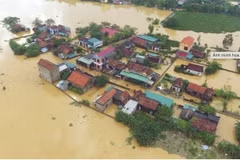
Heavy rain causes widespread damage across central Vietnam

According to the Vietnam Disaster and Dyke Management Authority under the Ministry of Agriculture and Environment, as of 5pm on November 11, the downpours injured two people in Hue city, and damaged or unroofed 38 houses in Quang Tri, Hue, Quang Ngai and Dak Lak.

Representatives of the People’s Committee of Ninh Bình province present the decision to establish the Kim Bang Delacour's Langur Species and Habitat Conservation Area. (Photo: VNA)

Ninh Binh establishes world's largest Delacour's langur sanctuary

The establishment of the Kim Bang Delacour's Langur Species and Habitat Conservation Area in Ninh Binh province provides a solid legal and scientific foundation for completing the dossier to seek UNESCO recognition of the Van Long–Kim Bang–Tam Chuc Cultural and Ecological Landscape Complex as a World Heritage Site.

Trees planted along Vo Truong Toan street in Cao Lanh ward, Dong Thap province. Urban tree species capable of reducing fine particulate matter will be planted to reduce air pollution. (Photo: VNA)

Urban trees capable of reducing fine dust to be planted

The Forestry and Forest Protection Department (FFPD) will lead the component on identifying crop and planting structures that help reduce air pollution, while also participating in the design of urban public-space landscapes.

Professor Yucheng Lin, an Assistant Professor at City University of Hong Kong (CityUHK). (Photo: VNA)

Hong Kong expert offers solutions to help Vietnam tackle sea-level rise

In an interview with the Vietnam News Agency’s correspondents in Hong Kong (China), Lin, an expert specialising in sea-level change and climate risk assessment, said Vietnam shared global drivers of sea-level rise with China’s coastal regions, but local conditions could lead to significant differences in the overall risks.

Typhoon Yagi caused severe losses in many provinces in Vietnam in 2024. (Photo: VNA)

Vietnam could face super typhoon like Yagi every seven years

If global average temperatures rise by two degrees Celsius, Vietnam could experience such a super typhoon once every 13 years on average. The frequency would increase to once every nine years under the three-degree warming scenario and once every seven years if temperatures rise by four degrees.

Six of the newly recorded species are of conservation significance, representing four orders and five families. (Photo published by VNA)

Dakrong Nature Reserve records 35 new bird species

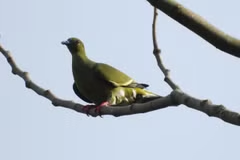
Dakrong Nature Reserve in the central province of Quang Tri has recorded 35 bird species not previously documented, including several endangered and rare species listed on the International Union for Conservation of Nature (IUCN) Red List.

An overview of Soc Son waste-to-energy plant in the Nam Son Waste Treatment Complex, in Hanoi (Photo: VNA)

Hanoi targets collection and treatment of all industrial solid waste

Hanoi aims to ensure that all industrial solid waste from its hi-tech parks, industrial parks and industrial clusters is collected and treated in line with regulations under a new plan to strengthen waste management and tighten control on scrap collection, storage and recycling facilities across the capital.

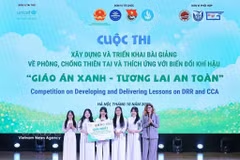
UNICEF Representative in Vietnam Silvia Danailov (first, right) honours first winners of the teaching materials competition. (Photo: VNA)

Deputy minister urges early action on disaster risks

Rapidly shifting climate conditions and increasingly overlapping hazards mean disaster risk reduction can no longer stand alone; it must sit at the heart of sustainable development, tightly integrated with climate response, water security, social welfare and economic growth.

General Secretary of the Communist Party of Vietnam Central Committee and President To Lam speaks at the groundbreaking ceremony for a project to upgrade the Bac Hung Hai irrigation system. (Photo: VNA)

Hung Yen: Project to modernise Bac Hung Hai irrigation system launched

General Secretary of the Communist Party of Vietnam Central Committee and President To Lam stressed that the development of Bac Hung Hai must be integrated into broader efforts to ensure water security, protect the environment and promote sustainable development in the Red River Delta.