Hanoi (VNA) - The first Autumn Fair 2025 is a venue for displaying goods, envisioned as a launchpad for digital commerce, enhancing the presence of Vietnamese brands on modern online platforms.
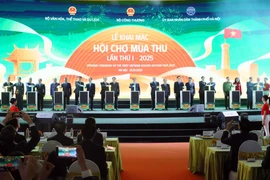
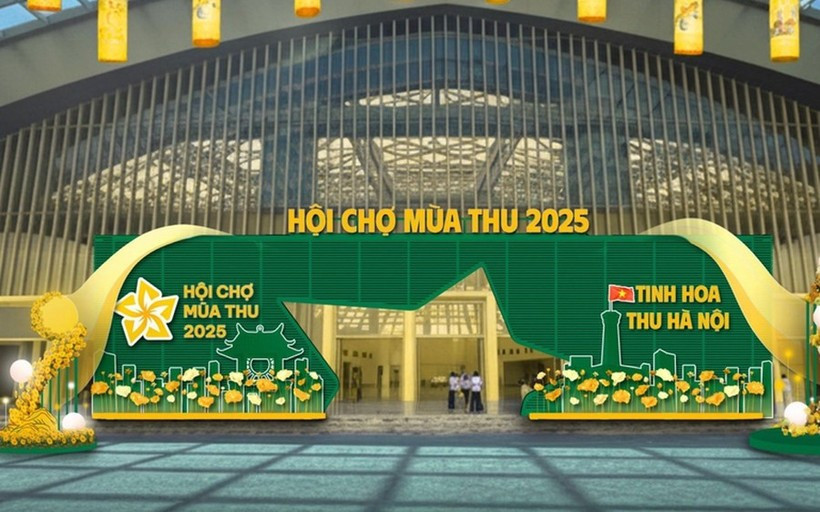
The inaugural Autumn Fair 2025 officially opened at the National Exposition Centre in Dong Anh, Hanoi on October 25, under the theme “Connecting Industry-Trade-Consumption.” The fair serves not only as a major economic gathering but also as a space to honour Vietnamese cultural values, showcasing the nation’s craftsmanship, creativity, and integration efforts.
The Autumn Fair 2025 is a national-scale economic and cultural event, assigned by the Prime Minister to the Ministry of Industry and Trade in coordination with the Ministry of Culture, Sports and Tourism, the Hanoi People’s Committee, and other ministries and localities. It is a key event of 2025, aiming to concretise policies on promoting domestic trade, boosting production, business, import-export activities, and enhancing Vietnam’s national image and product branding.
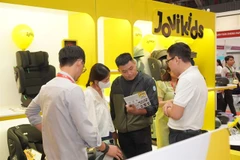
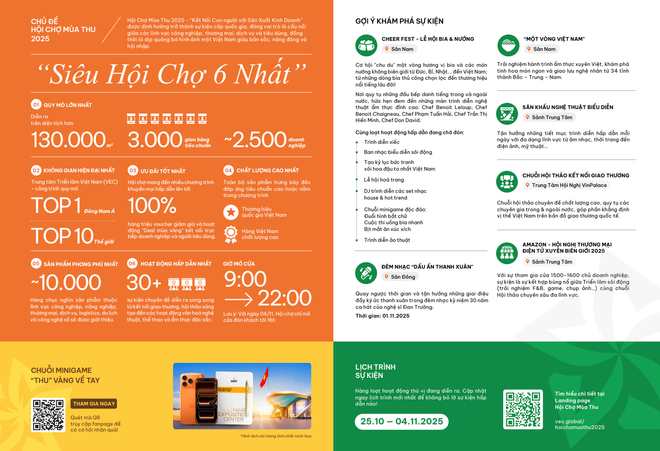
Running from October 25 to November 4, the fair takes place over more than 130,000 square metres, featuring five thematic zones and over 3,000 booths. It gathers participants from 34 provinces and cities, various ministries, thousands of enterprises, cooperatives, and major Vietnamese corporations. Numerous international partners and businesses are also attending to showcase products, explore trade opportunities, and seek potential collaborations.
Organisers expect the fair to attract an average of 500,000 visitors per day during its 11-day run, demonstrating the strong appeal of an event of both national and regional significance. With such scale, the fair is set to become a highlight among Vietnam’s economic and trade promotion initiatives this year.
This year’s edition also welcomes dozens of international companies, together with foreign embassies and trade promotion organisations. More than a trading platform, the fair functions as a bridge for cooperation and cultural exchange. It enables Vietnamese enterprises to expand markets, access green technologies, adopt sustainable production standards, and promote the image of Vietnam and its people in the global integration process.
Notably, the inaugural Autumn Fair 2025 has evolved beyond a traditional exhibition into a “springboard” for digital commerce. Its most distinctive feature is the combination of physical and virtual spaces, merging on-site trade activities with online communication and digital platforms.
According to Vu Ba Phu, Director of the Vietnam Trade Promotion Agency under the Ministry of Industry and Trade, this hybrid model represents a new approach to trade promotion, aligned with global digital transformation trends.
Phu said that digital trade promotion and digital transformation are very dynamic, attracting wide public interest.
“In this context, we are seeing the active participation of Tiktokers, KOLs, KOCs, and other digital influencers. Therefore, the Organising Committee has invited many well-known influencers to attend, helping to spread the image of the first Autumn Fair 2025 on digital platforms.”
Alongside the involvement of influential content creators, the Ministry of Industry and Trade has launched a comprehensive communication campaign across national media outlets and online platforms. From the early planning stage, digital communication strategies were actively implemented to ensure the fair’s brand reached the widest audience.
The Autumn Fair 2025 is also considered an integral part of Vietnam’s national trade promotion strategy and contributes to implementing the Government’s Green Growth Strategy to 2030 with a vision to 2050. By encouraging enterprises to adopt clean technologies, use recycled materials, conserve energy, and protect the environment, the fair acts as a “soft mechanism” that fosters awareness and action toward sustainable development.
Ultimately, the first Autumn Fair 2025 is more than a large-scale trade promotion event, it is a symbol of Vietnam’s entrepreneurial spirit in the era of integration. Within this shared space, each enterprise contributes to the nation’s development narrative through innovation, technology, cultural identity, and responsibility to the community and environment./.