Robert Legage, a theatre artist from Canada who has won numerous prestigious awards including Companion of the Order of Canada, the European Commission's Europe Theatre Prize and Canada's Governor General's Performing Arts Award, is known for his versatility in every form of theatre craft – script-writing, acting and directing.
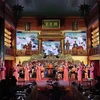
Recently he introduced in Hanoi a video of the opera "The Nightingale and Other Short Fables'', which he directed in October 2009 for the Canadian Opera Company. Its setting was inspired from Vietnamese water puppetry.
The opera was presented at the Festival Lyrique d'Aix-en-Provence in July 2010, at the Lyon Opera during the autumn of 2010, and won the Claude Rostand Award in June 2011. Awarded by the Syndicat de la Critique in France, this prize crowns the best lyrical production created outside Paris.
He spoke to Viet Nam News about the work and his passion:
* How did you choose a water setting for an opera, knowing it could be a medium that artists are uncomfortable with?
The tale takes place in and around a lake. In the main story [The Nightingale], set in China in 19th century, everything happens around a small pond and the smaller fairy tales on animals are also connected with water.
The Nightingale was a short story, so I added some other fairy tales on foxes, roosters and other animals.
I got the idea of using Vietnamese water puppetry during the rehearsal process. Because this piece is about the emperor of China receiving a gift from the emperor of Japan, we wanted to create a show where we could bring in different things from different Asian countries. The result has been harmonious. Various puppetry skills from Asia are used in the opera including, none resembling the other.
Also, my work typically uses new technology, but for this, I used very simple techniques, wanting to go back to the original, basic root of all modern techniques.
We had just three weeks for the rehearsals, and had to work very fast. Singers always complain that theatres are too dry for their throats; in this case, performing in water, they complained that the stage was too cold. But I was really interested in trying to mix opera with water puppetry.
Opera singers are not very happy always if they are asked to move about on the stage. So, when we put a puppet in the hands of an opera singer, the reaction was one of rear. But when they received some training and could control the puppets, they became fascinated, and their movement with the puppets became smoother.
I came to Hanoi first in 2007 to see water puppetry and borrow some techniques. I was a bit shocked at seeing how water puppetry connected to the whole history of Vietnam. Each time I watched a show, I learnt new things and became very interested in digging more into this tradition.
* You have worked in different fields, theatre, cinema, circus and so on. Is there a particular culture or art that you are most interested in?
Actually, I think the art of opera is a great mother art, because it invites other arts to be part of it. I also think any art needs to stand alone. I like the idea of inviting all artists like choregraphers, puppeteers and writers to work together and create an inspiring show. I believe that we should all try to learn from each other create together.
* Do you have any plan to co-operate with Vietnamese artists and do the same show in Vietnam?
My first fantasy when I came here in 2007 was to do this – to return to Vietnam and put on the show. But this would mean France and Canada have to spend a lot of money on transporting huge equipments as well as many people involved. It's a bit crazy to think of that, but one day who knows.
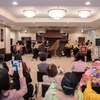
Actually, a couple of days ago, on a street corner here in Hanoi, I saw a wonderful concert [Luala concerts]. I think that there is enough talent in Hanoi for me to stage a show with Vietnamese artists one day.-VNA
Recently he introduced in Hanoi a video of the opera "The Nightingale and Other Short Fables'', which he directed in October 2009 for the Canadian Opera Company. Its setting was inspired from Vietnamese water puppetry.
The opera was presented at the Festival Lyrique d'Aix-en-Provence in July 2010, at the Lyon Opera during the autumn of 2010, and won the Claude Rostand Award in June 2011. Awarded by the Syndicat de la Critique in France, this prize crowns the best lyrical production created outside Paris.
He spoke to Viet Nam News about the work and his passion:
* How did you choose a water setting for an opera, knowing it could be a medium that artists are uncomfortable with?
The tale takes place in and around a lake. In the main story [The Nightingale], set in China in 19th century, everything happens around a small pond and the smaller fairy tales on animals are also connected with water.
The Nightingale was a short story, so I added some other fairy tales on foxes, roosters and other animals.
I got the idea of using Vietnamese water puppetry during the rehearsal process. Because this piece is about the emperor of China receiving a gift from the emperor of Japan, we wanted to create a show where we could bring in different things from different Asian countries. The result has been harmonious. Various puppetry skills from Asia are used in the opera including, none resembling the other.
Also, my work typically uses new technology, but for this, I used very simple techniques, wanting to go back to the original, basic root of all modern techniques.
We had just three weeks for the rehearsals, and had to work very fast. Singers always complain that theatres are too dry for their throats; in this case, performing in water, they complained that the stage was too cold. But I was really interested in trying to mix opera with water puppetry.
Opera singers are not very happy always if they are asked to move about on the stage. So, when we put a puppet in the hands of an opera singer, the reaction was one of rear. But when they received some training and could control the puppets, they became fascinated, and their movement with the puppets became smoother.
I came to Hanoi first in 2007 to see water puppetry and borrow some techniques. I was a bit shocked at seeing how water puppetry connected to the whole history of Vietnam. Each time I watched a show, I learnt new things and became very interested in digging more into this tradition.
* You have worked in different fields, theatre, cinema, circus and so on. Is there a particular culture or art that you are most interested in?
Actually, I think the art of opera is a great mother art, because it invites other arts to be part of it. I also think any art needs to stand alone. I like the idea of inviting all artists like choregraphers, puppeteers and writers to work together and create an inspiring show. I believe that we should all try to learn from each other create together.
* Do you have any plan to co-operate with Vietnamese artists and do the same show in Vietnam?
My first fantasy when I came here in 2007 was to do this – to return to Vietnam and put on the show. But this would mean France and Canada have to spend a lot of money on transporting huge equipments as well as many people involved. It's a bit crazy to think of that, but one day who knows.
Actually, a couple of days ago, on a street corner here in Hanoi, I saw a wonderful concert [Luala concerts]. I think that there is enough talent in Hanoi for me to stage a show with Vietnamese artists one day.-VNA