Central bank stands ready to pump more foreign currencies to market: official
The State Bank of Vietnam (SBV) will increase its interference in the foreign currency market and stay ready to pump money to the market more frequently, thus creating favourable conditions for credit institutions to meet the demand for legal foreign currencies of organisations and individuals, according to Vice Director of the SBV’s Monetary Policy Department Pham Chi Quang.
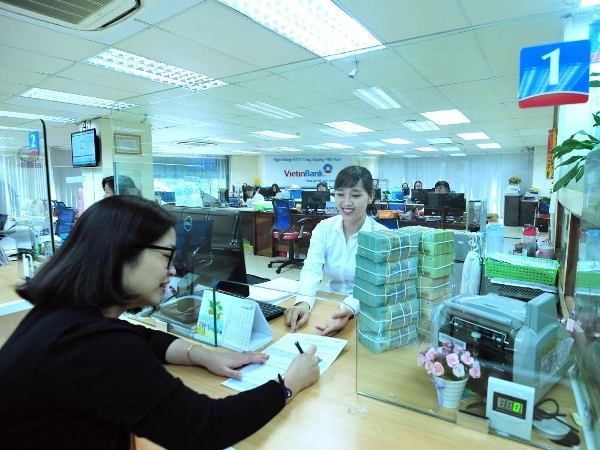 Illustrative image (Photo: VNA)
The official said that since the beginning of 2022, the international market has developed complicatedly and unexpectedly, negatively affecting the global economic-financial system.
In this context, central banks have tightened the control over monetary policies and increase operational interest rates to rein in inflation, resulting in strong developments in the financial-monetary market, he noted.
The USD/VND exchange rate has so far increase about 2 percent over that in the end of 2021.
The SBV has managed the interest rate towards the creation of room for the exchange rates to develop flexibly and absorb shocks from the outside, while interfering in the market to minimise the over-fluctuation of the rates, contributing to stabilising the foreign currency market as well as the macro-economy, and controlling inflation, he said.
Since the beginning of this year, the SBV has sold foreign currencies through suitable methods, meeting the demand of the economy and maintaining the VND liquidity to support the VND interest rate stability, thus assisting the socio-economic recovery and development process, said Quang.
According to the bank, the 2 percent rise in USD/VND exchange rate since the end of 2021 is suitable to the conditions and development of the domestic and foreign markets as well as the target of the monetary management policy in stabilising the monetary market and macro-economy as well as reining in inflation.
Quang said that in the time to come, the SBV will coordinate with relevant agencies to make concerted management over VND liquidity to ensure the stability of exchange rates, foreign currency market and interest rates. He revealed that in recent years amid the favourable conditions of the market, the SBV has purchased a large amount of foreign currencies.
The official underlined that the selling of foreign currencies more frequently to the market will help satisfy the requirements for foreign currencies to buy necessary products serving domestic production and export, thus stabilising the market and support the economic recovery./.




You should also see

PM urges stronger cooperation between Vietnamese, Chinese Ministries of Justice
Prime Minister Pham Minh Chinh has requested the Ministries of Justice of Vietnam and China to foster cooperation and mutual support, making them to be on a par with the height of the bilateral relations.


See more
 Business
Vietnam treasures multifaceted cooperation with Côte d'Ivoire: Deputy FM
Vietnam always attaches importance to and wishes to bolster multifaceted cooperation with Côte d'Ivoire – its traditional friendship partner in Africa, Deputy Minister of Foreign Affairs Nguyen Minh Hang has said.
 Videos
Foreign investment driven towards new breakthrough phase
Vietnam has so far drawn nearly 500 billion USD in registered FDI capital after nearly four decades of opening up its economy, with investment quality improvement considered a key task for a new breakthrough phase ahead.
 Business
Quang Ninh attracts additional 115 million USD from Japan investors
The Quang Ninh Economic Zone Authority (QEZA) presented investment certificates to two Japanese projects worth 115 million USD in total at a conference held at Song Khoai Industrial Park (IP) on April 19.
 Business
Central bank plans to auction gold bars on April 22
The State Bank of Vietnam (SBV) will auction SJC-branded gold bars on April 22, a representative of the central bank said on April 19.
 Business
Hanoi to host Vietnam Medipharm Expo 2024
The 31st Vietnam International Medical and Pharmaceutical Exhibition (Vietnam Medipharm Expo 2024) is scheduled to take place in Hanoi from May 9 to 12, an official of the Ministry of Health (MoH) told a press conference on April 19.
