Dong Nai attracts 1.1 billion USD in FDI capital so far this year
Dong Nai has attracted 1.1 billion USD to nearly 140 foreign direct investment (FDI) projects since the start of this year, according to the Industrial Zones Authority of this southern province (DIZA).
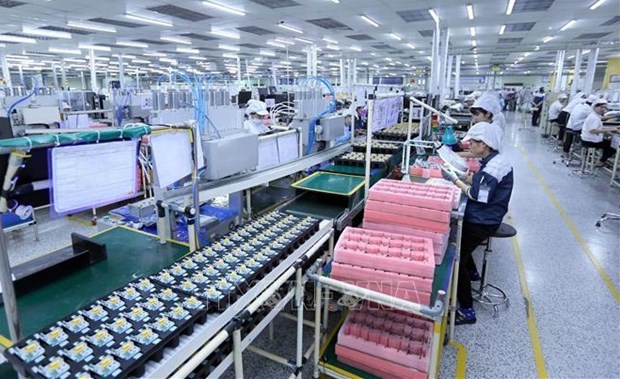 The FDI capital attracted so far this year has exceeded Dong Nai’s target of 700 million USD for 2021. (Photo: VNA)
Of the sum, more than 736 million USD was channeled into 93 existing projects while the rest into new ones.
The FDI capital attracted so far this year has exceeded this industrial hub’s target of 700 million USD for 2021.
Most of the projects operate in supporting and electronics industries, apply modern technology, and do not cause environmental pollution, matching the local policy of selective FDI attraction.
Le Van Danh, deputy head of the DIZA, said despite the COVID-19, foreign investors have still raised capital, expanded operations, and invested in many new projects in Dong Nai, which shows their belief that the pandemic will be put under control and the economy of Vietnam and Dong Nai will develop in the time ahead.
The province will welcome more FDI projects in the coming time as many investors are liaising with the DIZA to express their intention to open new projects, he added.
Dong Nai is currently home to nearly 1,500 valid FDI projects worth 32 billion USD in total by investors from 45 countries and territories. The largest investors are the Republic of Korea, Taiwan (China), and Japan./.




You should also see

Millions of children in Vietnam protected by vaccination over 40 years: UN agencies
Millions of children in Vietnam have been protected by immunisation over the past 40 years, said the World Health Organisation (WHO) and UNICEF offices in Vietnam on April 25 when they mark the World Immunisation Week from April 24-30.


See more
 Business
New EU-funded project to boost smart agriculture in Mekong Delta
A meeting took place in the Mekong Delta province of Tra Vinh on April 25 to introduce the project “Smart Agro-ecological Transformation of Farming Systems towards Resilience and Sustainability in Middle and Coastal Zones of the Vietnam Mekong Delta (STAR-FARM)”.
 Business
Vietnam Online Business Forum tackles sustainability in e-commerce
The Vietnam Online Business Forum 2024, themed “Sustainable E-Commerce”, kicked off in Hanoi on April 25.
 Business
Vietnam-Singapore trade on the rise since start of 2024
Trade between Vietnam and Singapore topped 2.54 billion SGD (1.87 billion USD) in March, rising 4.29% year on year, according to the Trade Office of Vietnam in the city state.
 Business
Petrol prices decrease slightly on April 25
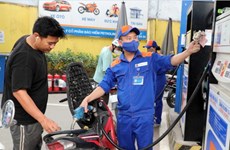
The retail prices of petrol were adjusted down from 3pm on April 25 by the Ministry of Industry and Trade and the Ministry of Finance.
 Business
Vietnamese canned sugarcane juice favoured in US
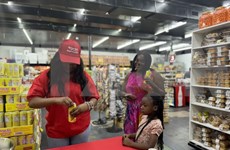
The first cases of Vietnamese canned sugarcane juice have hit supermarket shelves in Miami, the US state of Florida.
