E-commerce high growth provides fertile land for logistics

Vietnam has surpassed Thailand and Malaysia to lead Southeast Asia in terms of e-commerce growth with an annual expansion of more than 30 percent, bringing big opportunities for logistics companies.
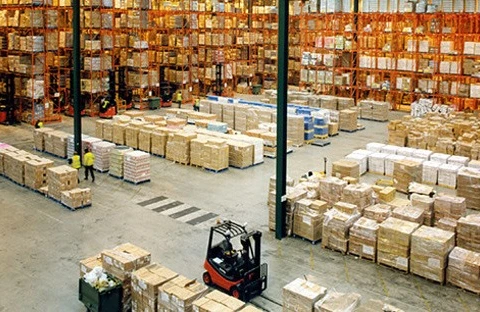
E-commerce high growth provides fertile land for logistics ảnh 1E-commerce high growth provides fertile land for logistics. (Photo: blog.paycorp.co.za)

Hanoi (VNA) – Vietnam hassurpassed Thailand and Malaysia to lead Southeast Asia in terms of e-commercegrowth with an annual expansion of more than 30 percent, bringing bigopportunities for logistics companies.

The scale of e-commerce inVietnam is forecast to reach 10 billion USD in 2020, with many companies investingnot only in their sales websites and marketing but also in goods transport anddelivery service.

However, major domestic deliveryservice companies are unable to meet the need of online retail, as they simply providethe traditional logistic services without adapting them to e-commerce,according to Nguyen Quang Thuat, director of order processing at Sendo JointStock Company, an e-commerce retailer and online commerce platform.

Sendo’s latest survey showedover 40 percent of its customers complained about the time for delivery. Inaddition, delivery costs are considered to be high.

Director of Lazada Express VuDuc Thinh said logistics costs account for 30 percent of e-commerce revenue, ahigh level on the world, compared to 10-15 percent in India.  

Logistics services are notkeeping pace with the boom in e-commerce, according to Thinh. For example, as onlineretailers may receive hundreds of thousands of orders a day, the hiring of “shippers”to deliver goods by motorcycle will be impossible, he said.

Thinh also pointed to a lack ofa law on logistics and cumbersome regulations. He cited as an example aregulation requiring a bill of sale for imported goods in transportation, whichis hard for on-line retailers which deal with hundreds of orders a day, withsome orders worth just several tens of thousands of dongs (several USD).

Poor connection between e-commerceand logistics sectors is a weak link of Vietnam’s e-commerce and hindersopportunities of logistics firms.

What is more worrying that thereis currently no school specializing in logistics training.

Vice Chairman of the VietnamLogistics Association Dao Trong Khoa admitted that few domestic logistic companiescan meet the requirements of their e-commerce partners.

He suggested logistics companiesto link up based on their respective strengths and available services in orderto best meet customers’ demand.

Thinh of Lazada Express urgedlogistics companies invest in technology and learn from world experience.

Pending State support andpolicies, many companies have made their own efforts to catch up with newdemands.  

In anticipation of a three-foldincrease in orders this year from 2017, the Giao hang nhanh delivery companyplans to invest 2 percent of its revenues in upgrading technologies, including theintegration of the positioning application to classify orders according todestinations, thus reducing delivery time.  

Director General of the companyNguyen Tran Thi said the company aims to deliver all orders in Hanoi, Da Nangand Ho Chi Minh City within 2 hours from the time of order placement, and within24 hours for customers throughout the country.  

Foreign e-commerce platformsalso select local delivery partners based on whether their technologies arecompatible.

According to Fabian Wantd, CEOof Lazada Vietnam, domestic delivery companies have good understanding of the localmarket while foreign retailers are strong in technology. Therefore, Vietnamesefirms must invest in technology if they want to cooperate with foreignpartners.-VNA
VNA

See more

Rice harvest in Xuan Giang commune, Ninh Binh province. (Photo: VNA)

Plan issued to develop agricultural logistics system

A key target is that by 2030, all concentrated agricultural, forestry and fisheries production areas will have access to essential services, including product traceability, quarantine, testing, quality certification, processing and market development. The move reflects growing international demand for stricter food safety, quality and traceability standards, which have become increasingly important for agricultural exports.

Delegates at the signing ceremony (Photo: VNA)

Vietnam, RoK boost micro-business cooperation

Vietnam's young population, dynamic market, and big growth potential are a perfect fit for the strengths that Korean micro-businesses bring in K-brands, technology, and service expertise, said KFME President Song Chi Young.

Cars at a public parking lot in Hai Phong city. (Photo: VNA)

Vietnam's auto sales rise 15%, hybrid, imported vehicles continue to outperform

With auto loan interest rates remaining competitive, stable vehicle supply, and an increasingly diverse product range, Vietnam's automotive market is expected to maintain its growth momentum through the remainder of 2026. SUVs, MPVs, and hybrid vehicles are likely to remain the main drivers of overall market sales.

The MoU signing ceremony between Becamex VSIP Binh Dinh and PV Gas CNG in Gia Lai province on June 26, 2026 (Photo: nhandan.vn)

Gia Lai positions itself as magnet for sustainable investment

Vice Chairman of the provincial People's Committee Nguyen Huu Que said ESG is no longer a communications message or a cost burden, but an essential requirement for accessing global capital. Gia Lai has chosen ESG as a pillar for building new competitive advantages and achieving sustainable development.

Chairman of the Tay Ninh provincial People's Committee Le Van Han delivers remarks at the inauguration ceremony. (Photo: VNA)

Suntory PepsiCo inaugurates 300-million-USD plant in southern Tay Ninh province

Built on nearly 20 hectares at Huu Thanh Industrial Park, the facility is the company's largest and most advanced plant in Vietnam and the biggest production site in Suntory PepsiCo's Asian manufacturing network. The factory has a designed annual production capacity of over 1.24 billion litres and is equipped with highly automated production, filling and warehousing systems.

Ho Chi Minh City inaugurates a UAV postal route linking Can Gio commune and Vung Tau ward on February 12, 2026. (Photo: VNA)

Ho Chi Minh City promotes UAV applications to develop low-altitude economy

With its enlarged development space, Ho Chi Minh City now combines strengths in urban development, industry and services with high-tech agriculture, the marine economy, logistics and diverse ecological areas. These conditions provide an ideal testing ground for UAV applications in urban management, land administration, environmental monitoring, disaster prevention and response, agriculture, logistics and public services.

Workers produce outdoor wooden furniture for export to Europe at the factory of Hong Ngoc Co., Ltd. in Phu Tai Industrial Park, Quy Nhon Bac ward, Gia Lai province. (Photo: VNA)

Vietnam's wood exporters race to stay on growth path

Despite headwinds from Middle East tensions that have pushed up freight and logistics costs, exports of wood and wood products were estimated at 1.53 billion USD in June, lifting first-half export turnover to 8.54 billion USD, up 4.4% from a year earlier, according to the Ministry of Agriculture and Environment (MAE).

Workers make clothes for export to the Japanese market at Hung Viet Garment Company in Hung Yen province. (Photo: VNA)

Vietnam seeks stronger export growth in H2

Despite the encouraging performance, Vietnam's exports remain heavily dependent on a limited number of major markets and product groups, while the domestic value added of many export products remains relatively low because of their reliance on imported raw materials and components.

Hiep Phuoc Industrial Park in Hiep Phuoc commune, Ho Chi Minh City. (Photo: VNA)

Ho Chi Minh City: Industrial, export processing zones attract over 2.6 bln USD in H1

Speaking at the at the city's regular socio-economic press briefing on July 9, Deputy Head of the Ho Chi Minh City Export Processing and Industrial Zones Authority (HEPZA) Tran Viet Ha said that foreign direct investment (FDI) accounted for nearly 1.6 billion USD of the total, including 65 newly licensed projects worth more than 867 million USD and 83 existing projects that added over 707 million USD in registered capital.