
Hanoi (VNA) - Vietnam’s gold market is facing numerous challenges, including a wide gap between domestic and international gold prices, a longstanding monopoly on gold bullion, and persistent issues in the supply of gold to the market. In this context, Party General Secretary To Lam has asked for measures to abolish the monopoly on gold bullion.
The following is an interview between VietnamPlus and Dr. Nguyen Quang Huy, CEO of the Faculty of Finance and Banking at Nguyen Trai University, addressing these pressing issues.
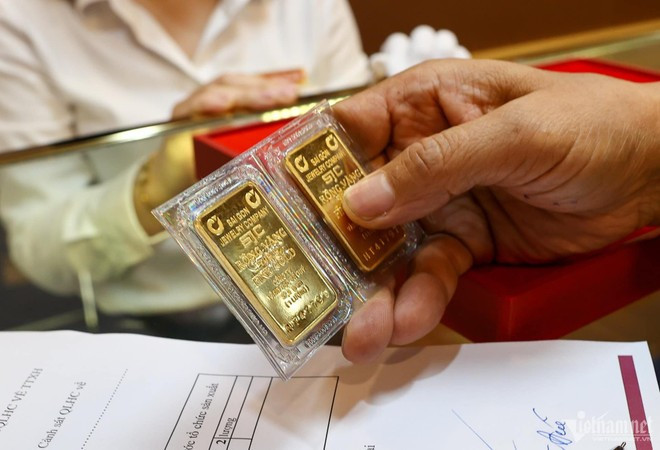
Breaking the monopoly
Reporter: How do you evaluate the Party General Secretary’s directions to abolish the monopoly on gold bullion and allow multiple qualified enterprises to participate in its production, especially in the current context?
Dr. Nguyen Quang Huy: The current disparity between the domestic and international gold prices is a result of a market that lacks competition and transparency. The General Secretary’s mention of abolishing the monopoly on gold bullion is not merely a technical measure, it represents a profound institutional reform in the financial and monetary sector.
If implemented in a scientific and well-regulated manner, allowing multiple qualified enterprises to produce gold bullion could break the monopoly that has existed for over a decade. This will promote competition, contribute to price stabilisation, and enhance the flexibility of supply.
However, it is crucial to establish a clear legal framework, implement strict standards for quality inspection, and put in place a mechanism for monitoring the quality of gold bullion in circulation. These measures are necessary to maintain public trust and avoid uncontrollable fluctuations in the market.
Reporter: At present, the price gap between domestic and international gold remains high, causing losses for gold buyers. In your opinion, what measures are needed to narrow this gap?
Dr. Nguyen Quang Huy: The gap between domestic SJC gold prices and international prices, sometimes 15 to 20 million VND (574-765 USD) per tael, is a distorted reflection of the market. This not only directly harms consumers, but also creates room for the growth of unofficial market activities.

To reduce this gap, several solutions must be implemented simultaneously. First, we need to break the monopoly on gold bullion production and allow the circulation of multiple reputable gold brands, as is the case in developed countries.
Second, we must permit the import of raw gold based on a transparent quota mechanism. This mechanism should be aligned with actual demand and enforced with clear, fair regulatory measures.
Third, we need to adjust the exchange rate with greater flexibility and ensure coordination between monetary policy and the gold market. This coordination is essential to avoid a dual burden on the U.S. dollar.
Fourth, we must enhance the role of the State in market regulation. This does not mean direct price intervention, but rather guiding the market toward self-regulation on the basis of transparency.
Reporter: With the elimination of the monopoly and the potential resumption of raw gold imports, is there concern about capital outflow in foreign currency? How can a transparent and fair gold market be established?
Dr. Nguyen Quang Huy: The suspension of raw gold import licenses since 2012 has inadvertently created a bottleneck in supply. Supply has been constrained, while demand has remained high, pushing the price gap between domestic and international gold. This situation not only harms consumers, but also opens the door for smuggling and leads to a market that operates "half in the light, half in the dark."
We can absolutely control the import of raw gold through a transparent quota mechanism that is responsive to real demand and maintains macroeconomic stability. If done properly, this will reduce smuggling, curb USD outflow, and restore trust in the market.
Additionally, when the gold market becomes healthy, the role of gold will return to its original nature - a store of value and a hedge against risk during uncertain times. In that case, people will no longer focus solely on hoarding gold. Instead, capital will gradually shift toward more efficient investment channels such as stocks, bonds, real estate, and pension funds. Gold will continue to play an important role in a diversified investment portfolio, but it will no longer serve as an unusual “safe haven” as it does now.
As the gold market becomes transparent, competitive, and effectively regulated, people will be less prone to speculative behaviour, less influenced by rumours, and less likely to suffer losses from abnormal market volatility.
Regarding the concern about “capital outflow in USD” once raw gold imports are allowed again, I believe it should be looked at more fairly. Controlled and well-monitored imports, based on actual domestic demand, could actually help stabilise the local market. It would also help prevent USD outflow through unofficial channels, which are much more difficult to monitor.
Gold exchange could be answer
Reporter: There are opinions that to ensure transparency in gold transactions, it is necessary to establish a gold exchange. What is your view on this?
Dr. Nguyen Quang Huy: This is a ripe moment to seriously consider establishing a standardised gold exchange. A centralised, transparent, and modern trading platform would help dismantle the current state of fragmented and opaque trading practices.
Such a gold exchange could offer multiple benefits. It would help reduce price discrepancies across regions, limit the risk of price manipulation, and provide the foundation for developing gold-based financial instruments such as derivatives. These developments would, in turn, contribute to the in-depth growth of Vietnam’s financial markets.
However, certain prerequisites must be met. A clear legal framework is needed, along with modern technology and a professional supervisory staff. We should draw lessons from successful models like COMEX in the United States or the Shanghai Gold Exchange.
The most important factor is a shift in regulatory mindset. We should not fear the so-called “goldisation” of the economy—especially if we can instead “financialise” gold in a civilised and modern way.
Reporter: What strong and decisive solutions are needed to steer the gold market onto the right track?
Dr. Nguyen Quang Huy: In the time ahead, to bring the gold market back to its true nature as a store of value and a stable investment tool, we need to implement five comprehensive solutions simultaneously.
First, we must urgently implement new regulations to eliminate the current monopoly mechanism in gold bullion production. We should reconsider the practice of recognising only one gold bullion brand and instead allow several capable and transparent enterprises to participate in this market, under strict supervision.
Second, we should develop the physical gold market in tandem with the financial market, including derivative instruments such as futures contracts and options. This would protect the public from speculative risks driven by rumours and improve price transparency.
Third, we need to increase the official supply of gold and reduce dependence on smuggled gold. Raw gold imports must be transparent, governed by a flexible control mechanism, and smuggling must be strictly penalised.
Fourth, we must enhance transparency of information and strengthen supervision over gold trading activities. Businesses must publicly disclose purchase and sale prices, profit margins, and link real-time data with commercial banks and the State Bank of Vietnam to ensure continuous monitoring.
Fifth, it is essential to change the public’s financial behavior through financial education. People need to understand the difference between asset accumulation and speculation, and avoid the “herd mentality,” which has been a key reason for recent market chaos and consumer losses.
In reality, the gold market cannot be left to float freely, but it also should not be rigidly constrained by outdated command-and-control mechanisms. Reforming the gold market is a necessary step to protect consumer rights, improve the effectiveness of monetary policy, and align Vietnam’s economy with international standards.
In the long term, a modern gold market must possess competition, transparency, and effective supervisory tools. Achieving this requires synchronised reform, smart policy design, and resolute implementation.
Reporter: Thank you for your insights./.