Ending plastic pollution: Change must begin at home

As plastic waste continues to choke our oceans, rivers, and landscapes, Vietnam is ramping up efforts to tackle one of the world’s most pressing environmental threats. In a strong call to action, the Ministry of Agriculture and Environment is urging every citizen to be part of the solution—beginning at home.

o-nhiem.jpg
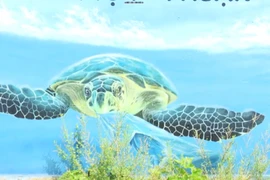
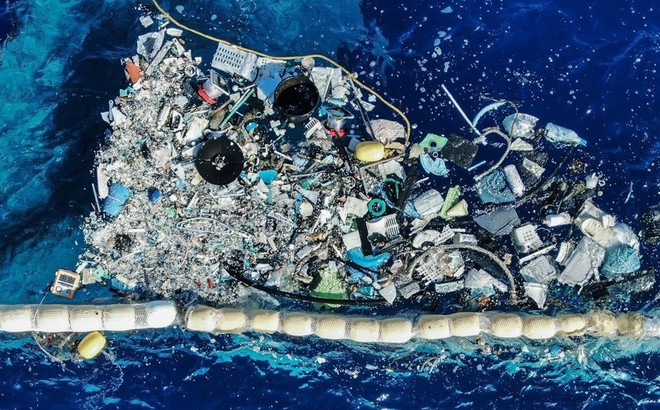
Plastic pollution in our oceans is becoming increasingly severe. (Photo: Wired)

Hanoi (VNA) - As plastic waste continues to choke our oceans, rivers, and landscapes, Vietnam is ramping up efforts to tackle one of the world’s most pressing environmental threats. In a strong call to action, the Ministry of Agriculture and Environment is urging every citizen to be part of the solution—beginning at home.

This year’s World Environment Day, marked on June 5, carries the theme “Ending Plastic Pollution.” In response, the ministry has launched a nationwide campaign titled “Joining Hands to Reduce Plastic Waste – Spreading Green Living.” The initiative calls for practical changes in daily habits and encourages communities, households, and businesses to rethink their relationship with plastic.

Deputy Minister Le Cong Thanh highlighted the alarming scale of the crisis. Globally, over 430 million tonnes of plastic are produced each year, and more than two-thirds of that is designed for single use. In Vietnam alone, an estimated 1.8 million tonnes of plastic waste is generated annually, but only 27% is recycled. The rest is either burned or buried, resulting in wasted resources and significant harm to ecosystems and public health.

To address this, Vietnam has taken major legislative and policy steps. These include the 2020 Environmental Protection Law, a national plan to reduce ocean plastic waste, and a series of incentives to promote recycling and circular economy models. The country has set ambitious goals: by 2030, it aims to reduce marine plastic waste by 75%, eliminate single-use plastics in coastal tourism areas, and make marine protected zones completely plastic-free.

Despite these efforts, the minister acknowledged challenges in enforcement and public engagement. “We have laws and strategies, but the on-the-ground implementation is still patchy,” he said. “Infrastructure for waste separation at source is inadequate, and single-use plastics remain prevalent in daily life.”

Still, there are bright spots across the country. Cities like Hai Phong, Quang Ninh, Da Nang, Binh Duong, and Ho Chi Minh City are pioneering innovative waste management models. “Green markets,” plastic-free neighbourhoods, and localised recycling initiatives are gaining traction. Many businesses have started to adopt biodegradable packaging and shift toward circular manufacturing systems.

A centrepiece of this year’s campaign is “No Single-Use Plastic Day,” to be observed at offices, schools, supermarkets, and marketplaces nationwide. The campaign also promotes source-based waste separation, community recycling, and eco-friendly farming practices that minimise plastic usage.
o-nhiem-1.jpg
Each of us must take action—don’t turn a blind eye to plastic pollution. Instead, take the lead in adopting a green lifestyle and protecting the environment. (Illustrative photo: Vietnam+)

Vietnam’s efforts have also drawn support from international environmental organisations. Dr Van Ngoc Thinh, Country Director of WWF Vietnam, praised the government’s initiatives but emphasised the crucial role of public participation. “Ending plastic pollution requires more than policies—it requires behavioural change,” he said. “We must say no to plastic bags, straws, and disposable cups. Small, everyday actions—like sorting waste or collecting litter—can lead to big results.”

Dr Thinh pointed out that Vietnam’s youthful population offers an opportunity to build a new culture of sustainability. He called for stronger investment in education and innovation, especially in developing clean technologies and expanding recycling infrastructure.

“Vietnam is heading in the right direction,” he noted. “With stronger cooperation between government, industry, and civil society, we can scale up green models and reduce reliance on plastics.”

Ultimately, the message from both government leaders and environmental experts is the same: the fight against plastic pollution starts with each individual. From refusing single-use items to participating in local clean-up efforts, every household plays a vital role in protecting the environment. Real change will not come from top-down mandates alone—but from everyday actions that, collectively, shape a greener, cleaner future./.

See more

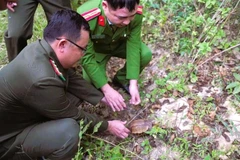
Sunda pangolins (Manis javanica), also known as the Javan pangolin, are listed in Group IB – critically endangered and strictly protected from all commercial exploitation (Photo: VNA)

Quang Ngai releases rare pangolin back into nature

Initial verification showed that the animal weighed 3.7kg and measured over 60cm. It was identified as a Sunda pangolin (Manis javanica), also known as the Javan pangolin, listed in Group IB – critically endangered and strictly protected from all commercial exploitation.

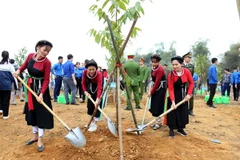
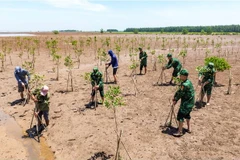
Residents of Tuyen Quang province take part in the One Billion Trees Programme. (Photo: VNA)

Tree-planting programme exceeds one-billion-tree goal

The total comprises 573.9 million scattered trees and 865.2 million trees grown in concentrated plantations, equivalent to 429,125 hectares of forest. Provinces posting the strongest results include Phu Tho with 177.9 million trees, Lao Cai with 108.8 million, and An Giang with 98.5 million.

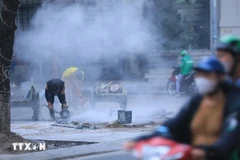
Construction activity is one of the causes of air pollution in Hanoi. (Photo: VNA)

Hanoi takes urgent measures to curb air pollution

The city requires the enhanced application of advanced technologies and remote monitoring systems, including satellite remote sensing, drones, and AI-integrated traffic cameras, to monitor, detect, and strictly address the illegal burning of garbage, straw, and agricultural by-products.

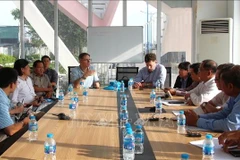
The World Bank delegation holds working session with Can Tho city People's Committee and relevant units (Photo: VNA)

World Bank delegation surveys Can Tho urban resilience project

The project is jointly financed by the WB with up to 250 million USD and a 10-million-USD non-refundable grant from the Swiss State Secretariat for Economic Affairs (SECO), along with counterpart funding from the Vietnamese Government. Its goal is to build a climate-resilient and sustainable city that can drive socio-economic growth across the Mekong Delta, mitigate flood vulnerability in central Can Tho, and improve inter- and intra-regional transport connectivity.

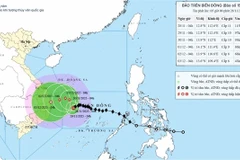
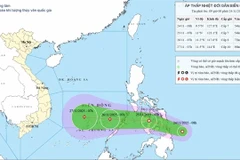
The direction of Storm Koto as of 04:00 on November 27. (Photo: VNA)

Lam Dong province’s coastal localities brace for Storm Koto

Local authorities have activated round-the-clock duty operations, continuously updated storm warnings and flood information and intensified inspections of riverside and seaside areas, low-lying zones, and locations at high risk of landslides and deep flooding.

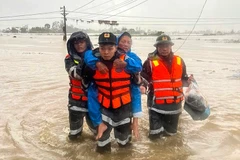
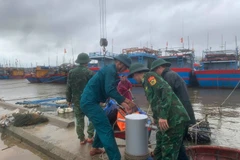
Border guard officers at Ky Ha Port Border Gate are assisting residents in securing their boats. (Photo: VNA)

VPA General Staff directs urgent response to Storm Koto

Military Regions 4, 5 and 7 were tasked with directing provincial military commands to advise local authorities, review response plans, and coordinate with relevant departments and sectors to identify disaster-prone areas, including locations at risk of flash floods, landslides, major dykes, embankments and reservoirs, and flood-prone zones, particularly those heavily affected by recent rains.

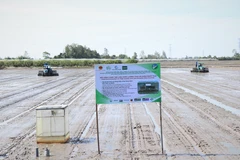
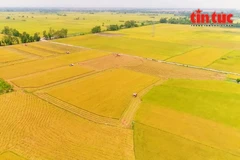
In 2024–2025, the project has implement seven pilot models in Can Tho city and the provinces of Vinh Long, Dong Thap, and An Giang. (Photo: VNA)

One-million-hectare high-quality, low-emission rice project changes mindset of producers

A project on sustainable development of one million hectares of high-quality, low-emission rice cultivation associated with green growth in the Mekong Delta by 2030 has so far helped shift the awareness and mindset of rice producers toward greater responsibility and toward adopting production trends aligned with global orientations for “green development.”

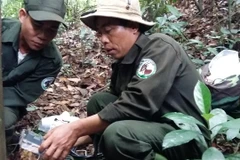
Two rangers check a camera trap in jungle of the Saola Nature Reserve in Hue city. (Photo: VNA)

Vietnam’s forests show signs of wildlife recovery

Vietnam’s forests are among the world’s most biodiverse, yet wildlife remains threatened by habitat loss and snaring. A new WWF-Vietnam survey, using 350,000 camera-trap days across 21 forests, reveals urgent conservation needs and signs of recovery.