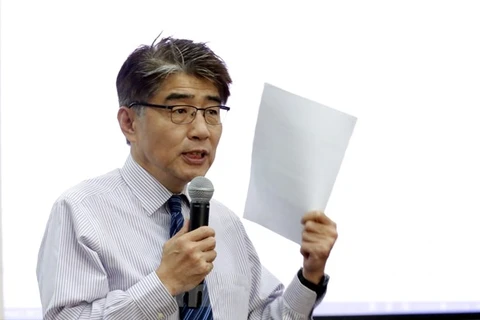
Minister of Industry and Trade Tran Tuan Anh talks to reporters (Photo: VietnamPlus)
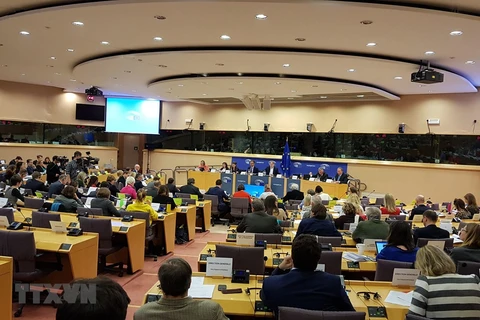
 Hanoi (VNA) - The European Union-Vietnam Free Trade Agreement (EVFTA) and the EU–Vietnam Investment Protection Agreement (EVIPA), which were ratified by the European Parliament (EP) on February 12, will help Vietnam promote its position in the international arena, Minister of Industry and Trade Tran Tuan Anh has said.
Anh granted an interview to the Vietnam News Agency following the EP’s ratification of the two deals.
Reporter: We have just received good news that the European Parliament voted to ratify the EVFTA and EVIPA, so how do you evaluate the results from the ratification of these two agreements?
Minister Tran Tuan Anh: This is good news for both Vietnam and the EU as well as for the globalisation on the basis of common rules-based trade organisations, as we must look broadly at regional and international scales with the contexts that Vietnam faces in 2020 and the years to come.
For the EU, this is almost a final step to complete the legal process for ratifying a very important trade agreement that the EU has signed with a developing country and to end the long-lasting negotiations between the two sides with various important contents.
The negotiation process lasted nearly eight years, accompanied by a huge amount of work and issues that both sides’ negotiators had to deal with. Therefore, this is a very significant event, as Vietnam and the EU have entered the final stage to activate the two agreements.
Of course, the two agreements still need to wait for the discussion and ratification of the Vietnamese National Assembly, but the Ministry of Industry and Trade absolutely believes in a similar good result at the legislature’s upcoming session.
As a result, a new trade area will formally be formed, in which two fair and strategic partners with very important roles in globalisation continue strengthening the multilateral trading system based on international law so as to effectively deal with trade protectionism or complicated developments in the international arena.
It must be affirmed that the two agreements contain very high requirements, different from other new-generation trade agreements that Vietnam has signed such as the Comprehensive and Progressive Agreement for Trans-Pacific Partnership (CPTPP). In addition to a reduction in tariff barriers, the deals also contain reforms to continue creating a more favourable and transparent environment for socio-economic development activities.
For 28 EU member states, Vietnam is a test for a new model of free trade between the developed EU with a developing nation which is, however, consistent in its opening and reform.
For the EVFTA, Vietnam has proved that the Party's foreign policy of multilateralisation and diversification of relations is absolutely right and brings tremendous benefits, especially in ensuring national interests as well as ensuring a strategic and sustainable cooperative relationship to contribute to international peace and stability, not merely economic and trade affairs.
Although it is still very early to assess, international researchers said that the EVFTA will immediately bring enormous benefits to Vietnam's economy as well as its businesses and local products.
Reporter: What is the next step for Vietnam to proceed with the implementation of this agreement?
Minister Tran Tuan Anh: We have to assert that in terms of the legal process, the EU side has finished its part, and the Vietnamese side still has work to be done urgently.
The first is the discussion of deputies and the ratification of the National Assembly. The Ministry of Industry and Trade is also expecting that the documents on the EVFTA and EVIPA will be submitted to the National Assembly at its upcoming session.
Therefore, the EU side also has enough time to carry out its final work to put the agreements into effect, as expected by July or August 2020. The business communities, people and organisations of both sides will soon benefit from these two agreements.
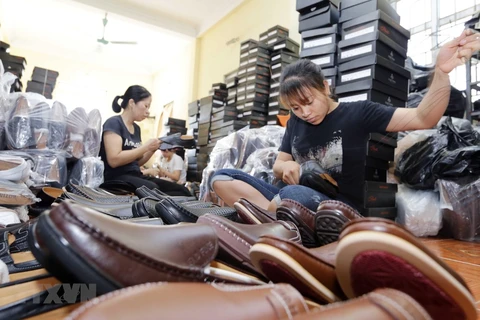
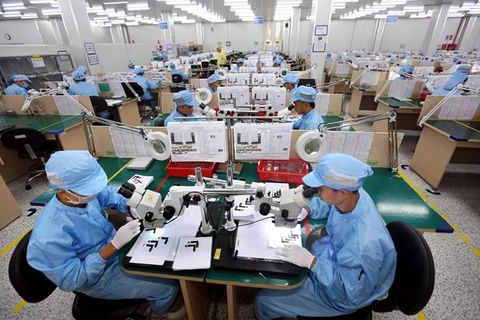
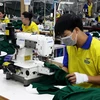
 Domestic enterprises have chances to expand markets and increase competitiveness (Photo: VietnamPlus).
 To that end, after the NA ratifies the deals, we have to make preparations to carry out integration commitments and long-term plans.
First of all, we must have an action programme approved by the Prime Minister to perform short-term and long-term tasks, and at the same time review and amend laws to report to the National Assembly for amendments and approval as well as conducting suitable socio-economic management, economic restructuring and domestic market development to effectively protect the benefits of the economy, businesses and people when implementing integration commitments.
The top priority is to disseminate legal knowledge and provide timely and complete information about the agreements and the Government's action plan to each sector, association, business and people, right after the deals become effective.
Reporter: So what are opportunities and challenges that the EVFTA will create for Vietnam?
Minister Tran Tuan Anh: The EU is an entity of 28 member countries with a high development level, and its scales of technology, capital and credit suitable to the development policy of Vietnam.
With the complements to each other, both EU and Vietnam see sustainability in the framework of cooperation of the two agreements.
In my opinion, when the EVFTA takes effect, the union’s technology and capital will help Vietnam form new supply chains in the union and globally, thus contributing to the country’s economic restructuring and enterprises’ competitiveness.
Currently, Vietnam's exports to the EU are growing rapidly, but its potential remains huge when a lot of tariff lines are cut to zero percent.
However, there remains a big gap in development between the two sides, especially in business governance, thus requiring stronger measures to help businesses take advantage of opportunities offered by the agreements.
One of the tasks that need to be done in 2020 is to restructure the production system and ensure the benefits of those affected by the integration process, in both positive and negative aspects./
Reporter: Thank you very much./.