FDI hoped to help realty market develop sustainably in long term
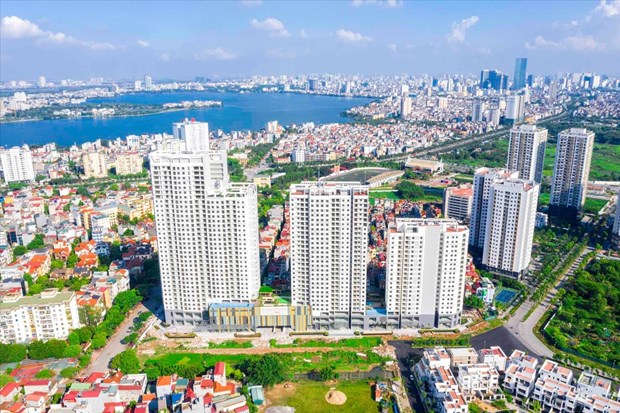
Vietnam’s real estate sector last year attracted an additional 1.85 billion USD in foreign direct investment (FDI), retaining its second place among industries drawing FDI with combined investment of 4.45 billion USD, accounting for 16.1% of the total FDI poured into the country, according to the Ministry of Construction.
FDI hoped to help realty market develop sustainably in long term ảnh 1The real estate sector was at second position in FDI attraction in Vietnam last year. (Photo: baodautu.vn)

Hanoi (VNA) – Vietnam’s real estate sector last year attracted anadditional 1.85 billion USD in foreign direct investment (FDI), retaining itssecond place among industries drawing FDI with combined investment of 4.45billion USD, accounting for 16.1% of the total FDI poured into the country,according to the Ministry of Construction.

TheMinistry of Construction said the FDI inflows in the real estate sector mainlyfocused on industrial real estate and some big projects. 

In thedifficult context of the market, FDI is a reliable source of capital fordomestic real estate enterprises, helping to promote the sustainable growth ofthe market in the long term.

TroyGriffiths, Deputy Managing Director of Savills Vietnam, said that theVietnamese realty market remains attractive to investors despite fluctuationsof the world economy.

With alarge working-age population and many attractive policies, Vietnam is stillattractive, he said, adding that the country has a property market withpositive growth, suitable for doing business and investing for a long timethanks to low risks and an inflation rate that is kept at a safe level.
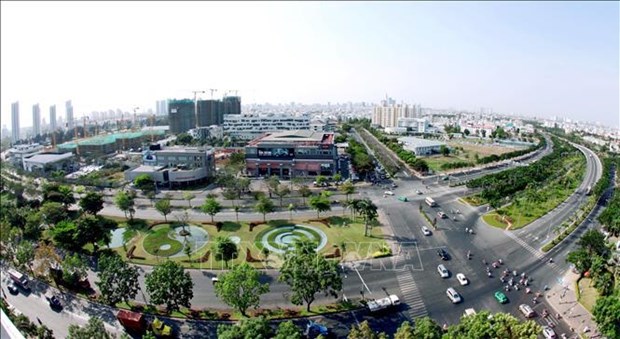
FDI hoped to help realty market develop sustainably in long term ảnh 2Phu My Hung Urban Area in Ho Chi Minh City. (Photo: VNA)

Accordingto the General Statistics Office, from the beginning of this year to January20, 2023, the total registered FDI capital in Vietnam reached 1.69 billion USD.

Thesectors related to wholesale, retail, and repair of automobiles, motorcycles,motorbikes, and motor vehicles attracted most of the sum with 651.9 millionUSD, accounting for 54.1% of the total newly registered capital. 

It wasfollowed by the processing and manufacturing industry which attracted 351.2million USD, accounting for 29.1%.

Thereal estate sector lost its second position in FDI attraction in the firstmonth of this year.

However,experts explained that the first month of this year coincided with the longLunar New Year (Tet) Festival and it was just a "warm-up" time forthe real market.

So,the FDI inflows into the real estate sector is expected to increase in thefollowing months./.

VNA

See more

Vietnamese, Chinese enterprises exchange experience at the networking and exchange programme in Da Nang city on January 13, 2026 (Photo: VNA)

Da Nang promotes logistics cooperation with Chinese businesses

With the goodwill and active engagement of partners, particularly the Chinese business community, the cooperation is expected to generate concrete and long-term opportunities, contributing to the development, deeper integration and sustainability of Da Nang’s startup and innovation ecosystem, said Le Son Phong, Deputy Director of the municipal Department of Science and Technology.

SCAVI Hue Co., Ltd. (100% invested by Financière B’Lao Group, France), specialising in garment manufacturing at Phong Dien Industrial Park in Hue. (Photo: VNA)

Business Confidence Index reaches seven-year high: EuroCham Vietnam

After several years affected by global volatility and disruptions, the Q4/2025 BCI indicates that European business sentiment in Vietnam has returned firmly to positive growth territory, surpassing levels seen prior to US tariff announcements and even before the COVID-19 pandemic. Specifically, 65% of surveyed companies assessed their current business conditions as positive in Q4/2025, with the figure rising to 69% when looking ahead to Q1/2026, suggesting that optimism is set to strengthen further as the new year begins.

Prime Minister Pham Minh Chinh chairs the 5th meeting of the Central Steering Committee on Housing Policy and the Real Estate Market in Hanoi on January 13, 2026. Photo: VNA

PM chairs meeting on housing policy, real estate market

The right to housing is a fundamental right of citizens, and housing is an essential need of every person. Housing development is an important pillar of social welfare policy, while also serving as a driving force for economic growth, labor market stability, and sustainable socio-economic development, said Prime Minister Pham Minh Chinh.

Hanoi to host Thailand Week 2026 in late January

Hanoi to host Thailand Week 2026 in late January

Visitors to Thailand Week 2026 will be able to enjoy a variety of attractive promotional programmes, lively trade promotion activities and daily lucky draws offering numerous quality Thai products.

Illustrative image (Photo: VNA)

German media group releases Vietnam outlook report 2026

The Germany-based international media group specialising in economic, financial and political coverage of emerging markets IntelliNews on January 11 published its annual Vietnam Outlook report 2026, highlighting prospects for economic growth and what problems lie in store.

PM Pham Minh Chinh speaks at the meeting (Photo: VNA)

PM pushes five strategic breakthroughs to fuel digital economy

Addressing the first meeting of the National Steering Committee on Data linked virtually with all 34 cities and provinces nationwide, PM Pham Minh Chinh, who is also head of the committee, stressed that the Party’s policies and guidelines and the State’s laws have long articulated a strategic vision for data development. He cited Resolution No. 57-NQ/TW and the recently enacted Law on Data, both of which designate data as a “new means of production” and a strategic resource that must be transformed into high-value assets.

A customer conducts transactions at the Vietnam Joint Stock Commercial Bank for Industry and Trade (VietinBank). (Photo: VNA)

Central bank aims for 15% credit growth in 2026

In 2026, monetary policy will continue to be implemented in a proactive, flexible, timely and effective manner to help stabilise the macroeconomy, keep inflation under control, support economic growth and advance the restructuring of banks under compulsory transfer.