Traditional Vietnamese theatre is being kept alive by many female artists like Nhu Huynh, Thanh Thuy and Mai Tuyet Hoa.
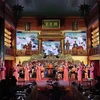
Cai luong (reformed opera) artist Huynh, one of many young talents at the Ho Chi Minh City-based Tran Huu Trang Theatre, is a pioneer putting a new spin on the form.
When the 24-year-old performs on stage, audiences are deeply moved by the cai luong songs, a traditional southern genre of theatre which originated in the Mekong River Delta after World War I.
Since her first prize at the Cai Luong Singing Contest in 2006 presented by the Ca Mau Radio and Television, Huynh has performed in more than 50 plays and dozens of TV shows viewed by thousands of audiences across the country.
Huynh has performed in prestigious cai luong troupes in Long An, Hau Giang and Tra Vinh provinces.
While she deeply respects her teachers like great stars Vu Luan and Kim Tieu Long, she doesn't want to live in their shadow.
"To develop cai luong, our young artists need to demonstrate their own personal style on stage," she said.
Singer Thuy, 37, of the Military Zone 7 Art Troupe said she pursued traditional folk music because she grew up with folk songs.
Thuy follows veterans like Hong Van and Ai Xuan who inspired millions of people when they performed folk songs on radio and TV in the 1980s and 1990s.
Thuy's albums are often on hit charts voted by HCM City Radio's FM Channel just weeks after airing.
Fans loved the song Co Gai Sai Gon Di Tai Dan (Saigonese Female Transporters) composed by Luu Nhat Vu, included on her album of traditional and folk music Tinh Ca Tren La (Love Songs), released last year.
Her songs, mostly written by musicians and songwriters such as Vu and An Thuyen, have encouraged young fans to dedicate their lives to a more noble purpose.
"I faced difficulties finding a position in the country's entertainment market. But I never gave up on my music," said Thuy.
In Hanoi, Hoa was best known for her work with her teacher, the late artist Ha Thi Cau, recognised as a "treasure" of xam art.
She has worked to bring the art to local and foreign audiences.
Hoa, with her beauty and performance skills, has attracted young people back to the old melodies of xam.
Xam is a type of Vietnamese folk music which is popular in the northern region. It dates from the Tran dynasty in the 14th century, and is generally performed by blind buskers who wander from town to town to earn their living by singing and playing instruments like the dan bau (monochord) and dan nhi (two-chord violin).
Xam artists sing about the lives of poor people.
"I hope xam will remain alive among young people," said the 38-year-old Hoa, leader of the Xam Ha Thanh Club, which offers xam by talented performers at home and abroad.-VNA
Cai luong (reformed opera) artist Huynh, one of many young talents at the Ho Chi Minh City-based Tran Huu Trang Theatre, is a pioneer putting a new spin on the form.
When the 24-year-old performs on stage, audiences are deeply moved by the cai luong songs, a traditional southern genre of theatre which originated in the Mekong River Delta after World War I.
Since her first prize at the Cai Luong Singing Contest in 2006 presented by the Ca Mau Radio and Television, Huynh has performed in more than 50 plays and dozens of TV shows viewed by thousands of audiences across the country.
Huynh has performed in prestigious cai luong troupes in Long An, Hau Giang and Tra Vinh provinces.
While she deeply respects her teachers like great stars Vu Luan and Kim Tieu Long, she doesn't want to live in their shadow.
"To develop cai luong, our young artists need to demonstrate their own personal style on stage," she said.
Singer Thuy, 37, of the Military Zone 7 Art Troupe said she pursued traditional folk music because she grew up with folk songs.
Thuy follows veterans like Hong Van and Ai Xuan who inspired millions of people when they performed folk songs on radio and TV in the 1980s and 1990s.
Thuy's albums are often on hit charts voted by HCM City Radio's FM Channel just weeks after airing.
Fans loved the song Co Gai Sai Gon Di Tai Dan (Saigonese Female Transporters) composed by Luu Nhat Vu, included on her album of traditional and folk music Tinh Ca Tren La (Love Songs), released last year.
Her songs, mostly written by musicians and songwriters such as Vu and An Thuyen, have encouraged young fans to dedicate their lives to a more noble purpose.
"I faced difficulties finding a position in the country's entertainment market. But I never gave up on my music," said Thuy.
In Hanoi, Hoa was best known for her work with her teacher, the late artist Ha Thi Cau, recognised as a "treasure" of xam art.
She has worked to bring the art to local and foreign audiences.
Hoa, with her beauty and performance skills, has attracted young people back to the old melodies of xam.
Xam is a type of Vietnamese folk music which is popular in the northern region. It dates from the Tran dynasty in the 14th century, and is generally performed by blind buskers who wander from town to town to earn their living by singing and playing instruments like the dan bau (monochord) and dan nhi (two-chord violin).
Xam artists sing about the lives of poor people.
"I hope xam will remain alive among young people," said the 38-year-old Hoa, leader of the Xam Ha Thanh Club, which offers xam by talented performers at home and abroad.-VNA