Free trade agreements give Vietnam's exports powerful boost

The utilisation rate of FTA tariff preferences remains high, with some agreements, such as the EU-Vietnam Free Trade Agreement (EVFTA), the ASEAN-India FTA, and the ASEAN-Australia-New Zealand FTA, recording rates of 30-50%.

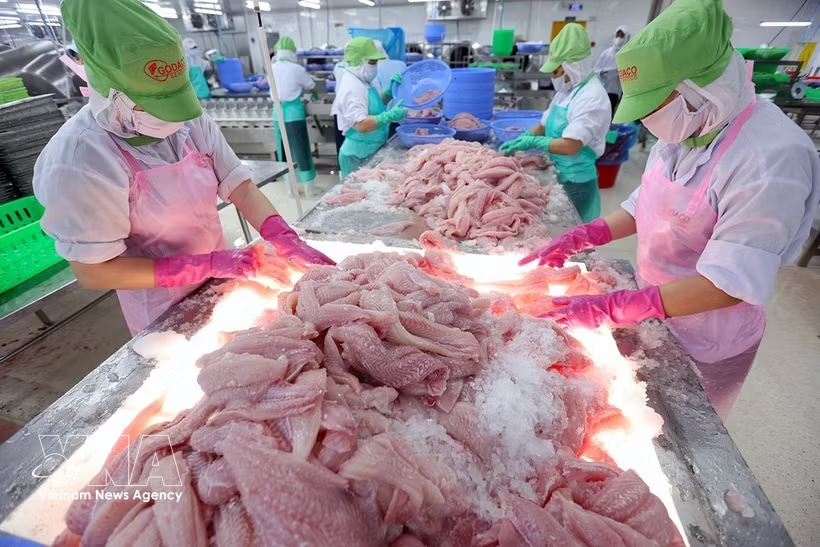
Workers sort and freeze Tra fish fillets for export at the processing plant of Go Dang JSC in former Tien Giang province (now part of Dong Thap province). (Photo: VNA)

Hanoi (VNA) – The effective use of new-generation free trade agreements (FTAs) has enabled Vietnamese businesses to expand into new markets, strengthen their competitiveness and integrate more deeply into global value chains.

According to the Ministry of Industry and Trade, as of July this year, more than 1.2 million certificates of origin (C/Os) had been issued under various FTAs, covering exports worth nearly 100 billion USD, equivalent to 28% of Vietnam's total export value.

The utilisation rate of FTA tariff preferences remains high, with some agreements, such as the EU-Vietnam Free Trade Agreement (EVFTA), the ASEAN-India FTA, and the ASEAN-Australia-New Zealand FTA, recording rates of 30-50%.

More than 383 billion USD generated in six years

Statistics from the Ministry of Finance show that total two-way trade between Vietnam and the EU from January 1995 to June 2026 surpassed 900 billion USD.

Notably, 383.8 billion USD, or 42.6% of the total, was generated during just the first six years of implementing the EVFTA from 2020 to 2026.

In the first half of this year alone, bilateral trade reached 41.4 billion USD, with Vietnam exporting 31.8 billion USD to the bloc. The country posted a record trade surplus of 22 billion USD in the period, exceeding the 21.7 billion USD surplus recorded for the whole of 2019, before the EVFTA came into force.

According to a recent survey by the European Chamber of Commerce in Vietnam (EuroCham), 50% of EU businesses operating in Vietnam reported benefiting directly from EVFTA tariff preferences, while 66% said they had reduced costs by 5-30%. Some European companies noted that more than 80% of Vietnam-EU trade now qualifies for preferential tariffs, lowering product costs by 5-15% and improving market competitiveness.

Beyond the EVFTA, many Vietnamese companies are also optimising other new-generation FTAs, including the Comprehensive and Progressive Agreement for Trans-Pacific Partnership (CPTPP), the Regional Comprehensive Economic Partnership (RCEP) and the Vietnam-Korea Free Trade Agreement (VKFTA), to diversify markets and deepen participation in global supply chains.

Huynh Minh Tuong, deputy general director of Ba Ria - Vung Tau Seafood Processing And Import-Export JSC (BASEAFOOD), said that before the Vietnam-Japan FTA took effect, part of local seafood exports was shipped to China for processing before being re-exported to Japan. With preferential tariffs now available, Vietnamese companies can process products domestically and export them directly to Japan, significantly enhancing competitiveness. As a result, BASEAFOOD's exports to Japan have increased by 30-40%.

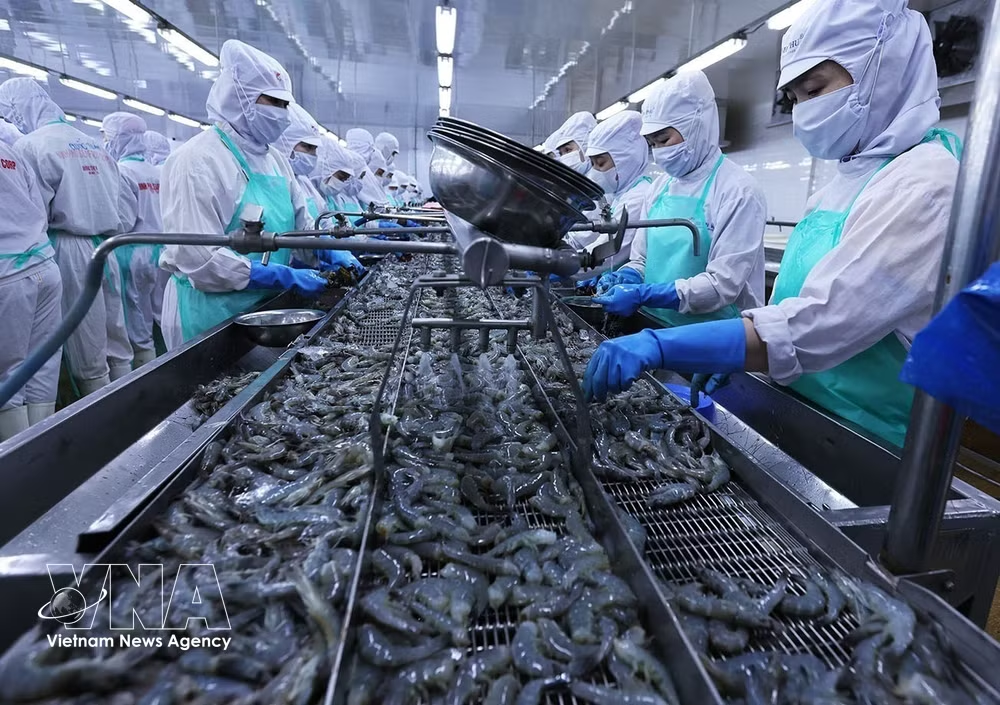
Similarly, Minh Phu Seafood Corporation has used the CPTPP to expand shrimp exports to Canada, Japan and Australia, while Vinh Hoan Corporation has increased its Tra fish market share in Canada and other CPTPP members.

Loc Troi Group has expanded rice exports to Asian markets, particularly China and ASEAN countries, by taking advantage of the CPTPP's flexible rules of origin and streamlined procedures. Vinamilk has utilised the VKFTA and ASEAN FTAs to boost dairy exports to the Republic of Korea, the Philippines, Singapore and other regional markets. Hoa Phat Group has increased steel exports across the Asia-Pacific while using regional raw materials to satisfy RCEP rules of origin. Meanwhile, Vinatex has secured more orders from Canada, Australia and New Zealand under the CPTPP and invested in an integrated fibre-weaving-dyeing supply chain to comply with origin requirements.
vnanet-fta.jpg
Many export-oriented businesses are making effective use of free trade agreements. (Photo: VNA)

Considerable untapped potential remains

Assessing Vietnam's FTA performance, Nguyen Ly Truong An, a trade expert at Long An University of Economics and Industry, said businesses' ability to utilise FTAs remains uneven.

Large enterprises with stronger management capacity, advanced technology and well-developed supply chains generally benefit more, while many small- and medium-sized ones continue to face difficulties accessing information, mobilising resources and meeting the stringent standards of export markets.

"The effectiveness of FTA utilisation depends heavily on business leaders' awareness and strategic vision," An said. "Some companies have achieved remarkable growth by proactively taking advantage of these agreements, while others have missed valuable opportunities despite having similar resources.”

FTAs are not simply about tariff reductions; they are a catalyst for them to restructure production, enhance competitiveness, and integrate more deeply into global value chains, he noted.

From a broader perspective, Associate Professor Nguyen Thuong Lang from the National Economics University’s institute of trade and international economics, said FTAs are not only a powerful driver of exports but also an important catalyst for restructuring Vietnam's economy.

According to the expert, if Vietnam fully capitalises on its FTA commitments, it will expand its development opportunities, attract higher-quality investment and become more appealing to international investors. At the same time, it will strengthen domestic production capacity and enhance the global standing of Vietnamese products.

“This is the key to creating new growth momentum at a time of intensifying international trade competition," he said./.
VNA

See more

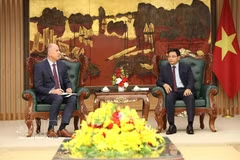
Deputy Prime Minister Nguyen Van Thang meets with Martin Sommer, head of the IMF’s Article IV consultation mission team to Vietnam, in Hanoi on November 13, 2026. (Photo: VNA)

IMF sees positive growth prospects for Vietnam, urges cautious monetary policy

Martin Sommer, head of the IMF’s Article IV consultation mission team to Vietnam, noted that inflation risks in Vietnam remain under control, but several factors could add to price pressures. He therefore called for cautious monetary policy management and readiness to respond promptly if inflationary pressures increased.

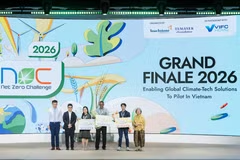
Representatives of the three first-prize-winning startups receive their awards at the event. (Photo: SGGP)

Seven green-tech startups secure 770,000 USD at Net Zero Challenge 2026

In its fourth year, the competition attracted more than 1,100 applications from 80 countries and territories, making it the most competitive edition since its launch in 2023. Nine finalists presented solutions in three categories, namely renewable energy and carbon removal; food systems and sustainable agriculture; and circular economy and waste management.

Vietnamese and Malaysian businesses connect at the event (Photo: VNA)

Vietnam, Malaysia connect businesses to boost bilateral trade cooperation

It centred on a business-to-business (B2B) matchmaking session, bringing Vietnamese and Malaysian companies together to discuss import-export needs, seek partners and explore cooperation. Vietnamese businesses aimed to connect with Malaysian importers, distributors and retailers, while expanding access for their products to Malaysia and other markets.

Visitors browse traditional Southern Vietnamese checked scarves on display at the Vietnam-Cambodia Trade Fair. (Photo: VNA)

Vietnam-Cambodia trade fair opens in An Giang

The fair features 150 booths representing 200 businesses, cooperatives, household businesses and production and trading establishments from both countries. The exhibition space is arranged into 10 zones showcasing products from Vietnamese localities and three zones featuring Cambodian products, creating opportunities for businesses from the two countries to promote their products, seek partners and expand markets.

An overview of the press conference to announce the organisation of the second Vietnam International Rice Festival - Can Tho 2026. (Photo: VNA)

Festival to chart new course for rice industry

The second Vietnam International Rice Festival - Can Tho 2026 will take place from November 22 to 25, showcasing the achievements and potential of Vietnam’s rice industry while promoting Can Tho’s image, cultural identity and people, as well as the distinctive river culture of the Mekong Delta.

Japanese business representatives review Ho Chi Minh City’s investment project portfolio at the conference. (Photo: VNA)

Vietnam remains attractive destination for Japanese businesses

Fukai Akihiko, President and Representative Director at Gunma Bank and head of a business delegation from Japan’s Gunma prefecture, said cooperation between Gunma and Vietnam has continued to expand in recent years. Around 15,000 Vietnamese people currently live in Gunma, forming the largest foreign community in the prefecture.

A panoramic view of the site designated for the Ninh Thuan 1 nuclear power plant in Phuoc Dinh commune, Khanh Hoa province. (Photo published by VNA)

Vietnam to access MBIR reactor research capabilities, gradually master nuclear technology

As Vietnam develops its nuclear science and technology and prepares the necessary conditions in terms of human resources, research capacity, safety systems and technical infrastructure, participation in international research programmes and access to MBIR will enable the country to conduct experiments supporting its programme for the peaceful use of atomic energy.

Illustrative image (Photo: chinhphu.vn)

State secret list for financial sector issued

Top secret items include detailed submissions, reports, proposals, explanatory documents, and data concerning state financial and budgetary policies presented to the Party Central Committee, the Politburo, the National Assembly, the National Assembly Standing Committee, or the Government in the event of an emergency related to national defence, national security, social order and safety, or a war for the defence of the Fatherland.

At the 2026 Vietnam Food Forum (Photo: VNA)

Vietnamese food exporters see EU as major market amid stricter standards

The EU–Vietnam Free Trade Agreement (EVFTA) tariff cuts are opening doors. But the EU is also a market with a strict and frequently updated system of standards and regulations, especially in food safety, quarantine, traceability, environmental protection and sustainable development.