Garment sector needs modern technology to keep up with global trends

Vietnam's textile and garment sector needs advanced technology to keep pace with global trends and to expand export markets, Trade Counsellor of the Republic of Korea in Vietnam Kim Eu Joong has said.
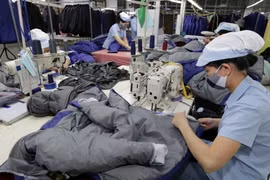
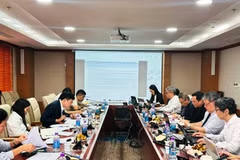
Garment sector needs modern technology to keep up with global trends ảnh 1Delegates to the seminar themed “Better production with digital help in garment and textile sector” (Photo: VietnamPlus)

Hanoi (VNA) – The Vietnamese textile and garment sector needs advanced technology to keep pace with global trends and to expand export markets, Trade Counsellor of the Republic of Korea (RoK) in Vietnam Kim Eu Joong has said.

Kim made the statement at a seminar in Hanoi on July 9 on digital technology in the garment and textile sector. Held by the Vietnam Textile and Apparel Association (VITAS) and the Korea Institute of Industrial Technology (KITECH), the seminar aimed to introduce advanced technology in the sector and share knowledge between Vietnam and the RoK as well as Asian countries, thus fostering their cooperation in the industry.

The trade counsellor advised the Vietnamese Government to invest in high technology for production, saying that his country, with its system of technical research institutes, can provide technical assistance for Vietnam.

He added that the European Union–Vietnam Free Trade Agreement (EVFTA), once coming into effect, will open up opportunities for the Vietnamese garment and textile sector, especially in increasing export turnover.

Truong Van Cam, VITAS Vice President, said trade cooperation between Vietnam and the Republic of Korea has developed rapidly over the past years.

In 2018, Vietnam enjoyed a trade surplus of more than 29 billion USD with the East Asian country. In the garment and textile sector, the latter is Vietnam’s largest investor with 4.7 billion USD, accounting for a quarter of the total investment.

He hailed the results of the annual training programme run by the Vietnam Textile and Apparel Association and the Korea Institute of Industrial Technology to increase competitiveness for garment and textile enterprises and share experience in digital transition.

Garment sector needs modern technology to keep up with global trends ảnh 2Vietnam enjoys trade surplus of more than 29 billion USD with the Republic of Korea in 2018 (Photo: VietnamPlus)
 

According to experts, the Fourth Industrial Revolution and popular applications of automation, Internet of Things, big data and artificial intelligence have created both challenges and opportunities for the apparel sector.

Automation technology has resulted in a reduction in the number of direct labourers, while data connection will help promote green production, saving natural resources and reducing inventory.

3D printing technology allows the production of products suitable to each consumer, satisfying the demand of users.

Higher labour productivity will help improve incomes for workers, helping the sector make breakthroughs, while enterprises can take the initiative in mapping out strategies to bring into full play opportunities and reduce challenges of the Fourth Industrial Revolution.

According to the Vietnam Textile and Apparel Association, the textile and garment industry earned approximately 18 billion USD from exports in the first half of 2019, up 8.61 percent year on year. The figure includes 14.02 billion USD worth of clothing and 1.02 billion USD worth of fabrics, up 8.71 percent and 29.9 percent, respectively.

The US remained the biggest buyer at 7.22 billion USD worth of textile and garment products, up 12.84 percent from a year earlier. It was followed by member states of the Comprehensive and Progressive Agreement for Trans-Pacific Partnership (CPTPP) (2.57 billion USD, up 11.13 percent), the EU (2.05 billion USD, up 10.46 percent), and the Republic of Korea (1.37 percent, up 5.59 percent).

In 2018, the textile and garment sector posted year-on-year export growth of more than 16 percent to surpass 36 billion USD, making Vietnam the world’s third biggest exporter of these products, after China and India. Based on these figures, the Vietnam Textile and Apparel Association believes the sector’s export target of 40 billion USD for 2019 is achievable.-VNA


VNA

See more

Vietjet Air’s Airbus A330 taxis at Vaclav Havel Airport in Prague, the Czech Republic. (Photo: VNA)

Vietnam’s airlines expand international networks

The Civil Aviation Authority of Vietnam forecasts that the country’s aviation market will handle 94 million passengers and more than 1.6 million tonnes of cargo in 2026, up 13% and 9.3%, respectively, from 2025.

A representative of Sumika Electronic Materials Vietnam (VSIP Bac Ninh Industrial Park, Tu Son Ward) briefs the delegation from Customs Sub-department Region V on the company's operations. (Photo: báo bắc ninh)

Bac Ninh customs facilitates clearance to boost exports

Pham Chi Thanh, head of Customs Sub-Department Region V, said the unit is focusing resources on developing a digital customs model and streamlining professional procedures to shorten clearance times and reduce costs for businesses while maintaining effective state management.

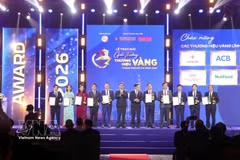
At the sixth Golden Brand Awards 2026 ceremony (Photo: VNA)

Ho Chi Minh City honours top 50 brands for 2026

The awards aim to recognise brands that can lead their industries, drive innovation and create a ripple effect across the business community, lifting the city’s standing in a new growth stage.

Luxury apartment projects in downtown Ho Chi Minh City (Photo: VNA)

Ho Chi Minh City's housing market sees price stabilisation, sharper buyer segmentation

According to Avison Young Vietnam, improved planning and infrastructure development have helped ease market uncertainty and prevented a complete freeze. More than 25,000 apartments are expected to enter the market in multiple launches between 2027 and 2030, with many projects scheduled to benefit from infrastructure improvements around 2030.

Vietnamese Deputy Minister of Industry and Trade Phan Thi Thang speaks at the forum (Photo: VNA)

Vietnam, Georgia look to more business opportunities

For Vietnamese firms, Georgia can serve as a gateway to broader regional markets, given its strategic location connecting the South Caucasus, Central Asia and China with European markets via the Black Sea.

Chairman of the Vietnamese Business Association in Laos (AVILA) Duong Dinh Bang (Photo: VNA)

PM’s visit injects fresh momentum into Vietnam-Laos special relations

At the 2026 Laos-Vietnam Investment Promotion Conference in Vientiane, the two PMs held direct dialogue with businesses and investors from both countries, affirming their determination to address bottlenecks in institutional frameworks, administrative procedures, transport infrastructure and payment connectivity. The goal of these efforts is to boost bilateral trade to 10 billion USD by 2030.

Deputy Secretary of the An Giang provincial Party Committee and Secretary of the Party Committee of the Phu Quoc special zone Dinh Van Noi speaks at the dialogue (Photo: baoangiang.com)

Phu Quoc moves to resolve infrastructure bottlenecks ahead of APEC 2027

Deputy Secretary of the An Giang provincial Party Committee and Secretary of the Party Committee of the Phu Quoc special zone Dinh Van Noi said an official information portal will be launched to receive public feedback, while hotlines for local leaders will allow businesses and residents to raise concerns directly.

Deputy Minister of Industry and Trade Phan Thi Thang at the forum. (Photo: VNA)

Vietnamese firms explore investment opportunities in Georgia

Priority areas with great cooperation potential include manufacturing, logistics infrastructure, renewable energy, tourism, hospitality, information and communications technology (ICT), and business process outsourcing (BPO), said a Georgian official.