HCM City maintains stable economic growth
Socio-economic development in Ho Chi Minh City in the past nine months continues to progress across fields, as reported at a regular conference in the southern hub on September 24.
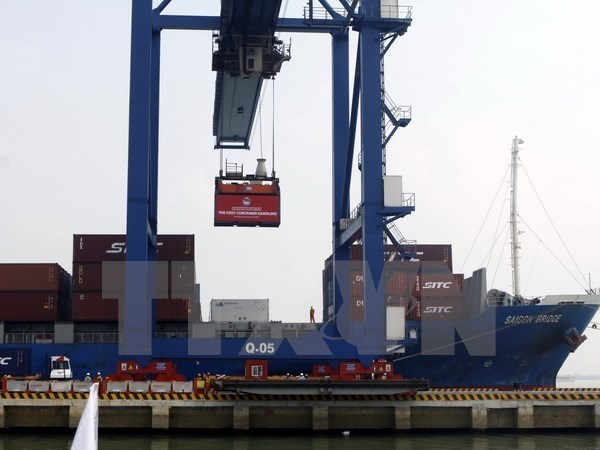 Hiep Phuoc port in Ho Chi Minh City (Photo: VNA)
According to the municipal People’s Committee, the gross domestic product (GDP) was estimated at nearly 650 trillion VND (28.6 billion USD), an annual rise of 9.1 percent.
Services accounted for 59.7 percent of GDP (up 10.3 percent) while industry and construction made up 39.9 percent (up 7.5 percent) and agriculture 1 percent (up 5.9 percent).
Retail and service revenue totalled more than 493 trillion VND (21.7 billion USD), an annual rise of 11 percent, and export turnover reached over 22.4 billion USD, down 5.9 percent over the same period last year due to the dwindling value of crude oil.
Exports to major markets such as the US, Japan, the EU, Australia, Singapore, and Russia have expanded, reducing dependence on China.
Since the beginning of this year, the city has welcomed 3.2 million international tourist arrivals, an annual rise of 5 percent and fulfilling 68 percent of the yearly target. The sector grossed over 69 trillion VND (3.03 billion USD) in revenue, up 6 percent yearly.
The industry recorded 11.85 percent annual growth thanks to the expanded industrial production scale and the move to increase the proportion of processing and manufacturing industry while reducing the ratio of mining industry.
As of September 21, local authorities had granted new investment licenses to 404 projects worth 2.36 billion USD, up 29.9 percent in the number of projects and 2.1 times in terms of capital.
Additionally, 108 existing projects increased their investment capital to 640.7 million USD.
According to the municipal Department of Finance, the city collected over 200 trillion VND (8.8 billion USD) to the State budget, up 5.49 percent over the same period last year.
Chairman of the municipal People’s Committee Le Hoang Quan attributed the outcomes to the effective implementation of measures to improve the local business climate, curb inflation and overcome capital obstacles for enterprises.
He underlined stable economic development as a top priority for the city in the remaining months of this year.
He called on relevant departments and sectors to work closely with the State Bank of Vietnam to help businesses develop operations and expand markets, while prioritising infrastructure, inundation prevention and clean water supply projects.
The city will also concentrate on expediting planning, environmental protection and climate change adaptation projects while more effectively implementing social welfare policies, he noted.-VNA




You should also see

InfographicVietnam tops Asia-Pacific in workplace wellness
Workplace well-being is on an "upward trajectory" throughout Asia-Pacific, with Vietnam leading the region (65.09), according to a recent study by Asia's largest mental health care company Intellect.



See more
 Business
High airfares create chance for short-distance trips for Reunification Day holiday
Due to a hike of air ticket prices for domestic flights, Vietnamese tourists are turning to short-distance trips for the upcoming National Reunification Day (April 30) and May Day (May 1) holidays.
 Business
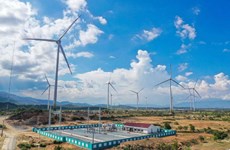
Phu Yen, Ninh Thuan attractive to energy project developers
The south-central coastal provinces of Phu Yen and Ninh Thuan have become attractive destinations for investors operating in the energy industry thanks to great potential for renewable energy development.
 Business
Petrovietnam posts 9-billion-USD revenue in Q1
The Vietnam National Oil and Gas Group (Petrovietnam) saw total estimated revenue of 231 trillion VND (9 billion USD) from production and business activities in the first quarter of 2024, exceeding the set quarterly plan by 33% and up 19% year-on-year, head a conference held by the group recently.
 Business
Forum seeks to increase PPP investment effectiveness
Investment cooperation in the public-private partnership (PPP) form is seen as a strategic option to mobilise private investment and improve public service delivery. However, the implementation of PPP projects in Vietnam still faces a lot of difficulties and obstacles, leading to a low number of successful projects and making the private economic sector cautious.
 Business
Remittance inflows expected to quench real estate sector’s thirst for capital: Experts
Amid a “thirst” for capital of real estate businesses, the strong inflow of remittances is expected to heat up the market again, held insiders.
