Herbal medicine industry remains largely underdeveloped

The herbal medicine industry remained largely untapped despite Vietnam’s many favourable conditions, said industry experts and policymakers.
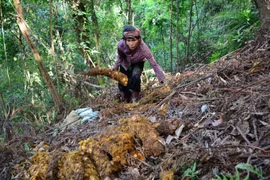
Herbal medicine industry remains largely underdeveloped ảnh 1Locals tend to a herbal medicine farm in the northern province of Ha Giang. (Photo: VNA)
Hanoi (VNS/VNA) - The herbal medicine industryremained largely untapped despite Vietnam’s many favourable conditions, said industryexperts and policymakers.

According to Prof Pham Vu Khanh, former head of the traditional medicinedepartment under the Ministry of Health, close to a third of all flora in thecountry or 4,000 plant species could be used for medicine yet the country stillhad to import as much as 50,000 tonnes of medicinal herbs every year (80-85 percent of medicinal herbs used).

For example, 300-400 tonnes of herbs were imported through the Chi MaInternational Border Gate in the northern province of Lang Son alone. Importedherbs typically fell under two categories: natural-grown andagriculture-cultivated with the majority being the latter.

Cultivated herbs were often affordable but varying in quality and in manyinstances, neither safe nor suitable for use in medicine production. 

Dr Phan Thuy Hien, deputy head of the National Institute of Medical Substances,said the underlying causes of Vietnamese medicinal herbs losing on home turfwere lack of economies of scale, poor transport infrastructure and labour-intensiveproduction methods, which all contributed to high prices compared tocompetitors. 

Except for a handful number of cooperatives that have successfully implementedworking production models, the vast majority of production centres were smallin size and lack both the ability and the will to employ rigid quality control.Furthermore, it's often difficult for local communities to connect withpharmaceutical companies and vice versa. 

The Red River Delta traditionally has been a major production centre ofmedicinal herbs with the Central Highlands in recent years catching up quicklythanks to its suitable soil and experienced farmers.

According to Prof Le Van Truyen, a former health deputy minister, there was along documented history of traditional medicine in the country. Along withmodern medicine, herbal medicine has been playing an important part in thehealth sector. 

Herbal medicine also serves another purpose which is bolstering patients'health foundation on top of providing key nutrients, according to Prof Tran VanOn, head of the flora study department of the Hanoi University of Pharmacy.

On said it required a concrete and well-coordinated effort by multipleministries and agencies to help develop the industry.

"We have many policies and lofty objectives yet too few protocols for realstudies and practices," he said.

"Even now we still do not have an official long-term development plan forthe industry," he added.

On said it's difficult to produce medicinal herbs, even those that are nativeand strong in Vietnam if the country continued to rely on imports. 

He urged the central government to start the establishment of a supply chainand the implementation of support policies for domestic-grown products. Inaddition, the Ministry of Health must step up efforts to filter out low-qualityherbs and those of dubious origin and invest more in upgrades to traditionalmedicine centres across the country./.
VNA

See more

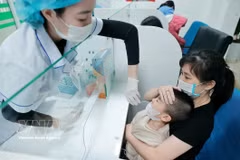
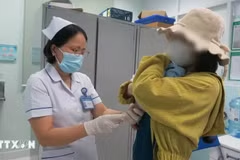
Collecting a sample from a pediatric patient for influenza testing (Photo: VNA)

Ho Chi Minh City acute respiratory infections surge over 64%

According to the Ho Chi Minh City Centre for Disease Control (HCDC), influenza viruses are are among the fastest-rising pathogens, with 151 positive samples in a single week. Influenza A is the dominant strain, with A/H1N1pdm09 in 116 samples, or nearly 77%.

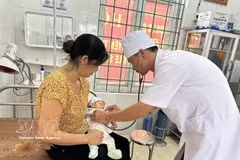
A doctor at Trung Nguyen Medical Station in Te Lo commune, Phu Tho province, examines a child patient. (Photo: VNA)

Phu Tho builds hospital culture to improve patient satisfaction

In recent years, alongside efforts to improve the quality of medical examinations and treatment, Phu Tho province’s health sector has focused on creating civilised, friendly hospital environments and strengthening healthcare workers’ sense of responsibility and service-oriented attitudes, with the aim of earning patients’ trust and satisfaction.

An overview of the meeting between Deputy Prime Minister Pham Thi Thanh Tra and César Louis-Philip Marseille, Managing Director of VAMED Engineering GmbH of Austria and member of the Board of Directors of VAMED+WWH Group of Germany,in Hanoi on October 7. (Photo: VNA)

Deputy PM suggests studying long-term development of hospital ship model

Vietnam is one of VAMED’s important partners in Southeast Asia. The group plans to invest 1.2 billion EUR in Vietnam over the next five years, creating jobs for thousands of workers and promoting knowledge and technology transfer. It also wishes to expand cooperation through preferential credit projects, public-private partnerships (PPPs) and partnerships with private enterprises; and supply medical products from Austria and Germany for Vietnamese partners.

The Son Tra regional medical centre (Photo: benhviensontra.com.vn)

Da Nang: Satellite hospitals prove effective at grassroots level

The model is an important component of the roadmap to turn Da Nang into a specialised medical centre for the central and Central Highlands regions, with a number of key specialties, in line with the spirit of Politburo Resolution No. 72-NQ/TW dated September 9, 2025, on breakthrough solutions to strengthen the protection, care and improvement of people's health.

Illustrative image (Photo: daibieunhandan.vn)

Ho Chi Minh City digitises 99.4% of hospital records

As of July 2026, 163 of the city's 164 hospitals, or 99.4%, adopted electronic medical records, the report said. About 64% of public hospitals and 65% of private hospitals now run the technology across their entire operations

Yersin International Clinic in Ho Chi Minh City. (Photo: VNA)

Ho Chi Minh City eyes more foreign medical tourists

Director of the municipal Department of Health Tang Chi Thuong said a key prerequisite for attracting foreign patients is a strategy to develop centres of medical excellence. He proposed selecting hospitals and specialties with strong expertise for investment towards international standards, particularly in competitive fields such as cardiology, oncology, robotic surgery, assisted reproduction, paediatrics, dentistry, cosmetic medicine, specialised health check-ups, traditional medicine and rehabilitation.

A nurse from Children's Hospital No. 1, Ho Chi Minh City, collects a blood sample for HIV testing from an infant. (Illustrative photo: VNA)

Health cooperation adds fresh momentum to Vietnam-US relations

Through this MOU, the US Department of State, working with Congress, plans to provide 98.75 million USD in life-saving global health assistance over the next five years, including 21.385 million USD in dedicated Global Health Security funding, to support Vietnam’s transition to full country ownership of its HIV/AIDS and tuberculosis programmes while strengthening its capacity to detect and respond to emerging and re-emerging infectious disease threats.

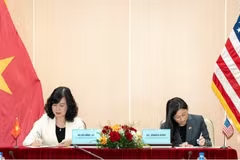
Minister of Health Dao Hong Lan and US Ambassador to Vietnam Jennifer McNamara Wick sign the memorandum of understanding on health cooperation. (Photo: US Embassy in Vietnam)

Vietnam, US launch five-year health cooperation

The cooperation will also support Vietnam in strengthening its healthcare capacity and gradually enhancing self-reliance in HIV/AIDS and tuberculosis prevention and control programmes, as well as in responding to emerging and re-emerging infectious diseases.

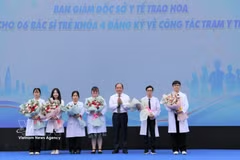
Director of the Ho Chi Minh City Department of Health Tang Chi Thuong (third, right) presents flowers to congratulate six young doctors who have volunteered to work at grassroots-level health stations (Photo: VNA)

Ho Chi Minh City strengthens grassroots healthcare workforce

Ho Chi Minh City's Department of Health on September 10 reviewed a pilot programme combining hospital-based practice with work at grassroots health stations and organised the fourth healthcare job fair, attracting nearly 1,000 candidates and 94 recruiters offering 806 positions.