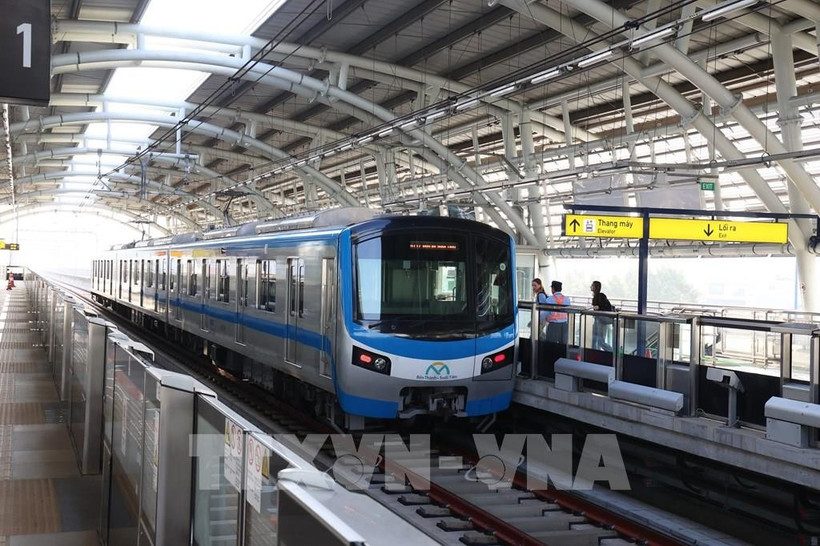
Ho Chi Minh City aims to complete metro links to Long Thanh airport by 2030

By 2030, HCM City targets completion of three key routes: Metro Line 2’s Tham Luong–Ben Thanh and Ben Thanh–Thu Thiem sections, plus the Thu Thiem–Long Thanh urban railway.

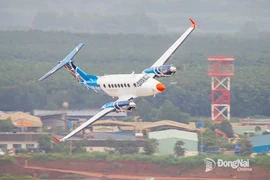
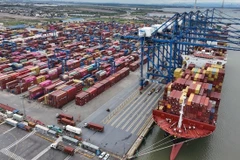
Illustrative image (Photo: VNA)

HCM City (VNA) - As the Dong Nai-based Long Thanh International Airport is set to open in 2026, Ho Chi Minh City has proposed an integrated metro network that would form a seamless transit corridor linking the new hub with its Tan Son Nhat International Airport.

The municipal Department of Construction said priority projects for 2026-2030 and through 2035 are being finalised with a focus on connectivity and urban expansion. By 2030, the city targets completion of three key routes: Metro Line 2’s Tham Luong–Ben Thanh and Ben Thanh–Thu Thiem sections, plus the Thu Thiem–Long Thanh urban railway.

For the Ben Thanh – Tham Luong route, the municipal People’s Committee issued a plan directing relevant agencies and investors to accelerate appraisal and submit adjustments for approval so that construction can start before January 19, 2026.

It is also advocating for the inclusion of the Thu Thiem–Long Thanh route in the list of projects under Resolution 188, which grants pilot special policies and mechanisms for metro development in Hanoi and Ho Chi Minh City. Both projects aim for early groundbreaking and completion by 2030.

The Department of Construction noted that major hurdles remain, including land clearance, funding mobilisation, technology transfer, and railway industry development.

Transit-oriented development (TOD) along metro corridors will also require tight coordination among urban planning, transport and finance authorities, and investors. With TOD still new to the city, officials are studying global models while launching pilot zones.

To accelerate progress, the city is making full use of the special mechanisms provided under Resolution 188 and the Railway Law to slash preparatory timelines. It is reviewing and updating TOD planning around stations and depots, with priority given to the Ben Thanh – Suoi Tien and Ben Thanh – Tham Luong lines.

It is also finalising a capital raising plan for the metro network, expanding training courses to cultivate a skilled railway workforce, and reviewing land reserves to submit to the municipal People’s Council for approval as counterpart assets for PPP projects, particularly BT contracts.

Earlier on October 29, the Prime Minister approved adjustments to the national master plan on railway network for 2021–2030, with a vision to 2050, reclassifying the Thu Thiem–Long Thanh line from national railway to urban rail line and handing full planning authority to Ho Chi Minh City and Dong Nai province./.
VNA

See more

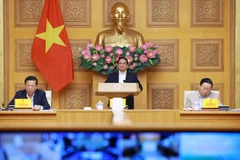
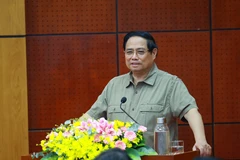
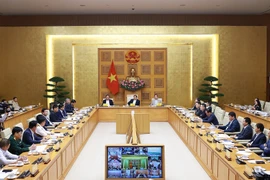
Prime Minister Pham Minh Chinh speaks at the 22nd meeting of the State steering committee for national key projects in the transport sector (Photo: VNA)

PM urges swift actions for ground-breaking, inauguration of key projects by Dec. 19

PM Chinh on December 9 requested ministries, sectors, localities, and relevant parties to continue working tirelessly to complete and open for technical traffic 3,188 km of expressways and 1,700 km of coastal roads, and ensure the commencement of technical flight operations at Long Thanh International Airport in the southern province of Dong Nai by December 19.

Illustrative photo (Photo: VNA)

Vietnam, RoK strengthen cooperation on trade remedies

Currently, both the RoK and Vietnam are each applying four trade-remedy measures on goods imported from the other. In particular, the RoK side called on Vietnam to exercise caution in its application of anti-dumping measures on four steel products from the RoK.

Residents of Ho Chi Minh City shop for essential consumer goods. (Photo: VNA)

HCM City projects strong 8% growth for 2025

The city’s total GRDP value for 2025 is estimated at 2.74 quadrillion VND (103.93 billion USD), accounting for 23.5% of national GDP. GRDP per capita is projected to reach 8,066 USD. Foreign direct investment inflows are expected to total 8.16 billion USD, representing a 21.1% increase year-on-year.

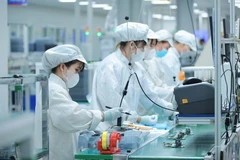
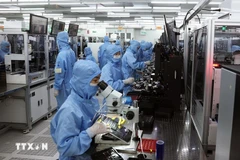
Vietnam implements a strategy to develop high-quality human resources for the semiconductor industry. (Photo: VNA)

Vietnam’s semiconductor surge underscores mounting demand for skilled engineers

Current estimates show around 7,000 engineers working in IC design, another 7,000–8,000 in packaging, testing, materials and semiconductor equipment, and about 10,000 technicians across packaging, testing and materials manufacturing. Together with more than 100 overseas Vietnamese experts engaged through the National Innovation Network, Vietnam’s semiconductor workforce totals around 15,000.

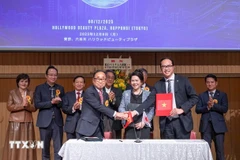
Representatives of VJBA and Ushiyama Sewing Academy sign a cooperation agreement at the event (Photo: VNA)

Vietnam, Japan seek to step up borderless business cooperation

Minister-Counsellor and Chargé d'Affaires at the Vietnamese Embassy in Japan Nguyen Sau stressed that as Vietnam is undergoing a period of strong transformation, Vietnamese enterprises in Japan serve as a pioneering force and a crucial bridge deepening the linkage between the two economies.

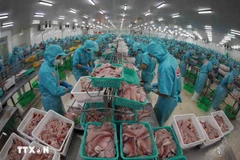
Sorting and packaging Luc Ngan lychee for export (Photo: VNA)

Bac Ninh has over 770 OCOP products rated 3 stars or higher

The northern province of Bac Ninh plans to intensify efforts to support the development of intellectual property for key products, especially OCOP (One Commune One Product) items, in order to increase the value of local agricultural and handicraft products by 2030.

Foreign investment inflows in the first 11 months of 2025 remained positive, with nearly 33.7 billion USD in newly registered capital and 23.6 billion USD in disbursed capital – the highest in five years. (Photo: VNA)

Rising FDI strengthens Vietnam’s position among emerging IFM markets

According to the National Statistics Office of Vietnam, foreign investment inflows in the first 11 months of 2025 remained positive, with nearly 33.7 billion USD in newly registered capital and 23.6 billion USD in disbursed capital – the highest in five years. These inflows are creating a solid foundation for growing demand for IFM services across factories, logistics centres and office buildings, particularly as foreign investors continue to expand production in Vietnam.