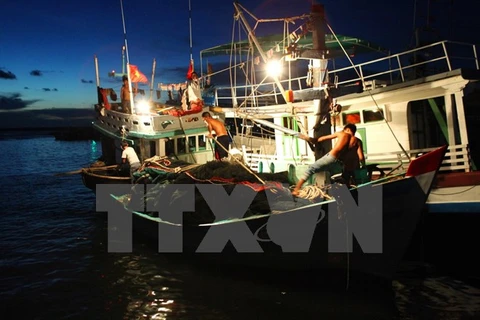
A corner of Ha Tien town, Kien Giang province (Source: VNA)
 Kien Giang (VNA) – The Mekong Delta province of Kien Giang earned 170 million USD from exports in the first six months of this year, accounting for 42 percent of the annual target and up 2.6 percent from the same period last year, reported the provincial Department of Industry and Trade.
The growth was buoyed by increases in the exports of frozen fish (up 30 percent), frozen squid and octopus (up 30.5 percent) and frozen shrimps (up 14 percent) thanks to the growing demands in traditional markets, namely Japan, the Republic of Korea and the European Union.
The export of other products, including instant noodle, canned fish and cooking oil, to Cambodia also enjoyed a growth rate of 31 percent as compared to the same period last year.
Many local exporters have taken the initiative in seeking foreign partners and stepped up the application of technology to better meet product quality requirements of import markets.
Trade and investment promotion activities have been organised both at home and abroad, while local enterprises have been supported to join domestic and overseas trade fairs, such as Australia Day, THAIEX in Thailand, Vietnam-Israel Business Forum in Ho Chi Minh City, and the International Agricultural Festival of the Mekong Delta 2017 in Can Tho city.
In the remaining months of this year, Kien Giang will continue implementing comprehensive measures to boost exports, in a bid to surpass the year’s target by 400 million USD.
Chairman of the provincial People’s Committee Pham Vu Hong said trade promotion activities will be increased, particularly in traditional markets while seeking new potential markets for its products.
More investment will be put in key production areas in order to produce clean and high- quality agricultural products, particularly rice and shrimps to ensure sufficient supply for processing and export.
Financial assistance will be offered to needy local exporters so that they can apply technologies in processing to increase added values of products with high competitiveness.
The province will also ensure material supply for processing, human resources and preferential loans to promote exports during the upcoming Christmas season and New Year and lunar New Year festivals.-VNA
The growth was buoyed by increases in the exports of frozen fish (up 30 percent), frozen squid and octopus (up 30.5 percent) and frozen shrimps (up 14 percent) thanks to the growing demands in traditional markets, namely Japan, the Republic of Korea and the European Union.
The export of other products, including instant noodle, canned fish and cooking oil, to Cambodia also enjoyed a growth rate of 31 percent as compared to the same period last year.
Many local exporters have taken the initiative in seeking foreign partners and stepped up the application of technology to better meet product quality requirements of import markets.
Trade and investment promotion activities have been organised both at home and abroad, while local enterprises have been supported to join domestic and overseas trade fairs, such as Australia Day, THAIEX in Thailand, Vietnam-Israel Business Forum in Ho Chi Minh City, and the International Agricultural Festival of the Mekong Delta 2017 in Can Tho city.
In the remaining months of this year, Kien Giang will continue implementing comprehensive measures to boost exports, in a bid to surpass the year’s target by 400 million USD.
Chairman of the provincial People’s Committee Pham Vu Hong said trade promotion activities will be increased, particularly in traditional markets while seeking new potential markets for its products.
More investment will be put in key production areas in order to produce clean and high- quality agricultural products, particularly rice and shrimps to ensure sufficient supply for processing and export.
Financial assistance will be offered to needy local exporters so that they can apply technologies in processing to increase added values of products with high competitiveness.
The province will also ensure material supply for processing, human resources and preferential loans to promote exports during the upcoming Christmas season and New Year and lunar New Year festivals.-VNA
VNA