Hanoi (VNA) - Achieving the goal of constructing at least one million social housing units by 2030 will require the active involvement of the entire political system and strong commitment from local authorities, according to officials from the Ministry of Construction.
Ha Quang Hung, Deputy Director of Department Housing Management and Real Estate Market under the Ministry of Construction, emphasised that realising this target demands significant effort from localities. However, some provinces and cities have yet to fully prioritise social housing, often failing to include development targets in their annual or five-year socio-economic plans.
As of the first nine months of 2025, a total of 73 new social housing projects covering 57,815 units have been launched nationwide, bringing the total number of units under construction to 132,616. Localities have completed 50,687 of the 100,275 units initially assigned, achieving 50.5% of their targets. By the end of 2025, an additional 38,600 units are expected to be completed, bringing the total to 89,007 units, or 89% of the goal.
Since the launch of the social housing investment scheme for 2021–2030, 696 projects have been implemented nationwide, totalling 637,048 units, 60% of the overall target. Among these, 165 projects with 116,342 units have been completed, 151 projects with 132,616 units are under construction, and 380 projects covering 388,090 units have received investment approval.
Currently, 16 out of 34 provinces are on track to meet the targets set by the Prime Minister. Another eight provinces are close to completion, lacking only 200–300 units. The Ministry of Construction has been coordinating with local authorities to accelerate progress and meet assigned targets.
Challenges in local implementation
Hung pointed out that many localities have yet to prioritise social housing in development plans or allocate local budgets for compensation, resettlement, and technical infrastructure necessary for clean land preparation. While sufficient land has been designated for social housing, its quality remains an issue. Many plots are poorly located, far from urban centres, and lack adequate infrastructure, delaying project implementation.
The 2023 Housing Law has also led some developers to propose cash payments instead of allocating land for social housing, reducing the available land supply. In addition, some projects have started construction but are progressing slowly, and disbursement from the 120,000-billion-VND credit programme remains low.
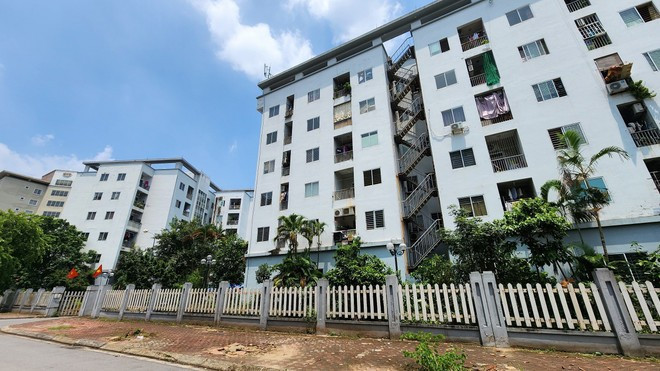
Recent apparatus restructuring and administrative unit mergers have led to leadership changes in many localities, causing occasional gaps in guidance and management. Additionally, some social housing projects lag due to developers lacking financial capacity or experience, while others have slowed construction to reassess local demand outside former provincial centres.
Regarding the 120,000-billion-VND credit package for social housing, Hung explained that there are two main funding sources: the Vietnam Bank for Social Policies, offering loans to homebuyers at 5.4% interest, and commercial banks providing loans to both developers and individual buyers. Conditions are straightforward: individual buyers need only a purchase contract, while developers must be recognised as project owners and meet banking credit requirements.
The State Bank has instructed commercial banks to reduce costs and apply digital technology in loan management to lower interest rates and make capital more accessible.

Ha Quang Hung, Deputy Director of Department Housing Management and Real Estate Market under the Ministry of Construction (Photo: VietnamPlus)
Hung noted that developers who execute projects efficiently rely less on loans, as social housing is exempt from land use fees. With 15–20% equity required from developers and the ability to sell homes after completing foundations, projects can generate cash flow from buyers themselves.
Hung stressed that despite various measures, the success of the one-million-unit social housing scheme hinges on local political leadership. Provinces where leaders are committed are far more likely to achieve their targets.
Directive No. 34-CT/TW, issued on 24 May 2024, requires that social housing targets be incorporated into provincial Party Congress agendas. Hung noted that with the engagement of the entire political system, Vietnam is expected to reach its goal of at least one million social housing units by 2030./.