Malaysia allows 11 business sectors to reopen

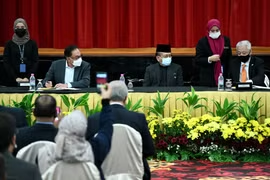
Malaysian Prime Minister Ismail Sabri Yaakob said on September 14 that more economic sectors will be allowed to reopen as the COVID-19 lockdown is no longer feasible amid fears that it can have more negative implications.
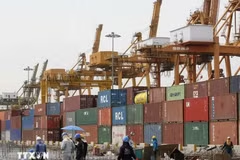
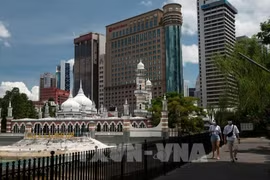
Malaysia allows 11 business sectors to reopen ảnh 1The reopening of the sectors would give the people of Malaysia the opportunity to improve their livelihoods. (Photo: Reuters)
Kuala Lumpur (VNA) - Malaysian Prime Minister Ismail Sabri Yaakob said on September 14 that more economic sectors will be allowed to reopen as the COVID-19 lockdown is no longer feasible amid fears that it can have more negative implications.

"The reopening of 11 economic sectors in states under phase one of the National Recovery Plan was appropriate due to the high vaccination rates in the states," he said.

Those eligible for reopening are car wash services; electronics supermarkets; homeware and kitchenware stores; furniture stores; sporting goods stores; car accessories stores; automobile sales and distribution centres; morning markets and farm produce markets; clothing, fashion and accessory stores; goldsmith shops; barbers; as well as beauty centres and hair salons.

The PM said the reopening of the sectors would not only help speed up economic recovery but also give the people the opportunity to improve their livelihoods.

"The government made the decision after taking into consideration data from the risk assessments conducted by the Health Ministry and the Domestic Trade and Consumer Affairs Ministry," he said.

He also said that 74.7 percent of Malaysia's adult population has been fully vaccinated, while 91.6 percent has received at least the first dose of the COVID-19 vaccine.

The leader noted that these sectors must comply with strict regulations and requirements such as mandatory wearing of masks in public places and presenting a certificate of vaccination for 14 days./.
VNA
See more

Indonesia designates 31 mln ha of waters as conservation areas

Indonesia designates 31 mln ha of waters as conservation areas

Head of the Convention and Marine Resource Balance working team at the ministry’s Directorate of Ecosystem Conservation Ahmad Sofiullah said this week that it is a strategic effort to ensure the sustainability of Indonesia’s marine ecosystems.

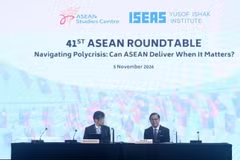
Thai Deputy Prime Minister and Minister of Foreign Affairs Sihasak Phuangketkeow (R) takes part in the Q&A session at the 41st ASEAN Roundtable. (Photo: VNA)

Thailand calls on ASEAN to proactively address polycrisis

Thai Deputy Prime Minister and Minister of Foreign Affairs Sihasak Phuangketkeow noted that no single member state could tackle challenges ranging from major-power competition and economic fragmentation to climate change and energy and food security on its own. Regional cooperation is therefore a strategic imperative, enabling ASEAN not only to overcome crises but also to sustain its development momentum.

Palm oil and palm oil-based products are among Indonesia’s promising export commodities. (Photo: VNA)

Indonesia to launch commodity export monitoring platform next year

DSI will draw on data from customs authorities, trade activities and the financial system, alongside contracts and documents uploaded by exporting companies. The platform will monitor the volume, quality, prices and destination markets of various commodities, as well as transactions between related parties.

Philippines increases rice imports from Cambodia

Philippines increases rice imports from Cambodia

Cambodia has contracted to supply a further 87,344 tonnes to the Philippines between September and December. If all orders are fulfilled, its rice exports to the market could reach around 209,000 tonnes in 2026.

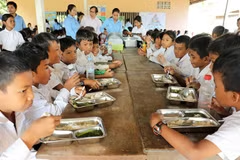
Students get free meals under the national school feeding programme at Hun Sen Svay Cek Primary School (Photo: khmertimeskh)

Cambodia expands school meal programme

Cambodian Prime Minister Hun Manet stressed that his Government would proactively allocate budget and strengthen management capacity, with the aim of expanding the school meal programme to more than 7,000 primary schools nationwide. The move is expected to improve students' nutrition and learning conditions.

Cambodia, EU strengthen investment cooperation

Cambodia, EU strengthen investment cooperation

In his opening remarks, Deputy Prime Minister and First Vice President of the Council for the Development of Cambodia (CDC) Sun Chanthol highlighted the Cambodian Government's efforts to improve the investment climate and facilitate trade, stressing the importance of close public-private cooperation in promoting Cambodia as an attractive investment destination.