Phnom Penh, January 19 (VNA) – A new growth model that places science and technology, innovation, and digital transformation at its core will become a new driving force, helping to position Vietnam on the global technology map, said Dr. Heng LiHong, Permanent Vice Chairman and Secretary-General of the Vietnam-Cambodia Business Association (VCBA).
According to the agenda, the 14th National Congress of the Communist Party of Vietnam will devote substantial time to discussing the country’s new growth model, in which science and technology, innovation, and digital transformation are identified as the key drivers, aiming for average double-digit gross domestic product (GDP) growth in the next development phase.
Heng LiHong, who is also a member of the Standing Board of the Business Association of Overseas Vietnamese (BAOOV), expressed his confidence that this new growth model will help Vietnam move beyond a development path reliant on low-cost labour and resource extraction, enabling the country to gradually climb to higher levels in the global value chain.
With a target of average GDP growth of around 10% per year, he noted that if implemented in a synchronised and effective manner, the new model could position Vietnam as a regional hub for smart manufacturing, innovation, and digital technology, thereby progressively affirming its place on the world technology map.
Heng LiHong, Director of MED115 Clinic in Cambodia, said digital transformation not only boosts labour productivity but also opens opportunities for Vietnamese businesses, especially small and medium-sized enterprises, to integrate more deeply into global supply chains. At the same time, strong investment in science and technology and the development of high-quality human resources will enable the country to master certain core and strategic technologies, enhancing national competitiveness.
More importantly, this growth model reflects the Party’s long-term vision, affirming its determination to pursue rapid yet sustainable development that prioritises quality, efficiency, and high value-added growth rather than merely chasing quantitative expansion, he emphasised.
During the preparations for the 14th National Party Congress, the collection of public feedback on the draft documents was conducted, garnering nearly 14 million opinions from people at home and abroad. In late October last year, the Vietnamese Embassy in Phnom Penh also organised a conference to gather feedback from the Vietnamese expatriate community on the draft documents of the congress.
Representing the VCBA at the event, Heng LiHong highly appreciated the initiative, viewing it as a practical activity that demonstrated a spirit of openness, listening, and the mobilisation of intellectual contributions from overseas Vietnamese (OV) in shaping the country’s development orientations.
According to the VCBA leader, the recent consultation process recorded more than 1,300 opinions from OV worldwide. In that context, allowing the Vietnamese community in Cambodia to directly contribute ideas not only made the 14th National Party Congress's documents more closely aligned with reality, but also strengthened trust and deepened the group’s attachment to their homeland.
He said this was also an opportunity for the Vietnam-Cambodia business and intellectual community to propose concrete solutions for economic cooperation, science and technology development, and human resource training.
On that basis, on behalf of the VCBA and the Vietnamese business community in Cambodia, Heng LiHong expressed his hope that the new leadership following the 14th congress will continue to uphold and promote the spirit of renewal, possess strategic vision, courage, and integrity, and particularly value the role of the 6.5 million OV worldwide as an important national resource, thereby creating stronger momentum for them to accompany the country’s development journey./.
See more
RoK’s AI robotics drive opens cooperation opportunities with Vietnam
Dao Tuan Hung, President of the Business Association of Vietnamese in Korea (BAVIK), said Vietnam should adopt a practical approach by prioritising specialised robots, including autonomous mobile robots (AMR/AGV), collaborative robots and machine vision systems, in sectors such as agro-fishery processing, textiles and garments, electronics and logistics.
Russian survey vessel docks in Hai Phong
This is the third joint marine scientific survey in Vietnamese waters, running from November 4 - December 12, and one of the opening field activities under the Vietnam–Russia roadmap for marine scientific research cooperation for 2026-2035.
Vietnam-Japan semiconductor cooperation paves the way for high-tech investment
The two countries are implementing five semiconductor research projects involving leading universities, with funding agreements signed in July. The projects cover three-dimensional integrated circuits, advanced semiconductor materials, secure artificial intelligence (AI) chips and power electronic components.
Vietnam to open registration for two-character “.vn” domain names for first time
Short, memorable and limited in number, these domains offer businesses, organisations and individuals an opportunity to establish distinctive online identities and strengthen their brands in the digital environment.
Mobilising international resources to drive Vietnam’s technology development
Vietnam previously focused mainly on attracting overseas experts and intellectuals to work in the country over the long term, but this approach encountered certain difficulties. Cooperation methods are now shifting towards greater flexibility, allowing experts to take part in conferences and scientific seminars, contribute to addressing major national challenges, or participate in short-term training and research programmes.
Fines of up to 200 million VND for violations in digital technology industry
Decree No. 401/2026/ND-CP, signed by Deputy Prime Minister Ho Quoc Dung on behalf of the Government, stipulates violations, forms and levels of penalties, remedial measures, and the authority to impose sanctions and handle violations.
Vietnam needs to master robot integration technologies to develop robotics industry
Associate Professor Dr. Duong Minh Hai of the National University of Singapore said Vietnam has several advantages, including its industrial manufacturing base, network of industrial parks, foreign investment inflows and technical workforce.
Core technologies key to sustainable robotics development in Vietnam: expert
Vietnam should select suitable robotic platforms and gradually build capacity in core technologies, including sensing, environmental perception, positioning, state estimation, AI, control and system integration. This will help develop technologies applicable across multiple sectors while avoiding fragmented investment and dependence on a single product category.
AI robots help streamline administrative procedures
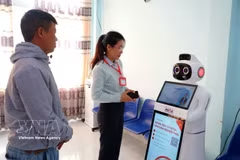
Operating around the clock, AI robots provide information on administrative procedures, required documents, processing times, fees and relevant regulations, complementing assistance from civil servants.
From QR codes to digital communities
Residents could send their QR codes to visitors and service providers, enabling them to find homes without asking for directions.
High prospects for Vietnam-Italy cooperation in robotics industry
Vietnam and Italy have highly complementary strengths in this robotics field. Italy has experience in machinery manufacturing, industrial robotics applications and an established business network, while Vietnam has a dynamic market, strong demand for production modernisation and a promising young engineering workforce.
Top leader receives new foreign ambassadors
Vietnam wishes to step up cooperation with the countries in such areas as economy, trade and investment; cutting-edge science and technology applications, semiconductors, artificial intelligence, new materials, digital transformation, sustainable agriculture, the environment, energy and renewable energy, the marine economy and maritime transport.
Over 400 scientists attend international material conference
Discussions focus on six key areas, including advanced materials and their applications for sustainable development; environmentally friendly material processing technologies; product lifecycle engineering; sustainable machine design; low-carbon industries and the circular economy; and artificial intelligence and digital transformation in material and mechanical engineering.
Applied AI Centre of Excellence to be built in Ho Chi Minh City
The initiative follows a memorandum of understanding signed in Ho Chi Minh City on September 30 by the three parties, aimed at establishing a regular channel linking the city’s innovation and startup ecosystem with Silicon Valley.
Digital technology opens new avenues for heritage education
Heritage education goes beyond providing knowledge to help learners understand the origins of cultural values, develop a critical mindset and foster a sense of responsibility towards the community.
Vietnam, France step up cooperation in AI, digital twin technology
At the meeting, the Deputy PM praised the group's contributions to promoting technology cooperation between Vietnam and France, particularly its collaboration with the Ministry of Finance and the National Innovation Centre (NIC) to establish a Centre of Excellence (CoE) for digital twins and artificial intelligence (AI) in Hanoi.
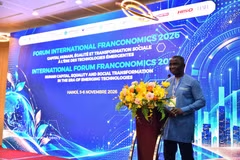
Franconomics 2026 explores human-centred technological transformation
Addressing the opening ceremony, Nguyen Anh Tuan, Rector of VNU-IS, said Franconomics was launched in 2019 as a multidisciplinary platform connecting scientists, policymakers, businesses and international organisations to discuss socio-economic issues relevant to Vietnam and the Francophone community.
Vietnam promotes int'l cooperation in science, technology and innovation
Science is opening up new opportunities in artificial intelligence, healthcare, semiconductors and clean energy, while challenges such as climate change, energy security and epidemics require international cooperation. Science, technology, innovation and digital transformation are central to Vietnam’s new growth model.
Vietnam eyes deeper participation in ASEAN robotics ecosystem
Vietnam, with its strengths in export-oriented manufacturing and foreign investment attraction, is well positioned to participate more deeply in the region's robotics value chains.
Responsible AI, teaching overhaul, global ties dominate GMC 2026
Panelists said AI can support knowledge delivery, information processing and personalised learning, but cannot replace teachers in building independent thinking, critical capacity, emotional intelligence and humanistic values. Universities therefore need to overhaul teaching, testing and assessment and redefine lecturers’ role in an AI-integrated environment.