Offshore wind power fundamentals drive Vietnam’s green transition: project developer
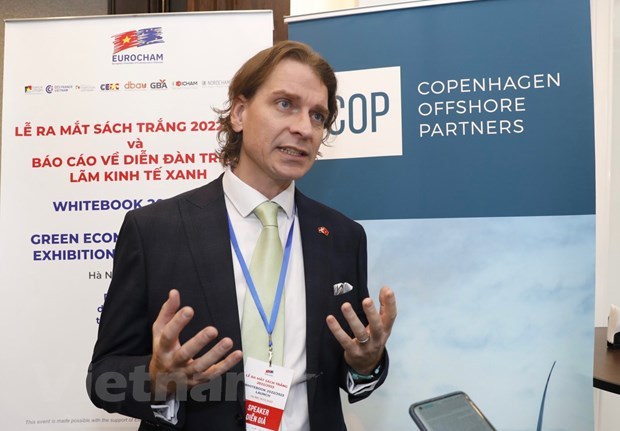
Offshore wind power will be fundamental to delivering Vietnam’s green transition goals, said Stuart Livesey, the Vietnam Country Director for Copenhagen Offshore Partners (COP) - the offshore wind project developer of Copenhagen Infrastructure Partners (CIP).
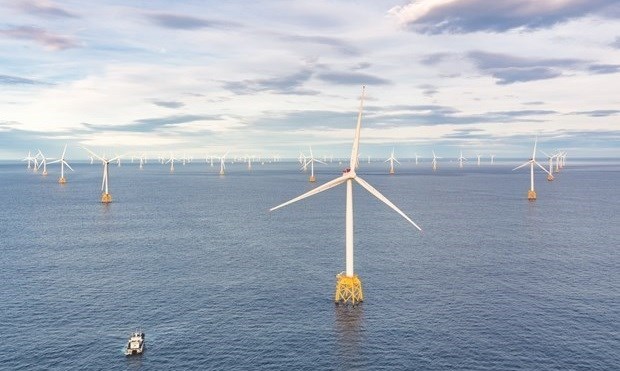
Offshore wind power fundamentals drive Vietnam’s green transition: project developer ảnh 1La Gan offshore wind project in the central province of Binh Thuan (Photo: VNA)

Hanoi (VNA) – Offshore wind power will be fundamental to delivering Vietnam’sgreen transition goals, said Stuart Livesey, the Vietnam Country Director forCopenhagen Offshore Partners (COP) - the offshore wind project developer ofCopenhagen Infrastructure Partners (CIP).

CIP is implementing La Gan offshore wind projectin the central province of Binh Thuan.

Speaking on thesideline of the release of the 2022-2023 Whitebook “Working Toward a GreenEconomy and Sustainable Development” by the European Chamber of Commerce inVietnam (EuroCham) on February 16, Livesey said that currently, Vietnam’soffshore wind resource is relatively untapped, and establishing this industryhas many benefits in comparison to other renewables.

Offshore windpower will likely be much cheaper and more sustainable than other energy sources,and can utilise many of Vietnam’s existing and future labour force and supplychains, he said.

However, the official added that it is fundamentally impossible to deliver a commercial offshore windfarm in Vietnam due to a lack of necessary regulatory framework and a lack of flexibility for the offtake of energy to transition toallow for these offshore mega-projects.

Both nationaland international developers and investors are keen to invest in offshore windin the Vietnam market.

Offshore wind power fundamentals drive Vietnam’s green transition: project developer ảnh 2Stuart Livesey, Vietnam Country Director for Copenhagen Offshore Partners (Photo: VNA)

However, thedelays in key decision-making requirements and lack of ownership by aspects ofthe government to enable this industry could result in huge delays to greenenergy targets. Delays will cause billions of dollars of direct in-country investment, andpotentially deter global investors from pursuing Vietnam when so many otheremerging markets strive for their own offshore wind goals, he said.

For largeinternational developers, ESG (Environmental, Social, and Governance) isincreasingly important as part of their working policy, as these companies needto meet IFC (International Finance Corporation) standards to satisfy lendersand international organisations that have high standards to meet.

“Regulationsshould recognise the need to use these internationally recognised standards toestablish qualified and transparent procedures on large-scale infrastructureprojects,” he recommended.

Talking aboutthe need for green energy development in Vietnam, Livesey said that Vietnam has made some boldand commendable targets at COP26, actively taken a stance to combatclimate change, and paid more attention to green energy generation for today and future generations.

“Green andsustainable energy is critical for both the future of Vietnam and its predictedgrowth, where there are needs from its people, and the industries and theglobal supply chain Vietnam provides,” he said.

Countries andsuppliers around the world are now setting their targets for green-sourcedsupply chains and green energy.

Many of thosehave strong commitments to the energy transition, so Vietnam must speed up the transition tomaintain its position as a key export market in Southeast Asia, he said./.

VNA

See more

Production line at Honda Vietnam's manufacturing facility in Dong Van II Industrial Park, Ninh Binh province. (Photo: VNA)

Vietnamese economy sustains momentum on strong industrial production

The National Statistics Office (NSO) under the Ministry of Finance reported that the manufacturing and processing sector remained the principal driver of economic growth, accounting for 33.07% of the economy's total value-added growth during the first six months of the year.

Investors conduct transactions at Bao Viet Securities' headquarters in Hanoi. (Photo: VNA)

Vietnam eyes 205.6 billion USD in stock market funding for 2026–2030

Addressing a seminar on restructuring capital mobilisation channels hosted by the Finance and Investment newspaper on July 15, Bui Hoang Hai, Vice Chairman of the State Securities Commission of Vietnam (SSC), said the domestic economy continues to face considerable external challenges in 2026, including the effects from the Middle East conflict.

Workers process farm produce at the Coastal Fisheries Development Company (Cofidec) in Ho Chi Minh City. (Photo: VNA)

Vietnam remains ASEAN’s fastest-growing economy in first half of 2026: experts

Economists at United Overseas Bank (UOB), a Singapore-based multinational bank, said Vietnam’s gross domestic product (GDP) expanded by 8.39% in the second quarter of 2026, from 7.94% in the first quarter. As a result, economic growth for the first half of the year reached 8.18%, keeping Vietnam at the top among ASEAN economies.

The interface of Vietnam's foreign supplier portal for tax registration, declaration and payment by overseas suppliers. (Photo: dientuungdung.vn)

Foreign digital service providers pay nearly 480 million USD in taxes

According to the Department of Taxation, 259 overseas suppliers have registered, declared and paid taxes through the portal. Tax revenue from the group reached 78.1% of the full-year target, surging 119% from a year earlier and making foreign suppliers the fastest-growing source of tax revenue in Vietnam's digital economy.

Ca Mau companies and households use rooftop solar to cut expenses. (Photo: VNA)

Vietnam raises rooftop solar sales cap to 50%, widens direct power deals

Rooftop solar power is entering a new phase of development with a more solid foundation. When integrated with energy storage systems and direct power purchase mechanisms, it not only contributes to supplementing distributed energy sources and reducing pressure on the national power system, but also serves as a driving force for green growth, enhances the competitiveness of the economy, and ensures energy security.

Production of electrical wiring harnesses at Bandai Vietnam Co., Ltd. in the Left Bank Industrial Park, Phu Tho province. (Photo: VNA)

Record FDI Inflows signal strong investor confidence, but absorptive capacity remains key

Vietnam's competitive advantages are evolving. Rather than relying primarily on low labour costs and tax incentives, the country's future competitiveness will increasingly depend on structural and long-term factors, including transparent institutions, policy predictability and an investment environment capable of supporting long-term strategic investors.

Vietnamese Ambassador to the RoK Vu Ho (first, left) and other participants in the conference in Seoul on July 14 (Photo: VNA)

Vietnam, RoK strengthen investment links at Seoul conference

Vietnamese Ambassador to the RoK Vu Ho said bilateral relations are currently enjoying the best conditions, underpinned by what he described as the three key factors of “favourable timing, geographical advantages, and strong public support”.

Electricity generation is monitored at the plant of the Hai Phong Thermal Power Joint Stock Company. (Photo: VNA)

Energy security “shield” must be built in layers: Expert

In an interview recently granted to the Vietnam News Agency, Dr Nguyen Van Tu, General Director of the Vietnam Petroleum Institute (VPI), said petroleum reserves are a critical line of defence, but a genuine energy security “shield” must be built in layers.

Reducing emissions is not only essential for tackling climate change but also brings tangible benefits to farmers and businesses. (Photo: VNA)

Vietnam steps up low-emission farming to support green growth

Vietnam is among the world's leading producers and exporters of agricultural products, including rice, coffee and a wide range of fruits. However, key export markets such as the US, the European Union (EU) and Japan are tightening sustainability requirements for agricultural products, making the transition to low-emission farming increasingly important.

Fresh fruit products of Vietnam are introduced to German customers. (Photo: VNA)

"Live data" paves way for Vietnamese farm exports

Achieving Vietnam's target of more than 74 billion USD in agricultural, forestry and fishery exports in 2026 will require stronger traceability systems, initially focusing on key export commodities, high-value products and major markets such as the EU, the US and China.

An enterprise in the southern province of Dong Thap invests in modern technologies and machinery for production. (Photo: VNA)

Broadening financing channels key to unlocking SME growth

As the private sector takes on a more central role under the Politburo's Resolution No. 68-NQ/TW, experts and business representatives say Vietnam needs a more comprehensive approach to supporting SMEs. This includes improving institutions, making financial support tools more effective and reshaping the financial system to better suit the characteristics of SMEs.