📝OP-ED: Bold steps taken to stamp out corruption, negative phenomena

Corruption is a particularly dangerous problem causing enormous consequences for the society. Therefore, preventing and fighting corruption and other negative phenomena is a task of leading importance demonstrating the strong political resolve of the entire Party, people, and army.

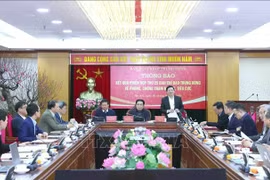
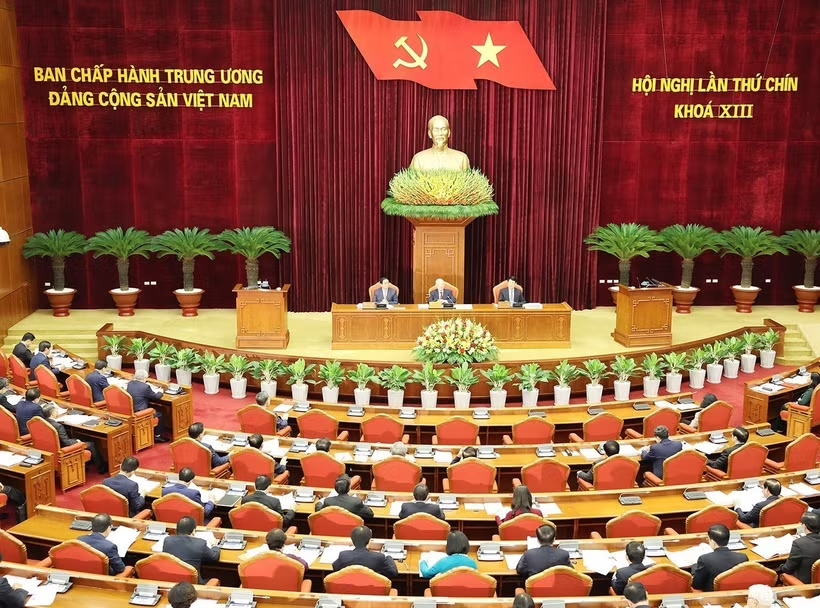
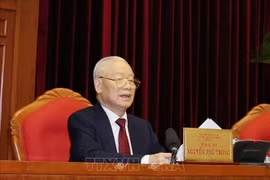
The ninth session of the 13th Party Central Committee takes place in Hanoi from May 16 to 18, 2024. (Photo: VNA)

Hanoi (VNA) – Corruption is a particularly dangerous problem causing enormous consequences for the society. Therefore, preventing and fighting corruption and other negative phenomena is a task of leading importance demonstrating the strong political resolve of the entire Party, people, and army.

Over the recent past, the combat against the “internal enemy” in general as well as the investigation into and settlement of corruption and other negative phenomenon cases has been carried out in a more drastic, comprehensive, and effective manner at both central and local levels.

With the motto of “no off-limits zones, no exceptions, no privileges, no matter who”, the combat against corruption and other negative phenomena is truly an irreversible trend.

Relevant agencies have been expanding investigation into and launching criminal proceedings against many persons involved in large and particularly serious and complex cases of corruption and other negative phenomena, along with the violations that involve many ministries, sectors, localities, both state and non-state sectors, and stir public concern.

They include the cases at Van Thinh Phat Group, the Sai Gon Commercial Joint Stock Bank (SCB), and related units and organisations. Basing on these cases, authorities have expanded probes and initiated legal action against two more cases involving 72 persons, tens of who used to serve as leaders of ministries’ departments and agencies, officials of inspectorates and auditing units, and bank inspectors.

Five key cases in the settlement plan of the Central Steering Committee for Corruption and Negative Phenomena Prevention and Control have had first-instance trials completed, including the one at the Consular Department of the Ministry of Foreign Affairs and some relevant units, and another at the Health Department of Quang Ninh province, the Advanced International JSC (AIC) and related units

The internal affairs boards of provincial-level Party committees have also uncovered hundreds of cases of corruption and other negative phenomena.

In 2023 alone, the provincial-level steering committees for corruption and other negative phenomenon combat put 260 cases under their monitoring. Local authorities also launched investigations into 763 cases involving 2,079 persons, almost doubling the figure in 2022.

In particular, a number of outstanding and prolonged cases have been handled. Many localities have also took legal action against major cases linked with officials managed by the Party Central Committee and provincial-level Party committees, including former secretaries of provincial Party committees or former chairpersons and vice chairpersons of provincial People’s Committees.

Promoting Party building, rectification
case of repatriation flights.jpg
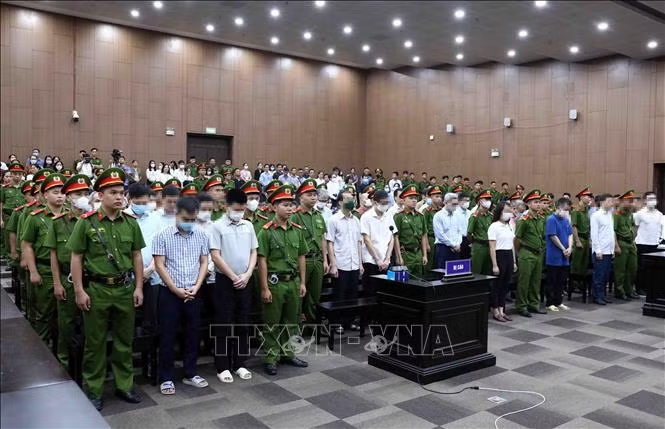
Defendants involved in wrongdoings related to the reptratiation flights stand trial at the Hanoi People's Court on July 28, 2023. (Illustrative photo: VNA)

Throughout the over 90 years of making self-improvement and construction, the Party has consistently attached importance to the Party building and rectification, taking this as a pivotal task. Particularly, the personnel work forms the core of this pivotal task because, as President Ho Chi Minh said, “cadres are the root of every work” and “success or failure depends on good or bad cadres”.

That fact could be seen clearly when the country was reunified and has surmounted countless difficulties and hardships, especially during the nearly 40 years of “Doi moi” (Renewal) and integration into the world. Part of that success is attributable to the personnel work implemented seriously and in line with the Party’s principles and rules, as well as the contingent of cadres proactively making self-improvement, thinking big, acting bold, daring to confront challenges, and making unceasing efforts for common interests.

It is also a fact that alongside national reforms and development, a no minor part of the cadres, including those at the strategic level, has shown degradation. Many of them abused power, infringed the Party’s statutes, broke laws, and committed corruption and other negative phenomena. This is the direct and main cause for corruption yet to be stamped out.

Therefore, to effectively prevent and fight corruption and other negative phenomena, it is necessary to take action early and from afar or, in other words, to “confine the exercise of power within an institutional cage”.

That is also why recently, aside from stringently dealing with violating cadres and Party members, the Party has strongly upheld the Party building and rectification. In particular, it has invested efforts in perfecting the guidelines and legal regulations on corruption and other negative phenomenon prevention and control.

Last year, the Politburo issued regulations on the control of power and the combat against corruption and other negative phenomena in the personnel affairs (Regulation 114); in the examination, supervision, and enforcement of the Party discipline, and in inspection and auditing (Regulation 131); along with in investigation, prosecution, hearing, and judgment enforcement (Regulation 132).

Together with other documents of the Party and State, the three above-mentioned are considered the “institutional cage” for purifying the contingent of cadres, protecting the regime and the law-governed socialist State of Vietnam, drastically protecting the healthiness of social relations and the transparency of the civil authority system, consolidating people’s trust and support, and contributing to socio-economic development in multiple aspects during the comprehensive national reforms. They also guarantee that all power is under strict control and responsibly binding. With great power comes great responsibility./.
VNA

See more

Minister of Foreign Affairs Le Hoai Trung (Photo: Ministry of Foreign Affairs)

Vietnam, Japan agree on new direction for cooperation: FM

The outstanding success of top leader To Lam's Japan visit was setting a new course for Vietnam-Japan cooperation, opening up fresh opportunities in key areas where both sides have strengths and needs, and generating new momentum to translate commitments and agreements into more extensive and effective implementation.

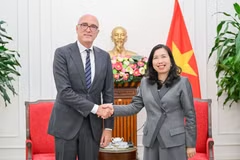
Deputy Minister of Foreign Affairs Le Thi Thu Hang (right) receives new Dutch Ambassador to Vietnam Remco van Wijngaarden in Hanoi on November 11, 2026. (Photo: Ministry of Foreign Affairs)

Official proposes Vietnam, Netherlands make full use of EVFTA

Deputy Minister of Foreign Affairs Le Thi Thu Hang expressed pleasure at the substantive and effective progress in bilateral relations in recent years, noting that the Netherlands has maintained its position as a leading EU trade partner and investor in Vietnam.

National Assembly President Tran Thanh Man (third, left) speaks at the NA Standing Committee’s 8th session on November 11, 2026. (Photo: VNA)

NA Standing Committee scrutinises grassroots democracy bill

Lawmakers underscored the need to ensure equal and effective exercise of grassroots democracy, particularly among disadvantaged groups and residents in socio-economically disadvantaged areas, while reviewing revisions to the draft Law on the Implementation of Democracy at Grassroots Level at the National Assembly (NA) Standing Committee’s 8th session on November 11.

At the 11th VIetnam - Australia Diplomatic and Defence Strategic Dialogue on November 10 (Photo: VNA)

Vietnam, Australia convene 11th Diplomatic and Defence Strategic Dialogue

The two sides vowed to boost two-way trade and investment, back a transparent, open, inclusive, fair, sustainable and rules-based multilateral trading system, diversify supply chains, including energy; cooperate in energy reserves, and expand sci-tech cooperation, especially in strategic technologies, AI and data security to bolster each economy’s autonomy and resilience.

Prime Minister Le Minh Hung (Photo: VNA)

PM to attend 49th ASEAN Summit and related meetings in Philippines

Prime Minister Le Minh Hung will lead a high-level Vietnamese delegation to attend the 49th ASEAN Summit and related meetings in Manila, the Philippines, from November 14 – 17 at the invitation of President Ferdinand Romualdez Marcos Jr. of the Philippines, the Chair of ASEAN in 2026.

Vietnamese Ambassador to Argentina and Uruguay Ngo Minh Nguyet (second from right) and Fernando Pereira (third from right), President of Uruguay’s ruling Broad Front (Frente Amplio – FA) coalition as well as other delegates at the meeting (Photo: VNA)

Uruguay seeks to strengthen cooperation with Vietnam

Vietnamese Ambassador to Argentina and Uruguay Ngo Minh Nguyet spoke highly of the valuable support and affection that the FA and Pereira personally have shown towards Vietnam during its struggle for national liberation and its subsequent process of national construction and development. These have provided an important foundation for fostering friendship and promoting relations between Vietnam and Uruguay.

General Secretary of the Communist Party of Vietnam Central Committee and President To Lam and his spouse, Ngo Phuong Ly, leave Tokyo on the afternoon of November 11 (local time), concluding their four-day official visit to Japan. (Photo: VNA)

Vietnam’s top leader concludes official visit to Japan

At their talks, General Secretary and President Lam and Japanese Prime Minister Takaichi Sanae reaffirmed that Vietnam and Japan are each other's leading and long-term important partners, sharing many common interests, with the development of one country creating favourable conditions for the groth of the other. Vietnam is a priority partner in Japan's foreign policy and the implementation of its New Growth Strategy.

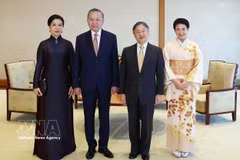
General Secretary of the Communist Party of Vietnam Central Committee and President To Lam (second from left) and his spouse Ngo Phuong Ly pose for a photo with Emperor Naruhito (second from right) and Empress Masako in Tokyo on November 11. (Photo: VNA)

Top Vietnamese leader, his spouse meet with Japanese Emperor, Empress

In a warm and friendly atmosphere, Emperor Naruhito and Empress Masako expressed their pleasure at the positive, substantive and comprehensive development of Vietnam-Japan relations, as well as increasingly vibrant exchanges between the two countries’ leaders and people.

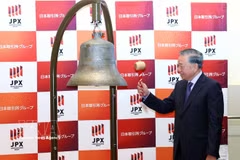
General Secretary of the Communist Party of Vietnam Central Committee and President To Lam rings the bell at the Tokyo Stock Exchange. (Photo: VNA)

Top Vietnamese leader meets leading Japanese financial institutions in Tokyo

General Secretary of the Communist Party of Vietnam Central Committee and President To Lam expressed his wish for bilateral financial cooperation to move beyond a traditional provider-recipient relationship towards a development partnership in which the two sides jointly develop financial markets, design effective capital mobilisation solutions and invest in projects and sectors that build long-term competitiveness.

Politburo member, Secretary of the Party Central Committee and head of the committee's Commission for Publicity Trinh Van Quyet meets with leaders of the Communist Party of Sweden. (Photo: VNA)

Vietnam, Sweden step up multifaceted cooperation

Politburo member, Secretary of the Party Central Committee and head of the committee's Commission for Publicity Trinh Van Quyet affirmed Vietnam's desire to deepen traditional friendship with Sweden during his visit to the country from November 7 to 11.

A discussion as part of the second session of the 16th National Assembly (Photo: VNA)

Lawmakers to discuss amendments to Law on Food Safety on November 11

The draft law adds provisions on the principles governing its application in cases of legal conflicts between the Law on Food Safety and other laws. It sets out additional obligations for businesses operating through e-commerce, provides for a food safety information and data system, and requires food businesses to meet good hygiene practices and apply advanced food management systems.