Organic farms fuel sustainable development
Born in Dien Ban Town, Quang Nam province, 37-year-old Duong Hien Tu has developed the area's first organic ecological agriculture system and a sustainable farming model over the past seven years to create the An Phu organic farm brand.
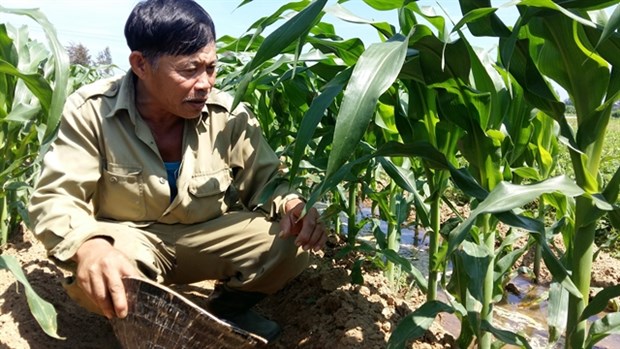 A farmer checks his crops in central Vietnam. Organic farming takes more time than using chemical fertilisers and pesticides. (Photo: VNA)
Quang Nam (VNS/VNA) - Born in Dien Ban town, Quang Nam province, 37-year-old Duong Hien Tu has developed the area's first organic ecological agriculture system and a sustainable farming model over the past seven years to create the An Phu organic farm brand.
As one of the first farming families in Go Noi, an agriculture-intensive area in the province, they began their adventure in organic farming on 2ha of land as part of a business-farmer co-operative model in 2012.
Farmers who made a living from traditional agricultural production for years were assigned to follow organic farming under strict regulations and responsibility-related contracts as well as market price guarantees.
“It was a real change among traditional farmers in the region. They were told to use their skills and set prices themselves,” Tu said.
“Each family was put in charge of a segment in the production chain, including livestock, rice, vegetables and fish. Livestock farms now supply meat and bio-fertilisers for vegetables, while garden waste from herb farms is used to feed livestock,” he explained.
He said this helped farmers to reduce production costs by 35 to 40 percent for chemical fertilisers and pesticides.
According to Do Huu Vinh, 69, a member of An Phu Farm, organic farming is a tough process because it takes more time.
“Most farmers prefer to chill out after spraying chemical fertilisers and weedkillers. They leave their farms for days to enjoy weddings, parties and festivals, but organic farming needs daily care,” Vinh said.
“We switched to organic farming two years ago, and it's fresh and healthy. We stopped using toxic chemical fertilisers and pesticides. Now it's all about hard work and herb-based pesticides to clear harmful insects,” he explained.
Healthy farming
Nguyen Viet Binh, a farmer in Dien Phong commune, said organic farming would be the sustainable choice for the future.
“Organic farming can be expensive due to labour costs, but we can work healthier on chemical-free fields. We can earn more on a small farm as organic products often sell for twice as much as chemical-based farms,” Binh said.
“Farmers ensure quality control and organic farming, while businesses ensure a stable price for safe farm produce. It helps reduce the risks from market fluctuations,” Binh added.
Hoang Hung, a biology engineer, believed that organic farming would continue to grow as people became more aware of where their food was coming from.
“Housewives look at quality rather than price. They want to know where the food they're feeding their children is from, and even visit the farms. This has pushed farmers to switch to organic methods,” Hung said.
The 23-year-old engineer, who works on a 5,000sq.m farm outside Da Nang, recycles garden and livestock waste to produce bio-fertiliser and bio-pesticides.
“Garden waste is fermented to produce bio-insect spray, while bees and ants help protect the farm from insect infestation. Earthworms are also to decompose organic waste,” he said.
The organic farm collective helps businesses reduce their initial investments by 20 percent.
“Farmers offer land, seeds, skills, labourers and knowledge of agricultural production, while businesses ensure supply chain development, sales, technical assistance and quality certification,” Hung said.
Links
Vo Lam Vu, the owner of an organic farm in Mang Den in the Central Highlands province of Gia Lai, said building links among organic farms nationwide would help set a firm foundation for an organic growth wave.
“It’s necessary. One organic farm by itself can't meet market demands, while shops need diversity for their products, ranging from vegetables, fruit, rice and seafood,” Vu said.
“Our farm, which turned to organic farming seven years ago, supplies on average 1.5 tonnes of safe farm produce – mainly roots and fruit – to Da Nang alone,” he said.
“Each farm specialises in key products, while others supply aquaculture, rice, or packaged coffee and tea,” he said.
He explained that organic farms would reduce the risks of market changes, while maintaining a stable income for farmers.
Do Thi Tuong Vy, manager of the An Phu Farm shop chain, said farmers held a 40 percent share in the organic production chain.
“Each farming family can earn from 12-14 million VND a month from organic farm produce. Poor families can also add to their coffers from making traditional cakes, pork and beef pies using materials from organic livestock and rice farms,” Vy shared.
She said a specialised livestock farm and processing plant had been built in Phu Ninh district to supply the central region market.
Vy said the farm had built links with three other organic farms in the region to promote produce diversity.
Thai Van Quang, an agricultural expert, said organic farming was still seen as an emerging market as awareness of over-used chemicals and stimulants in cultivation was limited.
Quang said the city, in co-operation with Chikujo town and experts from Kyushu University and Saga University, Japan, had launched a pilot project to produce liquid fertiliser made from organic waste from farms and public gardens.
Tu said organic farming would be key for An Phú Farm for domestic and export markets in the near future.
He said organic production was not only about making money; farmers had a social responsibility to deal with serious health problems partly related to over-used chemicals, toxic weedkillers and pesticides./.





You should also see
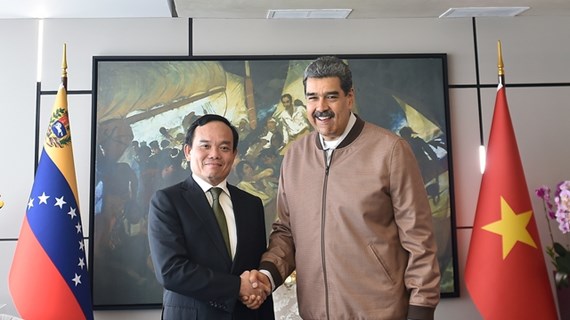
Vietnamese Deputy PM, Venezuelan President hold talks
Vietnamese Deputy Prime Minister Tran Luu Quang held talks with President of Venezuela Nicolás Maduro Moros in Caracas on April 18, as part of his ongoing official visit to the Latin American country.


See more
 Videos
Foreign investment driven towards new breakthrough phase
Vietnam has so far drawn nearly 500 billion USD in registered FDI capital after nearly four decades of opening up its economy, with investment quality improvement considered a key task for a new breakthrough phase ahead.
 Business
Quang Ninh attracts additional 115 million USD from Japan investors
The Quang Ninh Economic Zone Authority (QEZA) presented investment certificates to two Japanese projects worth 115 million USD in total at a conference held at Song Khoai Industrial Park (IP) on April 19.
 Business
Central bank plans to auction gold bars on April 22
The State Bank of Vietnam (SBV) will auction SJC-branded gold bars on April 22, a representative of the central bank said on April 19.
 Business
Hanoi to host Vietnam Medipharm Expo 2024
The 31st Vietnam International Medical and Pharmaceutical Exhibition (Vietnam Medipharm Expo 2024) is scheduled to take place in Hanoi from May 9 to 12, an official of the Ministry of Health (MoH) told a press conference on April 19.
 Business
Japan's Takashimaya plans to expand investment in Vietnam
Takashimaya, a Japanese operator of upscale department stores, plans to open a shopping centre in Hanoi in 2026 that will be the company's first new location abroad in eight years, Japanese newspaper Nikkei reported.
