Hanoi (VNA) – Hanoi is accelerating plans to redesign and reorganise its craft villages into modern “streets in villages,” contributing to the capital’s goal of achieving double-digit economic growth while preserving cultural heritage and improving living conditions.
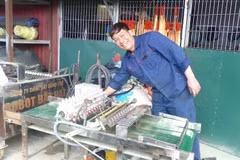
Hanoi is currently home to the largest number of craft villages in Vietnam, with around 1,350 villages engaged in traditional trades and handicrafts. Of these, 337 have been officially recognised by the municipal People’s Committee. Together, they generate an estimated annual revenue of more than 25 trillion VND (949 million USD) and provide employment for approximately 800,000 workers, making them an important pillar of the rural economy.
Under the Hanoi Master Plan with a 100-year vision, the city is shifting rural development from traditional agricultural production toward an ecological and high-value agricultural economy integrated with advanced technologies. At the same time, preserving the cultural identity and spatial characteristics of traditional craft villages remains a central objective. In this transition, the creation of green spaces has been identified as a key priority.
Nguyen Manh Phuong, Deputy Director of the municipal Department of Agriculture and Environment, said the city is implementing a comprehensive development project for craft villages for the 2025–2030 period with a vision toward 2050. At the heart of the initiative is the preservation of traditional village structures under the model of “villages within urban areas and urban spaces within villages.” Beyond architectural renewal, the strategy seeks to fundamentally transform the economic model of craft villages into clean production ecosystems linked with tourism and cultural development.
According to city statistics, Hanoi has recognised 55 tourism zones and destinations, including 27 associated with agricultural, rural, ecological and craft village tourism. Green planning is not limited to landscape improvements but also includes investments in technical infrastructure, such as multifunctional centralised waste-treatment facilities. The city is reviewing a long-term solid waste management plan aimed at reducing transportation distances to under 50 kilometres and addressing pollution in craft village clusters.
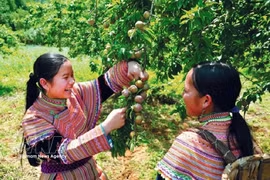
Agricultural production in these areas is also being oriented toward organic and ecological standards, with the application of Good Agricultural Practices (GAP) to enhance product value. The One Commune One Product (OCOP) programme linked to craft villages has achieved notable results, with 929 craft village products rated three stars or higher.
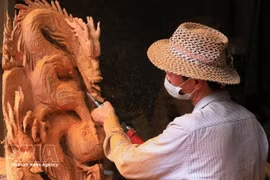
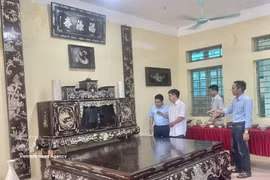
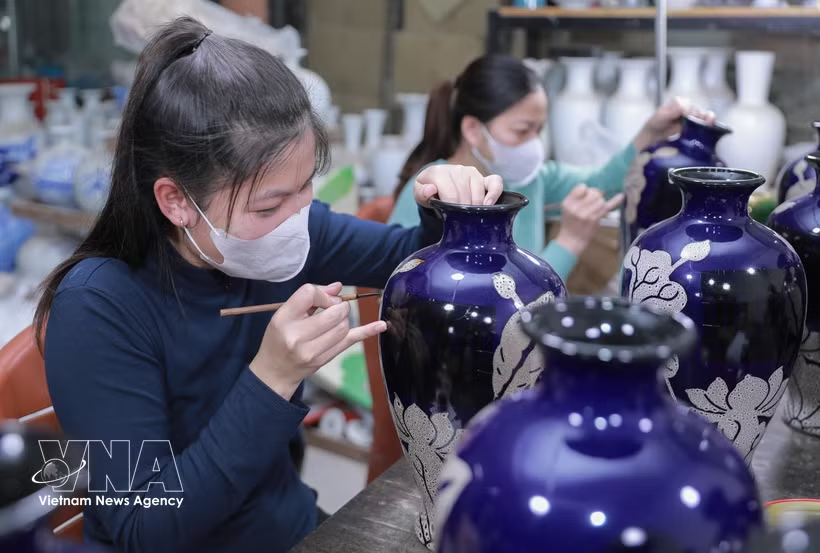
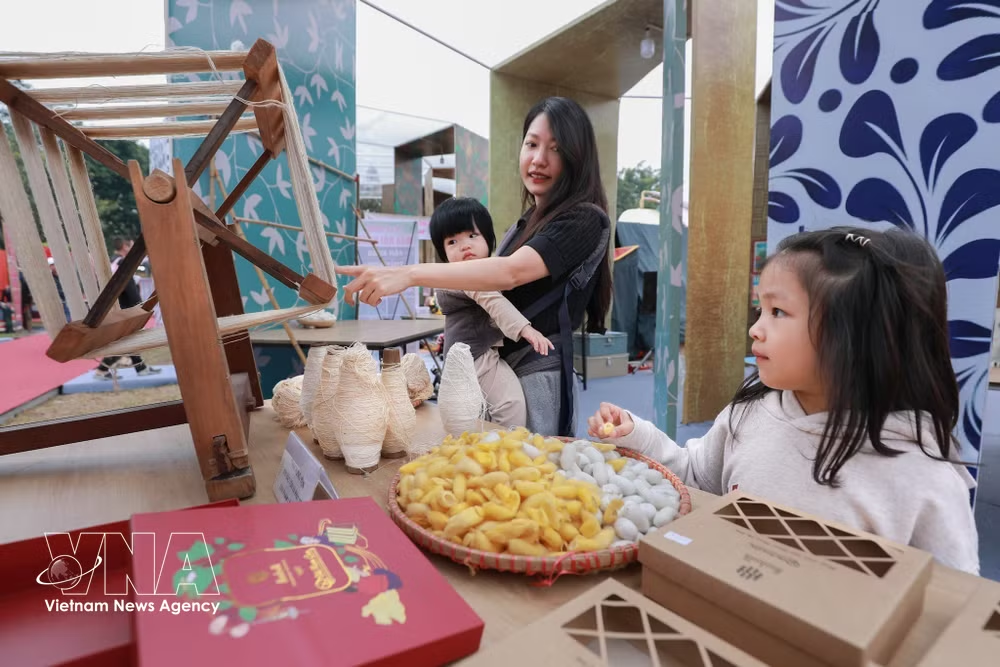
The inclusion of four renowned craft villages – Bat Trang ceramics, Van Phuc silk, Son Dong wood sculpture and Chuyen My mother-of-pearl lacquerware – in the global network of creative craft cities reflects Hanoi’s transition from traditional manufacturing to a creative economy with international branding.
At the same time, the city is focusing on resolving longstanding environmental bottlenecks that have hindered sustainable development in many craft villages. Under the revised Capital Law, Hanoi is drafting stricter environmental protection regulations than national standards and applying them throughout the Capital Region.
Authorities are also strengthening decentralisation, granting commune-level administrations broader authority in land management and environmental supervision. Artificial intelligence technologies are being applied in environmental monitoring, pollution warnings and climate adaptation, while waste treatment facilities and collection points have been integrated into digital mapping systems to support transparent and effective management.
According to the Hanoi Department of Agriculture and Environment, the city aims for annual craft village production growth of around 10% during the 2025–2030 period. To achieve this target, Hanoi envisions its craft villages not only as centres of production, but also as green and livable cultural spaces where heritage coexists harmoniously with sustainable urban development./.