Police request eight banks to provide information related to FLC Group case

The Investigation Police Agency under the Ministry of Public Security, on April 8, sent a document to eight banks requesting them to provide information to serve the investigation of the act of stock market manipulation against Trinh Van Quyet, Chairman of FLC Group Joint Stock Company.
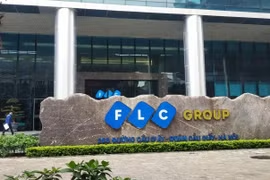
Police request eight banks to provide information related to FLC Group case ảnh 1Police searching FLC Group headquarters (Photo: VNA)
Hanoi (VNA) - The Investigation Police Agency under the Ministry ofPublic Security, on April 8, sent a document to eight banks requesting them toprovide information to serve the investigation of the act of stock marketmanipulation against Trinh Van Quyet, Chairman of FLC Group Joint StockCompany.

The eight banks are the Joint Stock Commercial Bank forForeign Trade of Vietnam (Vietcombank), Vietnam Technological and CommercialJoint Stock Bank (Techcombank), Saigon Thuong Tin Commercial Joint Stock Bank(Sacombank), Vietnam Prosperity Joint Stock Commercial Bank (VPbank), Bank forInvestment and Development of Vietnam (BIDV), Vietnam International CommercialJoint Stock Bank (VIB), Saigon - Hanoi Commercial Joint Stock Bank (SHB), andNational Citizen Commercial Joint Stock Bank (NCB).
The banks are requested to cooperate in providingaccount registration documents, account statements, savings accounts, loans andtransaction documents of Trinh Van Quyet and his two younger sisters - Trinh Thi Thuy Nga and Trinh Thi Minh Hue.

On March 29, the Investigation Police Agencylaunched criminal proceedings against and arrested Quyet for investigation of theact of stock market manipulation in the FLC Group, BOS Securities JSC andrelevant companies. Nga, Deputy CEO of BOS Securities JSC, and Hue, a member ofFLC Group JSC's accounting department, were arrested several days later.

On January 10, Quyet sold 74.8 million FLC shares withoutany reports and notifications in advance as stipulated in regulations, triggeringpublic concern and pushing the stock market into chaos.

The State Securities Commission of Vietnam (SSC) immediatelydecided to block Quyet’s securities accounts to prevent him from committingother illegal acts.

The SSC also asked the Ho Chi Minh City Stock Exchange(HoSE) to cancel the transactions of the 74.8 million FLC shares. Manyinvestors were refunded.

On January 18, it issued another decision under which Quyetwas fined 1.5 billion VND (65,600 USD), the heaviest penalty in line withregulations, and banned him from stock trading activities for five months.

It was the second time that Quyet was fined by the SSC forthe same offence. In 2017, he was fined 65 million VND for selling 57 millionFLC shares without proper notice./.

VNA
See more

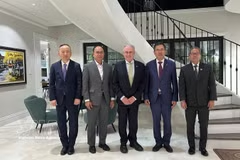
Ambassador Pham Hung Tam (second from right) and Australian Minister for Trade and Tourism Don Farrell (centre). (Photo: VNA)

Vietnam urges Australia to resume imports of fresh pomelos soon

The Ambassador noted that two-way trade turnover in the first 10 months of 2026 had expanded by around 20% year on year. During the same period, Vietnam's tourism sector welcomed around 543,000 visitors from Australia, according to figures from the Ministry of Culture, Sports and Tourism.

Participants in the working session between the State Audit Office of Vietnam and the State Control Committee of Belarus (Photo: VNA)

Vietnam step up state audit cooperation with Russia, Belarus

The State Audit Office of Vietnam and the Accounts Chamber of Russia signed an MoU on cooperation and expressed their wish to further expand collaboration at both bilateral and multilateral levels, focusing on the role and impact of supreme audit institutions on macroeconomic policies, digital transformation and the application of information technology to public auditing.

Prof. Tran Dang Xuan from Hiroshima University speaks at the event (Photo: VNA)

Vietnam's Japan-based academic network pitches research-to-market links

The Vietnamese Academic Network in Japan (VANJ)’s recent 7th annual conference linked more than 200 Vietnamese, Japanese and international scientists, experts, businesses and research students to push research cooperation, technology transfer and quality workforce development.

VietinBank’s LDR is around 92.8%, according to estimates by the ACB Securities Company based on data as of June 30. (Photo: VNA)

Banks with sufficient funding base to benefit from new safety ratio policy

The new policy, which will take effect early next month, raises the loan-to-deposit ratio (LDR) cap to 95% from the current 85%, while starting a phased transition towards Basel III liquidity standards, including by introducing a liquidity coverage ratio (LCR) and net stable funding ratio (NSFR).

The daily reference exchange rate is set at 25,652 VND/USD on November 17. (Photo: VNA)

Reference exchange rate edges higher

With the current trading band of +/- 5%, the ceiling rate applicable for commercial banks during the day is 26,935 VND/USD, and the floor rate 24,369 VND/USD.

Manufacturing materials for solar cell production at JA Solar Vietnam Co., Ltd., a Hong Kong (China)-invested enterprise in the Quang Chau Industrial Park, Bac Ninh city (Photo: VNA)

Vietnam, China widen economic, trade cooperation space

General Secretary of the Communist Party of Vietnam Central Committee and President To Lam’s trip to China for the 33rd APEC Economic Leaders’ Week and bilateral engagements is expected to add new momentum, including deeper economic connectivity, broader trade, investment and supply chain links, and a more balanced, substantive economic relationship that matches both sides’ potential.

The sidewalks on Hung Vuong street in Quang Tri province are under renovation. (Photo: VNA)

Quang Tri approves 103 priority projects for investment during 2026–2030

The 103 projects are categorised into seven fields, comprising energy; logistics; tourism, services, and trade; green and high-tech agriculture; industry, industrial zones, and production infrastructure; urban development and commercial housing; and healthcare, wellness, and resort services.

Workers make clothes for export to the Japanese market at Hung Viet Garment Company in Hung Yen province (Photo: VNA)

Vietnam’s textile-garment firms striving to achieve export targets, sustain employment

To achieve the annual target, textile and garment businesses are jointly implementing several core tasks, including diversifying export markets and partners, developing the supporting industries for raw materials and accessories to establish integrated supply chains, investing in technological innovation linked to AI, stepping up high-quality workforce training, promoting green transformation based on circular economy models, and building brands in both domestic and international markets.

Minister of Public Security General Luong Tam Quang (R) receives Choo Hyeong Wook, President and CEO of the Republic of Korea’s SK Innovation in Hanoi on November 16. (Photo: VNA)

Vietnam promotes international cooperation in energy, high technology

Minister of Public Security General Luong Tam Quang called on the RoK's SK Innovation to share experience and work with Vietnamese partners in developing clean and renewable energy, hydrogen, liquefied natural gas, energy storage technologies and carbon emission reduction solutions.

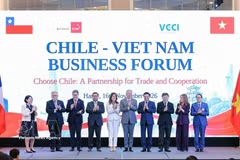
Delegates pose for a photo at the Chile-Vietnam Business Forum in Hanoi on November 16 (Photo: VNA)

Vietnam, Chile seek to expand trade ties

Chilean President José Antonio Kast pointed to potential for cooperation in agriculture and food, and called for stronger technical cooperation, better market access and closer links in innovation, technology, services and sustainable development.

Production of footwear for export at Lefaso Tra Vinh Industrial Investment and Production Joint Stock Company, Tra Cu commune, Vinh Long province (Illustrative image. Source: VNA)

VEFTA implementation requires exporters to restructure supply chains: Experts

Under VEFTA, tariff reductions to zero will be meaningless for Vietnam’s key export sectors, including textiles and garments, footwear, and agricultural and aquatic products, if goods are found to contain banned chemicals, violate rules of origin or lack transparency regarding their carbon footprints.