Hanoi (VNA) - Vietnam needs to secure long-term financing by mobilising “green” funds and integrating conservation into local socio-economic development plans, to boost biodiversity conservation and sustainable development, accoding to Ramla Khalidi, Resident Representative of the UN Development Programme (UNDP) in Vietnam.
The UNDP in Vietnam has proposed five priority actions and eight recommendations, focusing on measures to strengthen biodiversity protection, enhance climate resilience, and fulfill global commitments.
Khalidi emphasised that through an integrated approach—combining policy, practice, financing, innovation, and community capacity building—Vietnam can protect endangered species while creating livelihoods and ensuring conservation and development go hand in hand.

Khalidi said the UNDP is working closely with Vietnam to prepare the country’s 7th National Report under the Convention on Biological Diversity (CBD) to provide an updated overview of national biodiversity—from species populations and decline trends to the pressures they face. She stressed that this serves as a crucial foundation for effective conservation policy planning.
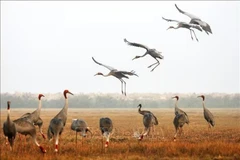
Although Vietnam has made significant progress in protecting endemic, rare, and endangered species, major threats remain, including habitat loss, illegal hunting, climate change, and invasive alien species.
The 2024 Vietnam Red Book issued a serious warning as the number of threatened species has risen from 836 in 2007 to 1,398 at present. Alarmingly, five species have disappeared, becoming extinct in the wild in Vietnam, including the sambar deer, the one-horned rhinoceros, the white-crested pheasant, the Siamese crocodile, and the southern Batagur turtle.
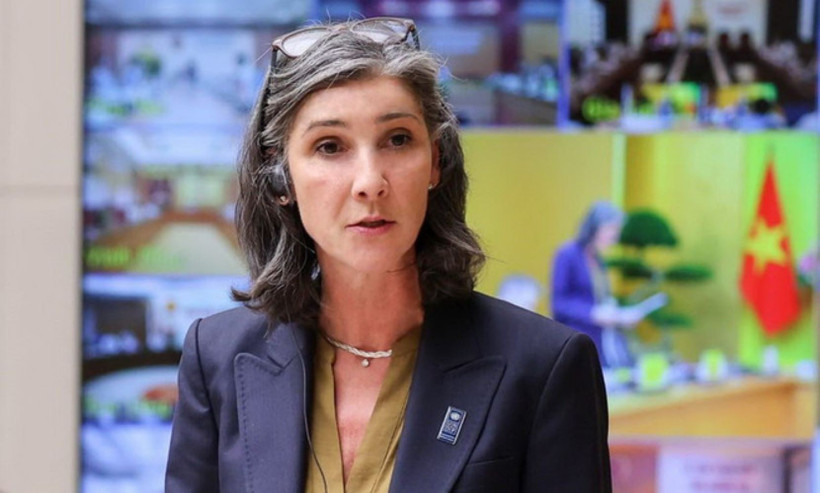
Ramla Khalidi, UNDP Resident Representative in Vietnam (Photo: UNDP)
Updated data from the 7th National Biodiversity Report (scheduled to be submitted to the CBD in February 2026) and the 2024 Red Book provide the Government with a stronger scientific basis for decisive action and effective policy guidance.
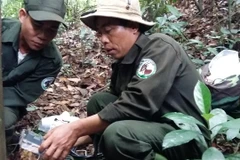
In the short term, the UNDP proposes priority actions, including protecting and restoring habitats by preventing encroachment, rehabilitating limestone forests, and strengthening supervision and enforcement with trained rangers. Further actions include improved protected area management, and modern technologies such as camera traps, GIS, drones, and SMART patrols. Empowering local communities through expanded forest patrols, co-management models, and economic incentives also works toward the same goal. Other priority actions include developing sustainable community-based ecotourism that combines environmental education with tourism to raise awareness of langurs and limestone forest ecosystems. Ensuring long-term financing via forest service payments, conservation funds, public-private partnerships, and corporate contributions, aligning conservation with provincial socio-economic development form the final priority actions toward the goal of conservation.
It recommends integrating biodiversity conservation into all sectoral and provincial planning, with clear evaluation indicators, she said.

A flexible management model should be applied, engaging businesses, social organisations, and communities in co-management, she said, adding that UNDP plans to pilot this approach in marine protected areas in collaboration with the Department of Fisheries and the Vietnam Fisheries Surveillance Force under the Ministry of Agriculture and Environment.
Vietnam should expand and connect protected areas to sustain wildlife populations, while using technology to monitor and link sites through ecological corridors, she said.
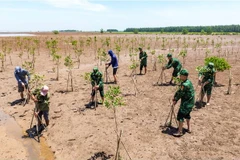
It also needs to synchronously implement priority measures, concentrating on restoring degraded ecosystems, giving special attention to mangroves, natural forests, wetlands, and marine habitats that are crucial for disaster prevention and livelihoods. Controlling pollution—especially plastic waste—by tightening waste management, reducing single-use plastics will greatly assist conservation efforts.
The “One Health” approach should be applied to reduce the risk of disease transmission from wildlife to humans, while strengthening environmental education and awareness-raising, particularly among young people, she stressed.
She noted that, through the Global Environment Facility Small Grants Programme and in partnership with SVW and other partners, the UNDP has been supporting ecotourism initiatives and community conservation.
Regarding international support to help Vietnam meet its COP26 commitments, Khalidi said the UNDP will provide assistance for Vietnam in strengthening policies and planning to update and implement the National Biodiversity Strategies and Action Plans (NBSAP) in line with the Global Biodiversity Framework. The UNDP also supports preparation of the 7th National Report under the CBD, and linking nature conservation with climate commitments in the updated Nationally Determined Contributions (NDC 3.0).
The UNDP will continue to scale up models that integrate conservation with livelihoods; mobilise resources and coordinate with multilateral funds and partners to invest in ecosystem restoration. It will encourage private sector contributions through voluntary carbon markets for nature-based solutions, and promote capacity building, and transfer of smart patrol systems. Also in the plans is to develop open databases on biodiversity and forest carbon, and developing forecasting and early warning tools.
Through an integrated approach—combining policy, practice, financing, innovation, and community capacity building—Vietnam can establish a robust conservation network to protect its unique biodiversity, thus promoting sustainable development and enhancing climate resilience, the UNDP official said./.