Private sector’s business confidence keeps improving

A recent survey by the Vietnam Private Sector Forum has shown that the confidence of private business executives keeps improving.
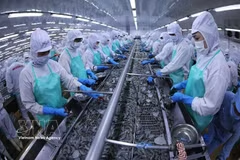
Private sector’s business confidence keeps improving ảnh 1Illustrative image (Source: VNA)
Hanoi (VNA) – A recent survey by the VietnamPrivate Sector Forum has shown that the confidence of private businessexecutives keeps improving, with the private sector increasingly asserting itsimportant role in Vietnam’s economic growth. 

Don Lam, VinaCapital General Director, said Vietnam hasexerted efforts to improve the business climate, evidenced by higher rankings insurveys conducted by the World Bank.

However, half of the surveyed enterprises confirmed thatregulatory barriers, including overlapping, unclear and inefficientregulations, are hurting them, diminishing the sector’s competitiveness.

Ho Sy Hung, head of the Enterprise Development Agency underthe Ministry of Planning and Investment, said over the past few years, the sizeof private enterprises has not improved, in terms of capital or the average numberof employees, making it hard for them to invest in technology, machinery andfixed assets to reduce costs.

The failure to expand has also made cumbersome administrativeprocedures a bigger problem, such as inconsistency between the Law onInvestment, the Law on Environmental Protection, the Land Law and theConstruction Law.

Hung admitted that enterprises, especially small andmedium-sized ones, struggle to access loans and credit guarantees. He suggestedoffering loan packages with reasonable interest rates and transparent andsimple lending procedures and diversifying banking products and services toincrease access to capital.

Economist Vu Dinh Anh said policies and mechanisms for theprivate sector must be based on the principle of “equality, no preference,respect and initiative”.

The results of the survey indicated that 63 percent ofrespondents plan to expand operations while 44 percent reported they havemissed out on business opportunities due to legal barriers and marketrestrictions.

Up to 37 percent of firms said their operations performedbetter in 2017 than in previous years while 43 percent of others expressedexpectations that the economy will improve.-VNA
VNA
See more

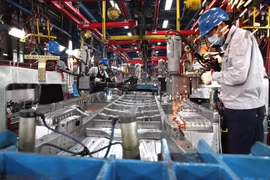
Production of footwear for export at Lefaso Tra Vinh Industrial Investment and Production Joint Stock Company, Tra Cu commune, Vinh Long province (Illustrative image. Source: VNA)

VEFTA implementation requires exporters to restructure supply chains: Experts

Under VEFTA, tariff reductions to zero will be meaningless for Vietnam’s key export sectors, including textiles and garments, footwear, and agricultural and aquatic products, if goods are found to contain banned chemicals, violate rules of origin or lack transparency regarding their carbon footprints.

Deputy Prime Minister Nguyen Van Thang meets with Martin Sommer, head of the IMF’s Article IV consultation mission team to Vietnam, in Hanoi on November 13, 2026. (Photo: VNA)

IMF sees positive growth prospects for Vietnam, urges cautious monetary policy

Martin Sommer, head of the IMF’s Article IV consultation mission team to Vietnam, noted that inflation risks in Vietnam remain under control, but several factors could add to price pressures. He therefore called for cautious monetary policy management and readiness to respond promptly if inflationary pressures increased.

Representatives of the three first-prize-winning startups receive their awards at the event. (Photo: SGGP)

Seven green-tech startups secure 770,000 USD at Net Zero Challenge 2026

In its fourth year, the competition attracted more than 1,100 applications from 80 countries and territories, making it the most competitive edition since its launch in 2023. Nine finalists presented solutions in three categories, namely renewable energy and carbon removal; food systems and sustainable agriculture; and circular economy and waste management.

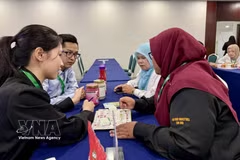
Vietnamese and Malaysian businesses connect at the event (Photo: VNA)

Vietnam, Malaysia connect businesses to boost bilateral trade cooperation

It centred on a business-to-business (B2B) matchmaking session, bringing Vietnamese and Malaysian companies together to discuss import-export needs, seek partners and explore cooperation. Vietnamese businesses aimed to connect with Malaysian importers, distributors and retailers, while expanding access for their products to Malaysia and other markets.