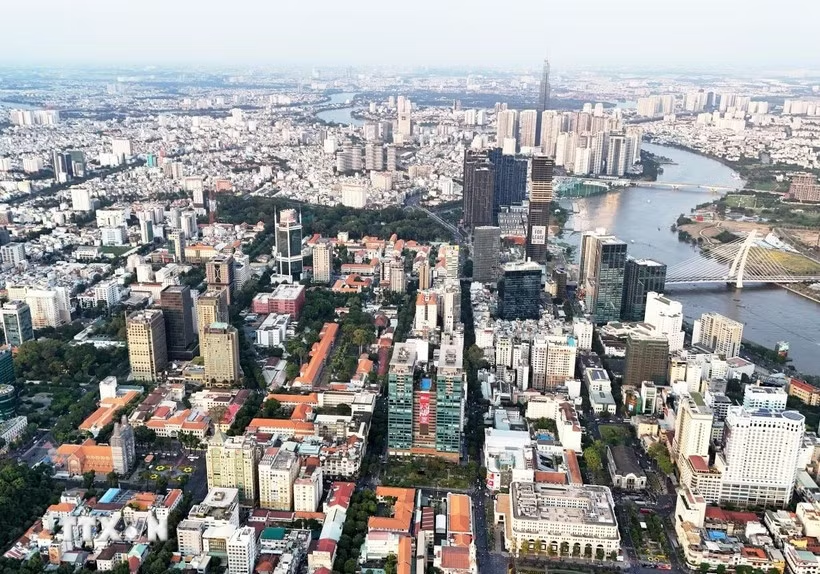
Ho Chi Minh City (VNA) – Over the past year, major Vietnamese macroeconomic shifts, evolving urban classification, and key regulatory reforms have reshaped Vietnam’s population patterns, capital allocation, and medium- to long-term real estate investment prospects.
At the same time, several large-scale real estate and infrastructure projects have been launched or given clear timelines, laying the groundwork for the next growth cycle, according to Avison Young Vietnam.
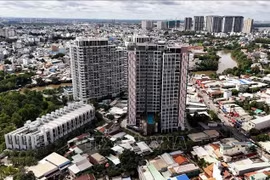
In its recently released Q4/2025 quarterly report of Vietnam’s real estate market, the property services firm noted that the residential market showed clear signs of recovery in 2025 after nearly three years of subdued activity, supported by renewed merger & acquisition (M&A) transactions, project resumptions, and new launches.
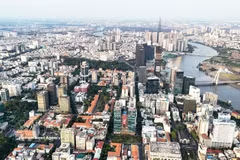
In Q4, new condominium supply in Ho Chi Minh City increased moderately as developers took a cautious approach to pricing and closely tracked absorption, with absorption rates reaching 65–75%.
Hanoi, by contrast, saw the launch of more than 10,000 new units, largely from large-scale developments. Although large supplies, absorption rates in Hanoi still reached 70–80%.
In central Da Nang, primary apartment prices reached new highs in Q4, ranging from 3,020–3,770 USD per sq.m., causing a timid absorption rates of 35–40%. Across major markets, mid- to high-end products dominated new supply, further widening the structural gap between segments.
Primary prices continued to rise, with widening divergence between core and peripheral areas.
In 2026, supply is expected to expand, while price growth moderates. New supplies are forecast at roughly 15,000 units in Ho Chi Minh City, 10,000 units in Hanoi, and 4,000 units in Da Nang, with projected price increases of 20–25% in Ho Chi Minh City and Hanoi, and 10–15% in Da Nang.
Current price levels do not point to speculative overheating, but rather reflect structural shifts in urban development, higher construction costs, and rising land values.
Avison Young Vietnam said the rollout of updated 2026 land price frameworks and adjustment coefficients (K-factors) across provinces is expected to accelerate urban land revaluation. While this may create short-term cost pressure, it supports greater pricing transparency and increased public revenue for infrastructure investment.
Residential-related M&A activity remained active alongside these market dynamics.
In 2025, majority of transactions recorded in the greater Ho Chi Minh City area, including 15 deals in the former Ho Chi Minh City and one in the former Binh Duong province. The other 11 deals occurred in Hanoi’s satellite provinces, and one deal recorded in central Vietnam. This pattern highlights how long-term capital deployment continues to move towards satellite areas, underpinned by strong housing needs, ongoing urban decentralisation, and accelerating infrastructure rollout.
According to the report, domestic investors emerged as the primary acquirers, accounting for a major in transactions valued above 100 million USD. Vietnamese businesses were largely driven by restructuring, divestment, or capital raising activity, or land bank expansion to improve and strengthen cash flow and balance sheets. This can be seen in the transactions of Vincom Retail, Sunshine Group, Phat Dat, and Son Kim Land.
Foreign investors, meanwhile, focused on large-scale and strategic long-term transactions. Examples can be seen in Gamuda Land in Hai Phong, CapitaLand's acquisition of projects from Vinhomes, or Japanese investors’ acquisition of 80% stakes in Phat Dat’s Thuan An 1 project.
“Today’s market is tilting in investors’ favour but many still have decision inertia, staying disciplined on pricing and deal structures, especially around legal due diligence and operational risks. Deals that do get across the line are often transformative, allowing investors to consolidate market share and reposition assets before the next growth cycle,” said David Jackson, Principal and CEO of Avison Young Vietnam, commenting on real estate M&A strategies over the past year.
Amid ongoing global capital reallocation, Vietnam’s strategic geographic position and positive economic outlook are expected to support increased investment inflows from 2026 onward, he added./.
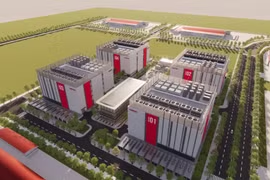
Billion-dollar capital seeks new opportunities in data centre real estate
Ho Chi Minh City is witnessing a strong investment wave in the data centre sector. The city has set up a dedicated task force to support investment procedures for a Hyperscale Data Centre serving AI development, with total investment estimated at around 2 billion USD. The investor consortium includes UAE-based technology company G42, Microsoft, FPT Corporation, VinaCapital, and Viet Thai Group.