
Vietravel Airlines launches direct Hanoi–Shenzhen route
This marks another step in the carrier’s expansion into the Chinese market, just three months after launching its Ho Chi Minh City–Shenzhen service.
This marks another step in the carrier’s expansion into the Chinese market, just three months after launching its Ho Chi Minh City–Shenzhen service.
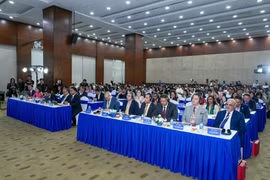
Discussions focused on improving the quality of human resources to meet the changing demands of the economy, with people placed at the centre of innovation, productivity growth and competitiveness enhancement.
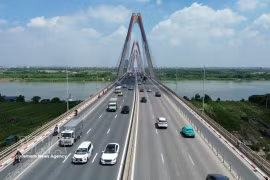
From a capital emerging from war in 1954, Hanoi has become an economic hub with GRDP of nearly 1.3 quadrillion VND in the first nine months of 2026, a trajectory that shows its vitality and capacity for transformation.
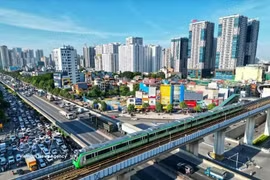
Hanoi's total local budget spending in the nine months stood at 72.3% of the annual estimate. Development investment reached 111.69 trillion VND, or 88.6% of the target and 2.8 times the level of the same period in 2025.
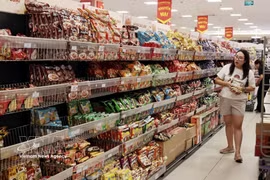
Vegetable prices soared during the month, mainly due to prolonged heavy rains in Hanoi and northern provinces, which flooded and damaged vegetable farming areas and reduced supplies.
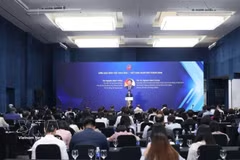
The forum focused on mobilising resources and strengthening international connectivity for sustainable marine development, science, technology and marine governance in the new era, and enhancing international cooperation to protect the environment and promote the values of coastal communities.
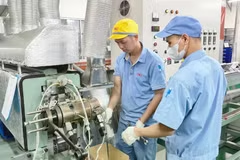
The Hanoi Department of Finance reported that foreign-invested enterprises in Hanoi generally maintained stable production and business operations in September, with many continuing to expand investment, increase capital and develop markets. Investment activity was concentrated mainly in real estate, wholesale and retail trade, information and communications, professional, scientific and technical activities, and business support services.

This is SPA’s second service connecting Hong Kong with Vietnam, following the launch of a direct Hong Kong–Phu Quoc route on May 22 this year.
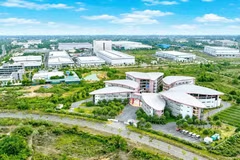
Hanoi is moving from broad-based investment promotion towards targeted efforts focusing on projects and corporations with strong leadership capacity and potential to create spillover effects. For 2026-2030, it aims to attract 10 multinational corporations to establish executive offices, research and development (R&D) centres, innovation centres or regional service centres, helping build an technology and innovation ecosystem with international competitiveness.

It will bring together domestic and international textile and garment companies to showcase new solutions in automation, digital transformation and green production.
Under a decision of the municipal People’s Committee on establishing an inter-agency working group, departments and agencies are responsible for identifying facilities subject to greenhouse gas inventories, developing emissions-reduction plans and studying projects capable of generating carbon credits.

In the first two quarters, Hanoi welcomed 18.01 million visitors, up 15.7% year-on-year, while total tourism revenue rose 19.1% to 74.23 trillion VND (2.85 billion USD). The average hotel occupancy rate stood at 65.64%.
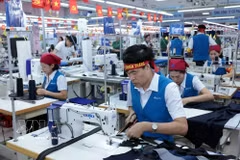
The annual exhibition comprises two main sections including HanoiTex, showcasing machinery, equipment and technologies for the textile and garment industry, and HanoiFabric, featuring fabrics and materials for textile, garment and embroidery production.

Resuming the route is part of the carrier's year-end operating plan. It's a concrete step toward optimising the airline's domestic network, and a sign of its commitment to helping Lam Dong province revitalise tourism following the airport upgrades, its representative said.
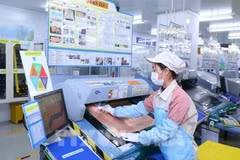
Hanoi aims to achieve average annual export growth of at least 12% during 2026-30, with the city seeking to diversify export markets, boost high-tech and value-added products and reduce reliance on traditional markets.

Major export products include rattan and bamboo products, sedge and wickerware, fine wooden furniture and handicrafts, ceramics, lacquerware and textiles. Many craft village products feature diverse designs and good quality, gradually enhancing their competitiveness in both domestic and international markets.

Stores, supermarkets, shopping malls and commercial streets are displaying a broad range of lanterns and toys across colours, designs and price segments to meet consumer demand.
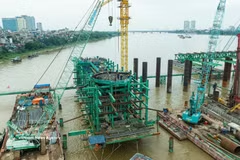
The projects comprise Tu Lien, Ngoc Hoi, Tran Hung Dao, Thuong Cat, Van Phuc, Hong Ha and Me So bridges. They are among the city’s key transport projects being constructed simultaneously.
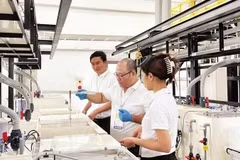
In the first eight months of 2026, the capital city attracted more than 3.7 billion USD in FDI, equivalent to 83% of the plan set for the year. Newly registered FDI exceeded 572 million USD across 450 projects, up 175.78% in project numbers and 209.46% in capital compared to the same period last year. Additional registered capital topped 492 million USD, while capital contributions and share purchases exceeded 2.6 billion USD.
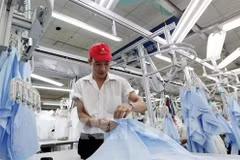
Hanoisme proposed support programmes for green transition, intellectual property, traceability and cross-border e-commerce, as well as credit packages specifically for exporters.

For Hanoi, which targets average GRDP growth of at least 11% annually from 2026 to 2030, unlocking resources and improving their allocation will be crucial to enabling businesses, particularly small- and medium-sized enterprises (SMEs), to create more jobs and added value.
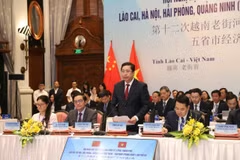
Officials agreed to strengthen connectivity across the entire corridor and focus on practical projects with clear priorities and concrete results.
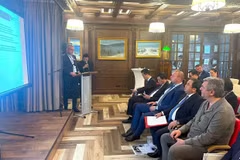
As Hanoi implements its master plan with a 100-year vision, in which metro lines are identified as the backbone of the capital city’s transport network, Secretary of the municipal Party Committee Tran Duc Thang met with representatives from several Saint Petersburg companies specialising in urban rail development.

By translating Resolution No. 10-NQ/TW into concrete programmes and actions, Hanoi is laying a solid foundation to attract high-quality FDI, turning foreign investment not only into an economic resource but also a catalyst for innovation, productivity growth and faster, greener and more sustainable development.
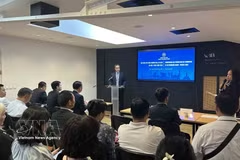
Discussions focused on French market demand, the development of products tailored to consumer preferences, the enhancement of business linkages, the improvement of tourism offerings' quality, and practical cooperation models.