Report highlights structural transformation, growth in rural areas
Policy-relevant information on the economy and society in Vietnam’s rural areas and assessments of Vietnamese rural households were detailed in a report released at a workshop in Hanoi on August 5.
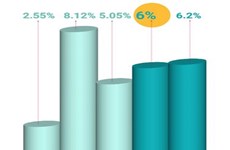
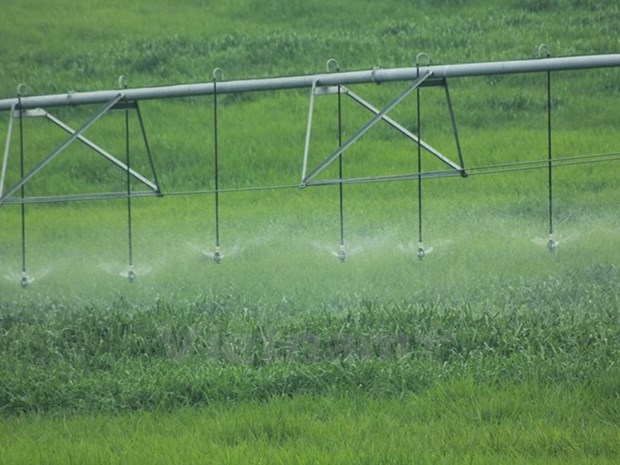
 Report highlights structural transformation, growth in rural areas ảnh 1Illustrative image (Source: VNA)

Policy-relevant information on the economy and society in Vietnam’s rural areas and assessments of Vietnamese rural households were detailed in the report “Growth, Structural Transformation and Rural Change in Vietnam: A Rising Dragon on the Move”, released at a workshop in Hanoi on August 5. 


As part of the United Nations University World Institute for Development Economic Research (UNU-WIDER) Structural Transformation and Inclusive Growth in Vietnam project, the synthesis report presented key findings and recommendations.

Addressing the event, Deputy Director of the Central Institute of Economics Management (CIEM) Nguyen Thi Tue Anh said outcomes from the report’s survey aim to draw an overall picture of the rural Vietnamese society as well as impacts related to changes in rural households and their ability to access capital resources, labour and land markets.

The report is comprehensive and a useful document for policymakers to design rural economic development plans, she noted.

According to Director of the UNU-WIDER Finn Tarp, who led the study team, the report introduced detailed studies and assessed the living conditions of Vietnamese families in rural areas and the improved social welfare services they received.

The poverty rate has reduced remarkably in rural areas and families now own more assets, he noted, expressing his hope that the report will be used to form policies in the future.

The 409-page report was based on five rounds of the Vietnam Access to Resources Household Surveys (VARHS) carried out among 2,162 households in 12 provinces in Vietnam every two years between 2006 and 2014.

It analyses the impact of rural household access to markets for land, labour and capital as well as the impacts of governmental policies on growth, inequality and poverty at the village level in Vietnam, including the distribution of gains and losses from economic growth.

It also creates a comprehensive set of materials and studies for policymakers, scholars, students and those interested in an integrated approach to studying growth, structural transformation and the microeconomic analysis of development in the country.-VNA

VNA

See more

People and vehicles travel across the Lo river pontoon bridge on the morning of February 16. (Photo: VNA)

PM commends units for constructing pontoon bridge to serve Tet travel demand

Prime Minister Pham Minh Chinh on February 16 sent a letter commending the determination and strong sense of responsibility of agencies and units in urgently building a pontoon bridge across the Lo river in Phu Tho province to promptly serve people’s travel demand during the Lunar New Year (Tet) 2026.

Prime Minister Pham Minh Chinh visits and extends Lunar New Year greetings to a patient undergoing treatment at Bach Mai Hospital. (Photo: VNA)

PM extends best wishes to doctors, patients on Tet occasion

Prime Minister Pham Minh Chinh visited and extended Tet greetings to medical staff and patients at Bach Mai Hospital and Viet Duc University Hospital in Hanoi while inspecting healthcare services during the holiday at these two leading central hospitals on February 16, or the last day of the Year of the Snake.

The Van Mieu-Quoc Tu Giam heritage site in Hanoi remains a major attraction for large numbers of visitors during the early days of spring. (Photo: VNA)

Hanoi offers free parking, public transport during Lunar New Year

During Tet, Hanoi offers free parking at selected schools and locations surrounding central heritage sites. In addition, single-journey fares are waived on the Cat Linh–Ha Dong and Nhon–Hanoi Station metro lines, while subsidised public bus services across the city are operating free of charge during the holiday period.

President Luong Cuong, his spouse, delegates and artists at the special Spring Homeland Art Programme 2026. (Photo: VNA)

Five major shifts chart overseas Vietnamese affairs in 2026 and beyond

In a world marked by intensifying strategic competition, emerging conflicts and intertwined economic, security and social challenges, nearly 6.5 million Vietnamese living in over 130 countries and territories have continued to look to the homeland as a firm spiritual anchor. The homeland remains a source of confidence, connection and aspiration for Vietnamese abroad.

Vietnamese Ambassador to Cuba Le Quang Long (right) symbolically hands over 250 tonnes of rice to Cuban Deputy Minister of Agriculture Telce Abdel González (Photo: VNA)

Vietnam supports Cuba in ensuring food security

Cuban Deputy Minister of Agriculture Telce Abdel González affirmed that Cuba will create all favourable conditions for AgriVMA’s rice production project in Los Palacios district, Pinar del Río province, with a view to expanding the model to other localities across the country.

The Binh Phuoc provincial Intelligent Operations Center (IOC), operational since September 2020, has played an important role in supporting the development of digital government. (Photo: VNA)

Breakthroughs under Resolution 57 drive local development

Following the Politburo’s Resolution No. 57-NQ/TW on advancing science, technology, innovation and national digital transformation, many localities across Vietnam are translating strategic guidelines into concrete action, laying the foundation for a new development model based on knowledge, technology and modern governance.