Resolution 57 paves way for Vietnam’s core technology development

Resolution 57 has provided strong momentum for Vietnamese enterprises to engage more deeply in the development of core technologies, gradually realising the goal of technological autonomy.

01-chip.jpg
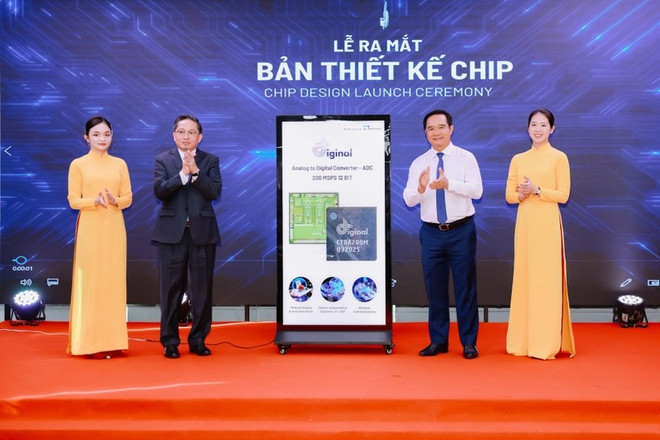
CT Group launches the first ADC chip developed by Vietnamese engineers. (Photo: CT Group)

Hanoi (VNA) - Resolution 57 has provided strong momentum for Vietnamese enterprises to engage more deeply in the development of core technologies, gradually realising the goal of technological autonomy.

Six months after the implementation of Resolution 57-NQ/TW, Vietnam’s science, technology, and innovation ecosystem has witnessed robust growth, with 858 science and technology enterprises, 45 high-tech firms, and more than 73,000 digital technology businesses in operation.

A notable highlight in the first half of the year was the active participation of major domestic technology companies. This shows that Resolution 57-NQ/TW has spread widely across society and the business community, generating social momentum and additional resources for the effective fulfilment of tasks.

The resolution has ignited the aspiration for technological mastery in Vietnam.

CT Group has been recognised as one of the pioneers in turning the resolution’s spirit into practical action. At the six-month review ceremony of Resolution 57-NQ/TW, the group unveiled the first ADC chip developed entirely by Vietnamese engineers. Remarkably, the chip was completed in only six months—a record achievement—opening opportunities for application in defence, artificial intelligence (AI), unmanned aerial vehicles (UAVs) and smart devices.

02-chip.jpg
Illustrative photo (Minh Son/Vietnam+)

This marks a strategic step towards mastering core technologies. The group is now establishing chip design houses focusing on AI, Internet of Things (IoT), and chips for strategic sectors such as UAVs, defence, 5G/6G and sensors.

Experts believe this breakthrough not only demonstrates domestic R&D capabilities but also raises expectations of building a high-tech “Make in Vietnam” value chain, where Vietnamese enterprises act as inventors, producers, and global suppliers.

CT Group has identified six strategic technology sectors as national products, including semiconductors, 6G telecommunications, UAVs, gene and cell therapy, frontier space economy, and digital transformation. Its Digital Twin 15 project is providing Vietnam’s largest data hub for the National Data Centre, strengthening digital infrastructure and management capacity.

Viettel has also defined innovation and the application of science and technology as the foundation for sustainable development.

As a defence-security enterprise, Viettel contributes to building high-tech defence capabilities, meeting national security requirements and creating momentum for domestic industry. The company focuses resources on mastering core technologies in telecommunications, AI, big data, and next-generation mobile networks (5G/6G). Viettel also commits to building digital infrastructure and technology platforms to support the Government, enterprises and citizens in digital transformation.

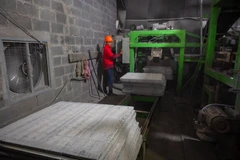
03-chip.jpg
Illustrative photo (Minh Son/Vietnam+)

VNPT, another key enterprise, has been assigned a leading role in realising the resolution’s objectives. The group has prioritised three main tasks: strengthening R&D in AI and 5G/6G technologies, developing modern digital infrastructure including data centres, VNPT Cloud, national 3D mapping and smart operation centres, and investing in high-quality human resources through training and partnerships with leading universities.

In today’s increasingly complex global tech landscape, the ability to master and develop core technologies is a direct measure of national competitiveness and economic security. For enterprises, especially in technology, technological autonomy is not just a macro-level goal but also vital for competitiveness and resilience. Dependence on foreign technology exposes firms to supply chain risks, rising costs, and reduced flexibility in product innovation and market expansion.

With its clear orientation and long-term vision, Resolution 57 has become a compass guiding Vietnamese enterprises to boldly invest in resource-intensive, high-risk but potentially groundbreaking fields.

The path to mastering core technologies remains challenging. However, the resolution has achieved the most crucial step: driving domestic businesses to change their mindset, invest confidently, and place their trust in their own capabilities.

The early achievements—such as the rapid growth of science and technology firms, the emergence of domestic R&D ecosystems, and the engagement of leading digital technology companies—have laid an important foundation for Vietnam to make significant breakthroughs in the new era./.

See more

In Vietnam, demand for infrastructure supporting AI, cloud computing, and digital services is rising at an unprecedented level. (Illustrative photo: VNA)

Vietnam emerges as new hub for data centres

Data centres have surged to become the second most preferred alternative asset class in the region. Vietnam is no exception to this trend as the demand for infrastructure supporting AI, cloud computing, and digital services has risen at an unprecedented level.

Professor Kurt Kremer, from the Max Planck Institute for Polymer Research in Germany, speaks at the event. (Photo: VNA)

Vietnam has advantages to develop versatile humanoid robots: experts

At the symposium, international and Vietnamese experts also discussed the latest trends in robotics, from socially interactive humanoids and collaborative service robots to medical and rehabilitation systems, and examined major challenges surrounding AI safety and ethics to ensure that robotics evolves in a responsible, human-centred and sustainable manner.

The organisers present members of the judging panel of the UAV Cup PV GAS 2025. (Photo: VNA)

UAV Cup PV GAS 2025 promotes Vietnam’s home-grown UAV technology

Jointly organised by Hanoi University of Science and Technology’s Institute of Space and Underwater Technology (ISUT) and Petrovietnam Gas JSC (PV GAS), the competition aims to foster innovation among young people, enhance capabilities in UAV research, design and application, and seek practical technological solutions for smart agriculture, environmental monitoring, logistics, and emergency rescue.

Assoc. Prof. Luu Anh Tuan, Executive Director of the Centre for Artificial Intelligence Research at VinUni University, speaks at the seminar. (Photo: VNA)

Vietnam advances people-centred AI development

The event brought together scientists, policymakers, and inventors to discuss responsible AI development with a focus on human-centred values. Participants explored practical applications of ethical frameworks, ensuring transparency and human oversight in AI, and promoting international cooperation to strengthen global AI governance.

Guiding a local how to apply for administrative procedures on a mobile phone (Photo: VNA)

2030 digital government blueprint with AI at core approved

By 2030, Vietnam targets completing the establishment of a digital government, forming a smart government powered by big data and artificial intelligence (AI), delivering proactive, predictive, and citizen-centric governance models.

Deputy Minister of Science and Technology Le Xuan Dinh (standing, left) speaks at the working session with INIR Mission in Hanoi on December 1. (Photo: VNA)

Vietnam, IAEA review national nuclear power infrastructure

From December 1–11, the Ministry of Science and Technology (MoST) through the Vietnam Agency for Radiation and Nuclear Safety is coordinating with relevant ministries and agencies to host an Integrated Nuclear Infrastructure Review (INIR) Mission in Hanoi. The delegation consists of seven IAEA experts, three international specialists invited by the agency from the UK, Brazil and Bulgaria, and one observer from Egypt.

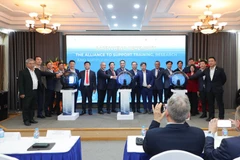
Delegates pose for a photo at the launch ceremony of the semiconductor alliance in Hanoi on November 27, 2025. (Photo: the organising board)

Alliance launched to strengthen high-quality semiconductor workforce training

Building on the coalition of five universities to develop high-quality human resources for the semiconductor industry initiated by the Ministry of Education and Training in Da Nang in 2023, VNU-Hanoi launched the semiconductor alliance to link education, research, and industry; foster an open ecosystem and develop high-quality human resources and “Make in Vietnam” semiconductor products.

Nguyen Thi Thanh Hoa, Chairwoman of the Vietnam Association for Protection of Child Rights, presents gifts to students at the ceremony (Photo: VNA)

Children’s views gathered to shape online cyber security policies

The survey found that 27.1% of children use the Internet for less than 1 hour per day, 50% for 1–3 hours, 18.8% for 4–6 hours, and 2.3% for more than 10 hours, he said, noting that the findings provide a comprehensive view of children’s Internet usage and risks related to personal safety on cyberspace.

Minister of Public Security General Luong Tam Quang hosts a reception for Jens Rubbert, Chairman of the EU–ASEAN Business Council, on November 27 (Photo: VNA)

Vietnam seeks to strengthen cybersecurity cooperation with European business community

Minister of Public Security General Luong Tam Quang met with Jens Rubbert, Chairman of the EU–ASEAN Business Council (EU–ABC), in Hanoi on November 27, during which he proposed enhanced coordination in detecting and addressing counterfeit, imitation and substandard goods, in order to safeguard the lawful rights and interests of businesses and consumers.