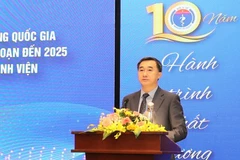
Hanoi (VNA) – The Politburo’s recent issuance of Resolution No.72-NQ/TW reflects the Party’s profound concern for public health, aiming to ensure a healthy Vietnam where all people access health care and enjoy a long and healthy life, Minister of Health Dao Hong Lan has stated.
The resolution on some breakthrough solutions in protecting, caring for, and improving people’s health was issued on September 9, 2025.
Talking to the press, Lan assessed that this resolution carries strategic, comprehensive, and long-term significance, with an action-oriented nature. It is a “resolution to implement resolutions”, featuring many new and strengthened policies for carrying out the previously issued guidelines.
It specifies five viewpoints, five groups of specific goals for 2030 with a vision toward 2045, six groups of breakthrough tasks and solutions, along with implementation responsibilities. It was developed on the principle of not replacing the existing Party resolutions or directives, but rather addressing new and important issues as well as major bottlenecks to make breakthroughs in public health care, protection, and improvement so as to achieve the set strategic goals.
First, she went on, the resolution emphasises that public health care, protection, and improvement is a goal, a driving force, a top political task holding a priority position in all development strategies and policies.
Second, it underlines the role of preventive medicine and grassroots health care. Therefore, the preventive healthcare system will be strengthened, with sufficient capacity for surveillance, early warning, and control of disease outbreaks early and from afar, while being ready to respond to public health emergencies. Meanhwile, the grassroots healthcare quality will be improved.
Third, it focuses on improving medical ethics and developing a high-quality and well-structured health workforce to secure patient satisfaction and support international integration.
Fourth, the resolution stresses the acceleration of healthcare financing reform and the sustainable and effective development of the health insurance policy as a foundation for exempting hospital fees, Lan noted.
Fifth, it targets breakthroughs in developing science, technology, innovation, and comprehensive digital transformation in health care.
Sixth, the resolution aims to make breakthroughs in developing private health care and utilising all resources for healthcare development, according to the official.
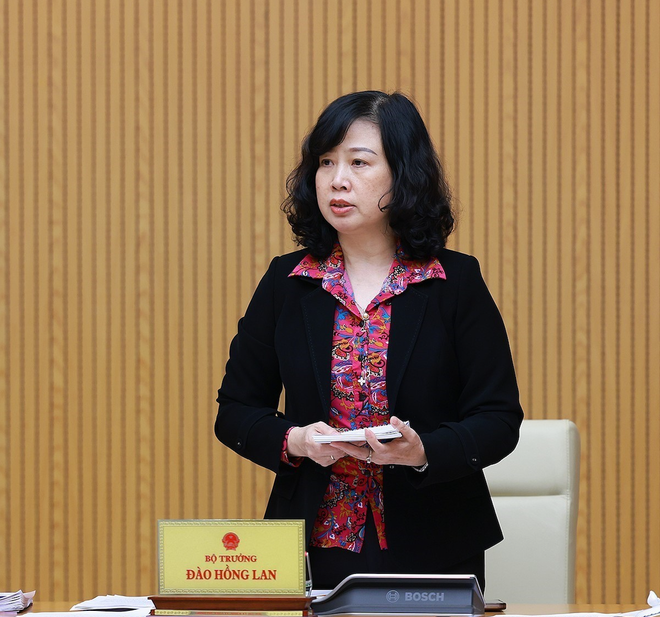
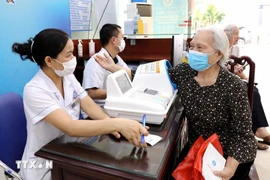
One of the key highlights of Resolution No.72 is the shift in focus from “treatment” to “prevention”. Preventive medicine and grassroots health care are the foundation, enabling people to access quality health services and comprehensive health management right at commune-level health stations.
To realise this policy, Minister Lan said that in terms of human resources, priority will be given to allocating resources for grassroots health care and preventive medicine, with strong mechanisms and policies to develop an adequate and quality workforce, especially in remote, disadvantaged, and particularly difficult areas, as well as border and insular zones.
In terms of infrastructure, essential medicines and medical equipment will be ensured to meet requirements, particularly in remote, disadvantaged, border, and insular areas.
Regarding operational and financial mechanisms, as well as functions, duties, and organisational structure, commune-level health stations will be organised as non-business public service units. This ensures the provision of basic and essential services in disease prevention, primary health care, medical examination and treatment, and social care services.
Mentioning the hospital fee waiver, the minister stated that the policy of free hospital care must be closely linked with universal health insurance coverage. This ensures that everyone participates in health insurance to share risks – those with better means supporting the poor, and the healthy supporting the sick – alongside state budget support.
In terms of benefit coverage, people will receive free routine health check-ups or screening at least once a year and have electronic health records established to manage diseases across the life cycle. This will be implemented starting in 2026. By 2030, citizens will be exempt from basic medical examination and treatment costs within the scope of health insurance benefits, following the set roadmap, she added./.