Buddhism under the Ly dynasty (1009-1225) was a special cultural heritage of Vietnam , said the Director of the Vietnam Buddhist Research Institute’s Hanoi branch.
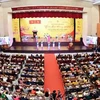
The Most Venerable Thich Thanh Due was speaking at a seminar on “Buddhism under the Ly dynasty with 1000-year Thang Long-Hanoi” in Hanoi on July 29.
The event, co-organised by the Buddhist Institute and the Institute for Religious Studies under the Vietnam Academy of Social Sciences, forms part of the Buddhist Week, to herald the millennium anniversary of Thang Long-Hanoi.
The cleric affirmed that Buddhism under the Ly dynasty became one of the most important spiritual elements in the course of liberation and development of an independent and self-reliant Dai Viet – the former name of Vietnam .
He said Buddhism under the Ly dynasty laid the first brick for the building of Vietnam ’s own Buddhism in the 11 th century before becoming a unified faith and flourishing in the end of the 13 th century and early 14 th century.
“Buddhism under the Ly dynasty gave birth to some of the nation’s great figures, typically King Ly Thai To and Great Monk Van Hanh, the two architects of the Ly dynasty and Dai Viet’s institutional regime, who opened up the glorious pages of the national history,” the Most Venerable said.
Delivering more than 100 presentations at the seminar, local and foreign researchers focused on reviewing the achievements Dai Viet gained under the Ly dynasty and the transfer of the capital city from Hoa Lu (Ninh Binh province) to Thang Long (now Hanoi).
They agreed that while recording political and military achievements and pursuing a flexible foreign policy to reinforce friendship with neighbouring countries, the Ly dynasty had a special awareness of the humanitarian values of Buddhist culture.
Under that dynasty, Buddhism’s influences have been seen in the building of Van Mieu ( Temple of Literature ), which was Vietnam ’s first university, the opening of schools and the development of a contingent of scholars, they said.
Previously, contributions made by Buddhism under the Ly dynasty have been evaluated only in terms of history and culture.
At this seminar, the participants continued to assess the religion’s contributions to the country’s development in a scientific and objective manner.
They also discussed ways and means to promote good values of Vietnamese Buddhism in the course of industrialisation and modernisation./.
The Most Venerable Thich Thanh Due was speaking at a seminar on “Buddhism under the Ly dynasty with 1000-year Thang Long-Hanoi” in Hanoi on July 29.
The event, co-organised by the Buddhist Institute and the Institute for Religious Studies under the Vietnam Academy of Social Sciences, forms part of the Buddhist Week, to herald the millennium anniversary of Thang Long-Hanoi.
The cleric affirmed that Buddhism under the Ly dynasty became one of the most important spiritual elements in the course of liberation and development of an independent and self-reliant Dai Viet – the former name of Vietnam .
He said Buddhism under the Ly dynasty laid the first brick for the building of Vietnam ’s own Buddhism in the 11 th century before becoming a unified faith and flourishing in the end of the 13 th century and early 14 th century.
“Buddhism under the Ly dynasty gave birth to some of the nation’s great figures, typically King Ly Thai To and Great Monk Van Hanh, the two architects of the Ly dynasty and Dai Viet’s institutional regime, who opened up the glorious pages of the national history,” the Most Venerable said.
Delivering more than 100 presentations at the seminar, local and foreign researchers focused on reviewing the achievements Dai Viet gained under the Ly dynasty and the transfer of the capital city from Hoa Lu (Ninh Binh province) to Thang Long (now Hanoi).
They agreed that while recording political and military achievements and pursuing a flexible foreign policy to reinforce friendship with neighbouring countries, the Ly dynasty had a special awareness of the humanitarian values of Buddhist culture.
Under that dynasty, Buddhism’s influences have been seen in the building of Van Mieu ( Temple of Literature ), which was Vietnam ’s first university, the opening of schools and the development of a contingent of scholars, they said.
Previously, contributions made by Buddhism under the Ly dynasty have been evaluated only in terms of history and culture.
At this seminar, the participants continued to assess the religion’s contributions to the country’s development in a scientific and objective manner.
They also discussed ways and means to promote good values of Vietnamese Buddhism in the course of industrialisation and modernisation./.