Soil washing effective for dioxin contaminated land: Seminar
The soil washing technology has proved to be effective in treating dioxin-contaminated soil at Bien Hoa Airport in the southern province of Dong Nai, experts said at a seminar held in Hanoi on December 8.
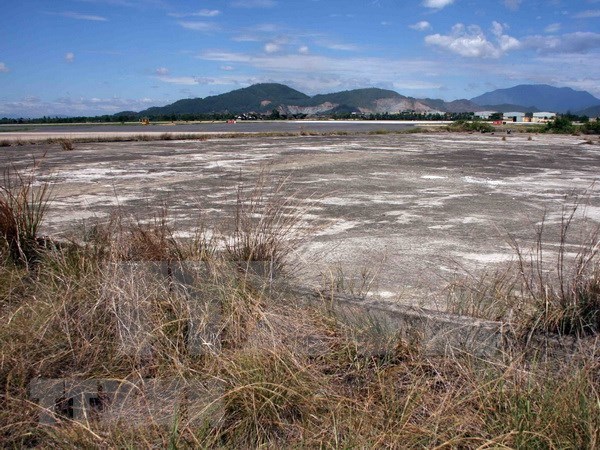 Bien Hoa airbase has high level of dioxin contamination (Photo: VNA).
Hanoi (VNA) – The soil washing technology has proved to be effective in treating dioxin-contaminated soil at Bien Hoa Airport in the southern province of Dong Nai, experts said at a seminar held in Hanoi on December 8.
The technology was trialed by the Centre for Technology Environmental Treatment’s Chemical Command under the Ministry of Defence and Japan’s Shimizu Corporation during 2019-2020.
Shimizu Corporation has remediated millions of tonnes of contaminated land in Japan using this technology. However, due to the high level of dioxin contamination at Bien Hoa airbase, the company said it was necessary to try the technology out to evaluate its efficiency.
The firm shipped a mobile-type soil washing plant from Japan, and installed it at Bien Hoa airbase in November 2018. The plant began operation in March 2019. Soil washing was piloted on various soil samples in different dioxin concentrations, and was successful in removing 95 percent of the dioxins in feed soil.
Shimizu’s soil washing is a water-based process utilizing “physical separation” based on mining and mineral processing principles for removing a broad range of organic and inorganic contaminants from soils. Hydrocyclone and flotation are the most important separation methods used in soil washing process. Hydrocyclone separates the fine soil from larger sand particles by the centrifugal force. Larger sand particles end up in the underflow; fine/light particles (silt, clay, organic) and water end up in the overflow.
As soil washing is low-cost and imposes little environmental burden compared to thermal treatment, experts said it should be considered to be applied further in the time ahead, they said.
The area surrounding Bien Hoa airport contains high levels of the chemical and is considered one of the country’s dioxin hotspots. According to assessments from Vietnam and the US, some 500,000 cu.m of dioxin-contaminated land in the airport need to be treated, requiring a large amount of capital and technology./.




You should also see

China’s fishing ban in East Sea violates Vietnam’s sovereignty: spokesperson
Foreign Ministry spokesperson Pham Thu Hang on April 25 said Vietnam’s consistent stance on China’s fishing ban in the East Sea, which has been affirmed clearly over the past years.



See more
 Environment
Consultation workshop on Cambodia’s Funan-Techo canal held in Can Tho
The Vietnam National Mekong Committee (VNMC) on April 23 held a consultation workshop on Cambodia’s proposed Funan-Techo canal project which has raised concerns about potential impacts on the Mekong river.
 Environment
Up to 1,000 ban flowers planted at Dien Bien Phu battlefield relic sites
About 1,000 ban (Bauhinia variegate) flower trees were planted at relic sites such as A1 Hill, Him Lam resistance centre and De Castries Bunker at Dien Bien Phu battlefield relic complex in the northern province of Dien Bien on April 21.
 Environment
Vietnam acts to combat white pollution
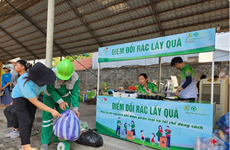
The Vietnamese Government has issued a lot of policies, participated in various forums, and promoted international cooperation, demonstrating its activeness and affirming its determination to reduce plastic waste and join global efforts toward a planet without white pollution.
 Environment
Can Tho explores climate change cooperation with foreign countries
Leaders of the Mekong Delta city of Can Tho on April 17 met with a visiting delegation from the Embassies of Canada, New Zealand, Norway, and Switzerland to discuss issues related to erosion, climate change, migration, and the city's current needs for support and cooperation.
 Environment
Nghe An: Man captured for illegal wildlife transport
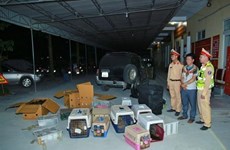
Police in Vinh city, the central province of Nghe An, have captured a suspect involved in the illegal transport of 420 rare wildlife animals, including parrots, kangaroos, turtles, and monkeys.
