Strength of unity leads Vietnamese nation to every victory: Indian expert

Over the past 80 years, the relationship between Vietnam and India has evolved from solidarity in the struggle against colonialism to a Comprehensive Strategic Partnership, built on historical empathy, strategic trust, and shared interests in a multipolar Asia.

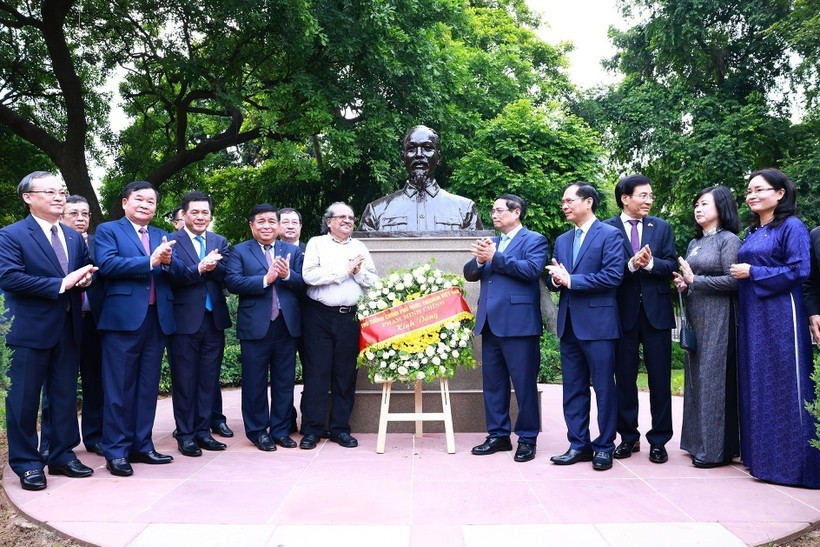
Prime Minister Pham Minh Chinh (fifth from right) and the Vietnamese delegation stand next to the statue of President Ho Chi Minh in New Delhi in July 2024. (Photo: VNA)

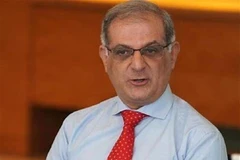
New Delhi (VNA) - The success of Vietnam’s August Revolution on August 19, 1945 stemmed from four factors: Marxism-Leninism, national unity, the leadership role of President Ho Chi Minh, and the steadfast prioritisation of national interests, former Indian Deputy National Security Advisor S.D. Pradhan has said.

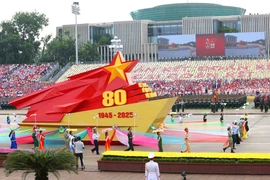
Talking to the Vietnam News Agency’s correspondents in New Delhi on the occasion of Vietnam’s 80th National Day (September 2, 1945-2025), Pradhan said that September 2, 1945 is a significant milestone in Vietnam’s history, marking the end of colonial rule, the monarchy, and the birth of the Democratic Republic of Vietnam (now the Socialist Republic of Vietnam).

This was the direct outcome of the August Revolution led by President Ho Chi Minh. With his strategic vision and ability to unite the people, he guided the nation to independence.

Notably, the late President always placed emphasis on ensuring human rights, freedom of belief, ethnic and gender equality, and respect for private property, thereby attracting both landlords and the national bourgeoisie to join the Viet Minh Front. This broad unity became a decisive source of strength, the expert affirmed.

Regarding the India-Vietnam ties, the former Indian Deputy National Security Advisor said that over the past 80 years, the relationship has evolved from solidarity in the struggle against colonialism to a Comprehensive Strategic Partnership, built on historical empathy, strategic trust, and shared interests in a multipolar Asia. The two countries now cooperate closely in defence, trade, culture, and regional security, becoming reliable partners in the Indo-Pacific region.

According to Pradhan, the 80 years of bilateral friendship have left many valuable lessons for international relations. First, it is the respect for sovereignty and shared values. Second, diplomacy must be based on open, honest, and consistent communication at all levels. Third, economic cooperation should be grounded in mutual benefits. Fourth, strategic partnerships must be linked with regional stability. And fifth, people-to-people exchanges are an essential pillar, helping to enhance understanding and foster lasting bonds./.

VNA
See more

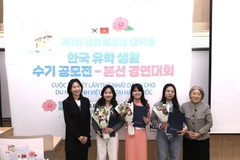
First-prize winners of the writing contest featuring Vietnamese students in the Republic of Korea. (Photo: VNA)

Writing contest highlights life of Vietnamese students in RoK

Contestants were required to complete three stages: an essay in Korean (2,000–3,000 words), and an online interview. A total of 18 contestants from universities across the RoK were selected for the final, where they delivered a Korean-language presentation summarising their essay.

Thailand plans to open Andaman petroleum blocks

Thailand plans to open Andaman petroleum blocks

Thailand’s energy policy must maintain a balance between security, sustainability and affordability. Over-prioritising any one pillar would harm both the public and the country’s competitiveness.

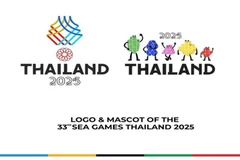
The logo and mascot of the 33rd SEA Games in Thailand (Photo of the organisers)

Thailand steps up promotion of local culture at 33rd SEA Games

The Sports Authority of Thailand (SAT) and the Ministry of Commerce have launched the “Taste, Shop, Cheer” programme at all competition sites, offering selected local foods and products to showcase Thailand’s soft power and high-quality goods to the ASEAN community.

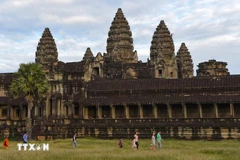
Angkor Wat temple in Cambodia (Photo: AFP)

Cambodia to pilot visa waiver for Chinese tourists

The exemption allows a 14-day stay during the four-month pilot, without requiring any application or fees. The completion of an e-arrival card upon entry is still required. During the pilot period, Chinese tourists can enter Cambodia multiple times.

Chief Economist at IQI Global Shan Saeed (Photo: VNA)

Five economies seen powering ASEAN’s next growth cycle

The MIT-PV economies are quickly becoming the mainstay of ASEAN’s next growth supercycle, supported by booming populations, rising wealth, structural reforms, and stategic convergence of human resources development, infrastructure modernisation, and resources.

Tourists inside a beer shop in Thailand. (Photo: AFP)

Thailand eases alcohol sales restrictions

Thailand ranked 16th out of nearly 200 countries for the most road traffic deaths per capita in 2021, WHO data shows. Nearly 33,000 people were killed in drunk driving incidents in the country from 2019 to 2023, according to public health ministry figures.

Illustrative image (Photo: tribune.net.ph)

Philippines dismisses over 9,000 police personnel

Data from the PNP Directorate for Personnel and Records Management released on December 3 showed that from July 2016 to November 26, 2025, a total of 32,698 police personnel were found guilty of various administrative offenses.

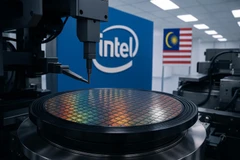
Intel to invest additional 208 million USD in Malaysia (Photo: invezz.com)

Intel to boost investment in Malaysia

The US is Malaysia’s third-largest market for semiconductor exports. In 2024, Malaysia exported 120 billion MYR (28 billion USD) in electrical and electronic products to the US, with around half related to chips.