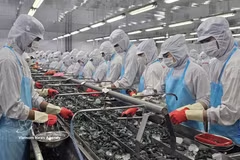
Leading economists have forecast a healthy 10% increase in Vietnam’s garment and textile exports for 2014 to 23 billion USD.
However,according to radio The Voice of Vietnam (VOV), the National Garment andTextile Group (Vinatex) cautions that a number of thorny problems,particularly those dealing with the procurement of raw materials, mustbe overcome if such an optimistic outlook is to be achieved.
Thesector is overly dependent on the importation of raw materials to meetits production quotas, which adds significantly to its production costs,Vinatex reports.
Additionally, businesses are under financialpressures resulting from increases in other production costs such aselectricity and transportation, which are even more exaggerated by anincrease in the minimum wage that went into effect on January 1 of thisyear.
Further exasperating the sector is the lack of highlytrained workers and an uneven distribution of them in regions throughoutthe country, the report states.
Vinatex also points out that,local businesses face challenges from “black market activities” such asillegal smuggling in the domestic market along with an influx of amyriad of fake and inferior quality products with the phony “Made inVietnam” label flooding the market.
These activities are dentingthe images of many high-profile Vietnamese garment and textilesbusinesses and creating a lack of consumer trust in their internationalconsumers.
Vinatex’s said its priorities are to maintain anexport growth by focusing on increasing the rate of growth in originaldesign manufacturer (ODM) products to 12-14%. Regarding Free-on-Board(FOB) products, the group must optimise orders to bring added value totheir products.
Vinatex will diligently strive to duplicate aproduction model in 2014 which has been applied successfully in similarbusinesses to reduce stockpiles, improve labour productivity andincrease the competitive edge of products.
To develop domesticmaterial sources, Vinatex said that it is imperative to strengthencoordination between garment and textile businesses and productionsectors in order to shift resources of materials among businesses.
Thepromotion of both foreign and domestic investment in garment andtextile material will facilitate an increase in the rate of localisationand increase the added value of products as well as reduce importsurplus.
Concurrently, the State should devise much improvedzoning plans to support the development of the dyeing and textileindustry to produce high-quality raw materials in country.
Withoutgood materials produced in Vietnam, the garment and textile sector willnot be able to satisfy the quality demands of Vietnamese andinternational consumers.-VNA