Hanoi (VNA) - The Ministry of Education and Training has completed the first phase of the comprehensive and fundamental reform of education from grades 1 to 12 for 2025. This is according to Resolution 29 of the Party Central Committee and Resolution 88 of the National Assembly. This is also the year that the implementation of the Education Development Strategy to 2045 will begin.
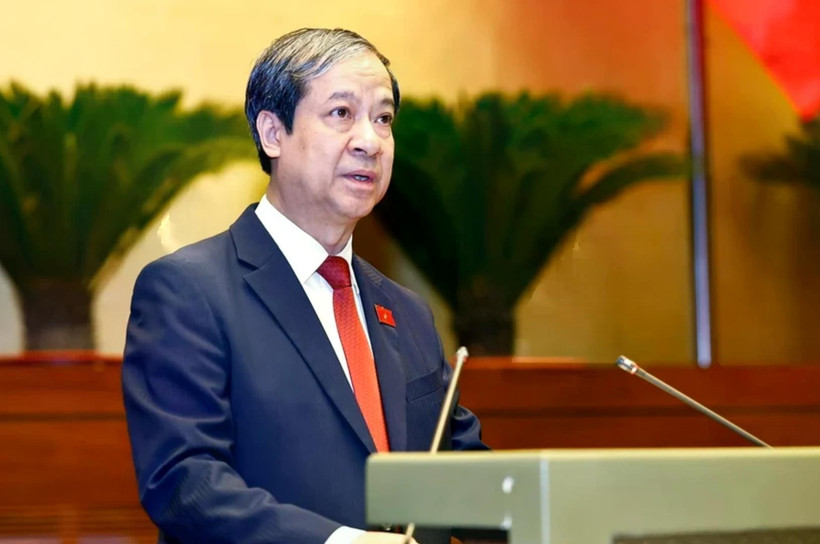
Minister of Education and Training Nguyen Kim Son shared the sector’s key tasks with the press.
Reporter: Could you please share the key tasks of the education sector in 2025?
Minister Nguyen Kim Son: In 2025, the education sector has many tasks and responsibilities to continue fundamental and comprehensive reforms.
One of the major tasks is that the Ministry of Education and Training will finalise the Government’s Action Programme to implement Conclusion No. 91-KL/TW dated August 10, 2024, by the Politburo on executing Resolution No. 29-NQ/TW. Once the Action Programme is issued, the next step will be to develop plans and begin the execution.
Currently, the Ministry of Education and Training is in the process of finalising the Education and Training Development Strategy to 2030, with a vision to 2045, which will be issued at the beginning of 2025. Along with the Action Programme to implement Conclusion No. 91 by the Politburo, the strategy will be a critical foundation for the next steps in the development of education and training.
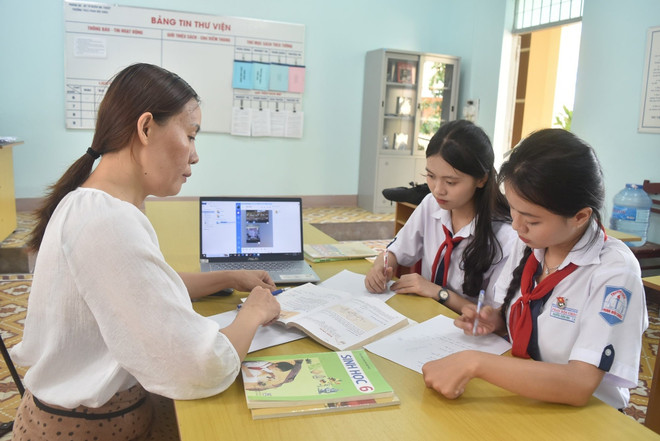
Last year marked the completion of the first phase of the implementation of the 2018 General Education Programme across all three educational levels nationwide. In the first half of 2025, with critical tasks such as completing the second semester, the high school graduation exam, and university and college admissions, will be the point at which this first phase can be concluded. After four years of practical implementation, in 2025, the Ministry of Education and Training will carry out a review of the initial phase of the 2018 General Education Programme to set new goals and solutions for deeper reform in the next phase.
In the first half of 2025, the draft Teacher Law will be submitted to the 15th National Assembly during its 9th session. Recognising the importance of this, the ministry has been focusing on completing the draft law after its first round of feedback from the National Assembly. We hope that the enthusiasm and dedication behind the draft law, which aims to develop the teaching workforce and solve many issues related to teacher management over the years, will convince the National Assembly deputies and society at large. Not only we, but also more than 1.6 million teachers across the country are eagerly awaiting the official promulgation and execution of the Teacher Law. At the same time, we will review the Education Law, Higher Education Law, and Vocational Education Law to consider amendments and additions.

When the first phase of the 2018 General Education Programme is completed, the new Pre-school Education Programme will be piloted in 20 provinces and cities across the country. The year 2025 will mark the beginning of reforms in early childhood education - a foundational level that still faces many challenges today.
The country is entering a "new era - the era of the nation’s rise”. Recently, the Politburo issued a resolution on breakthroughs in the development of science, technology, innovation, and national digital transformation. The Prime Minister issued a directive to strengthen human resources training for the semiconductor industry and several key digital technology sectors, alongside other important policies. The education sector clearly understands its critical responsibility in this important phase, as all "breakthroughs" aimed at success must begin with people, with human resources.
Along with other ministries, agencies, and localities, 2025 will also be a year when the Ministry of Education and Training, and the education sector focus on streamlining and enhancing the effectiveness and efficiency of state management. In the immediate term, we are implementing the merger and reception of units and focal points as directed by the Party Central Committee. This area of work will involve many tasks to be carried out in 2025.
Reporter: On December 31, 2024, the Prime Minister approved the Education Development Strategy to 2030, with a vision to 2045. What is the significance of this strategy for the sector in the coming years?
Minister Nguyen Kim Son: The Education Development Strategy to 2030, with a vision to 2045 is an important step to institutionalise the guiding principles of the Party and the State regarding education development. This is outlined in Resolution 29-NQ/TW dated November 4, 2013, on the reform of education and training, the Resolution of the 13th National Party Congress, Conclusion No. 91-KL-TW dated August 12, 2024, from the Politburo on Resolution No. 29-NQ/TW, and the Socio-economic Development Strategy for the 2021-2030 period.
This strategy affirms that education and training development is a top national policy. It plays a key role as the driving force for national development and should be prioritised for investment. It emphasises reforms in education and training, aiming to develop the capabilities of learners, especially their ability for innovation and creativity. It seeks to effectively implement the principle of learning linked to practice, theory connected with reality, and the combination of school education with family and social support. It promotes a learning society, and proactively boosts international integration.
The strategy confirms that the goal of education and training is for the well-being and happiness of people. It maximises the human factor, with people put at the centre, considered the subject, motivation, and resource for development. It lays the foundation for achieving the goal of rich people, a strong, democratic, just, and civilised nation, and a prosperous and happy country.
The Education Development Strategy to 2030, with a vision to 2045 sets the overall goal of developing Vietnam’s modern education, promoting the nation's good traditions, absorbing global civilisation, and fostering the comprehensive development of Vietnamese people to meet the new requirements of socio-economic development in the new era. Vietnamese education aims to reach the advanced level of Asia by 2030, and that of the world by 2045.
For the education sector, 2025 will be the starting year, focusing on implementing the Education Development Strategy to 2030, with a vision to 2045, in order to achieve the goals set out in the strategy and contributing to ushering the country into the new era.
Reporter: With many important tasks ahead in 2025, do you have any messages for the staff, teachers, and students across the sector, as well as for parents and society?
Minister Nguyen Kim Son: 2025 can be seen as a pivotal year, as the completion of many tasks this year will lay the foundation and create momentum for the development process in the next five years. With numerous tasks and responsibilities ahead in 2025, I hope that the entire sector, which has already made significant efforts, will continue to strive and complete the tasks and goals we have set to the best of our ability.
In 2024, we witnessed decisive actions in the policies regarding investment and attention to education from the central to local authorities. Many localities have implemented specific policies on tuition fees, policies for teachers, and investment in infrastructure to promote the development of education and training. I hope that these drastic and effective policies will continue to be reflected in 2025 and the years to come.
I also hope that with society's support, understanding, and sharing the education sector will grow even more.
On the occasion of the New Year, I would like to send my best wishes for health, peace, and happiness to the staff, teachers, and employees who are working in the education sector. I wish students a new year filled with joy, progress, and success in their studies.
Reporter: Thank you very much!