Vietnamese lemon is sold at a supermarket in Germany. (Photo: VNA)
 Berlin (VNA) – Since the EU-Vietnam Free Trade Agreement (EVFTA) took effect in August 2020, most commitments in the agreement have been implemented and left positive impacts on business activities, especially trade, said Do Viet Ha of the Trade Office of the Vietnamese Embassy in Germany.
She cited statistics from the General Department of Vietnam Customs which showed Vietnam’s total export turnover to 27 member countries of the European Union (EU) in the period 2020-2022 recorded good growth.
Specifically, in 2022, total value of Vietnam’s export to the EU reached 46.83 billion USD, marking a year-on-year increase of 16.7%, and accounting for 12.6% of Vietnam's total export turnover. Particularly, exports to Germany totalled 8.97 billion USD, up 23.1% compared to 2021.
Meanwhile, data from the German Federal Statistical Office (Destatis) showed Germany's import turnover from Vietnam reached 15.4 billion USD, up 21% compared to 2021, Ha said, explained that the difference between the figures is due to statistical methods and different rules of origin applied.
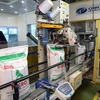
 Mango processing for export at Nafoods Group Joint Stock Company. (Photo: VNA)
 She listed some Vietnamese export items that recorded impressive growth to Germany, which were cameras, camcorders, and components, up 265.9%; toys and sports equipment up 126%; footwear 53.8%; textiles 37%.
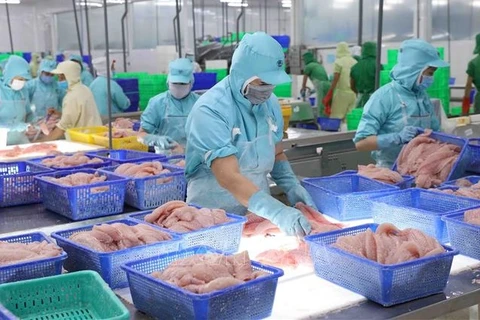
The export of some agricultural and aquatic products grew steadily, with aquatic products increasing by 26.1%; vegetables by 8%; coffee by 13.1%; tea by 14.6%.
The EU is Vietnam's third-largest trading partner and an import market for agricultural products with strong growth after the EVFTA came into effect. Vietnam's agricultural sector is considered one of the biggest beneficiaries of the EVFTA.
Vietnam's key agricultural products exported to the EU are seafood, rice, and vegetables, which all enjoy preferential tax rates right after the EVFTA comes into effect, while rules on origin and protection of geographical indications give Vietnamese agricultural and aquatic products opportunities to enhance their brands and product value on the EU market.
The official noted that rice is not a key item in export to the EU, but its export turnover in this market has increased steadily in recent years. This shows that EVFTA has actively supported Vietnam's exports. Businesses also make the most of the rice quotas to enjoy the 0% tax rate that the EU gives Vietnam.
Last year, rice exports to the EU market increased sharply, reaching 94,510 tonnes and exceeding the annual quota of 80,000 tonnes set in the EVFTA. Rice exports to some EU markets posted strong growth such as the Netherlands (44%), Poland (68%), Spain (89%), and Belgium (149%).
Regarding the benefits of the agreement for EU countries, Ha said that Vietnam has made a strong commitment to cutting taxes under the EVFTA, thereby offsetting the high transport costs from EU to Vietnam and increasing EU products' competitiveness.
Products from Germany/EU enjoy tariff reduction under EVFTA including vehicles, electrical machinery and equipment, plastic products, iron and steel, mineral oil, meat and poultry, sausages, milk, and dairy products.
In addition, Vietnam's commitments related to customs reform and trade facilitation, food hygiene and safety, animal and plant quarantine, technical measures for trade, and trade remedies make it easier for EU goods to access the Vietnamese market.
However, when entering the EU market, Vietnamese goods still face difficulties, particularly in meeting the rules of origin to enjoy preferential tariffs, and the risk of increasing trade remedies, Ha said.
To overcome these difficulties and maximise benefits from the EVFTA, the official said that businesses need to proactively study the guidelines of the agreement, the standards of goods exported to the EU market, as well as the EU market, people's tastes and consumption need, with a view to suitably improving product quality and design.
According to Ha, the government needs to develop an overall strategy to provide orientations and roadmaps for ministries, sectors, and localities to fully and promptly implement the commitments of the EVFTA; develop mechanisms to facilitate the development of domestic enterprises, prepare solutions to support industries under great competitive pressure when implementing the agreement.
More policies are also needed to attract foreign investment from the EU to Vietnam, she said./.