Hanoi (VNA) - The past 80 years have been a remarkable journey of transformation for Vietnam - from a newly independent nation to one confidently shaping its future, marked by outstanding achievements across all fields.
According to Associate Professor Dr. Vu Trong Lam, Director and Editor-in-Chief of the Truth National Political Publishing House, by 2024 Vietnam’s GDP had reached 476.3 billion USD, ranking fourth in Southeast Asia and 34th globally.

The country’s per capita GDP rose to 4,700 USD - more than 130 times higher than in 1945.
Vietnam’s total trade turnover reached 786 billion USD, maintaining its position among the world’s top 20 economies in terms of trade and foreign investment attraction.
Foreign direct investment (FDI), which was almost nonexistent before 1991, had by 2024 accumulated a total registered capital of nearly 502.8 billion USD, with disbursed capital of approximately 322.5 billion USD.
Vietnam is undergoing a strong transformation toward a digital economy, high-tech industries, and innovation-driven production models.
Proactive and dynamic international economic integration has enabled Vietnam to establish trade relations with more than 230 countries and territories, and to sign 17 free trade agreements (FTAs) with over 60 economies.
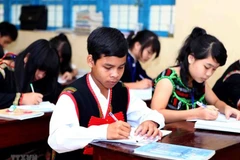
By 2025, the vast majority of Vietnam’s adult population is literate, with universal primary and secondary education achieved.
School attendance rates at all levels have reached nearly 99%, while the higher education network has expanded to more than 300 institutions — many of which, particularly in information technology, digital engineering, and biomedical sciences, have gained international recognition.
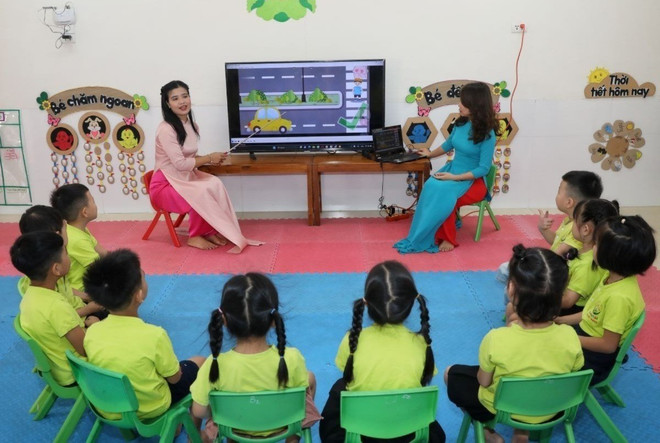
Vietnam ranks among middle-income countries with the highest Global Innovation Index (GII) scores, placing 44th worldwide in 2024 — maintaining its outstanding performance for 13 consecutive years.
The country’s startup ecosystem has also risen from fifth to third place among the six leading economies in Southeast Asia.
After 1975, Vietnam implemented a comprehensive national healthcare model. By 2025, the country’s average life expectancy had reached 74.5 years — an increase of more than 36 years compared to 1945, when the nation gained independence.
The public hospital system has been modernised and integrated from local to central levels, while electronic health records have been introduced in over 80% of provinces and cities.
Health insurance has been widely expanded, with nationwide coverage expected to reach 95% by 2025 — a remarkable leap from less than 5% before the 1990s.
The multidimensional poverty rate has fallen to below 5%, down from over 70% in the late 1980s, reflecting the effectiveness of key social welfare programs such as poverty reduction, support for vulnerable households, and preferential policies for remote and disadvantaged areas.

Vietnam welcomed nearly 18 million international visitors in 2024, most of whom chose cultural-historical heritage and local experience-oriented tourism.
With 16 elements inscribed on UNESCO’s Representative List of the Intangible Cultural Heritage of Humanity, Vietnam has demonstrated its strong capacity to preserve and promote its culture beyond national borders.
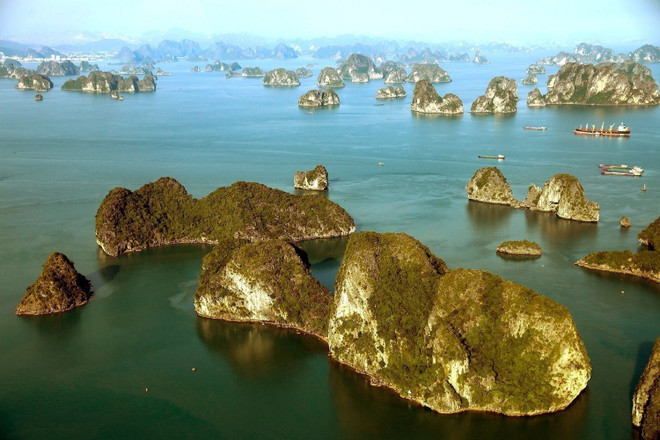
After eight decades, Vietnam’s national defense and security have undergone a remarkable transformation, establishing a strong posture of all-people national defense and people’s security — on land, at sea, in the air, and in cyberspace.
The country maintains a proactive stance of safeguarding the Fatherland early and from afar — even before potential threats arise — while closely combining nation-building with defense, and taking development as a means of protection.
Vietnam has also been actively and proactively building a comprehensively strong armed force during peacetime to create effective deterrence, preventing all acts of aggression as well as hostile schemes and sabotage activities.
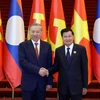
Vietnam has established diplomatic relations with 194 countries, including 37 strategic and comprehensive strategic partners, and is a member of more than 70 international organizations.
The country has successfully assumed major international roles such as ASEAN Chair, President of the United Nations Security Council, and member of the United Nations Human Rights Council — reaffirming its position as a responsible global actor.
Vietnam actively contributes to addressing global challenges, including climate change, peacekeeping, development cooperation, and regional security./.