Hanoi (VNA) – Over the past three decades since the International Conference on Population and Development (ICPD), Vietnam’s population efforts have played a positive role in fostering economic development, narrowing inequality, advancing social progress, and improving the quality of life, remarked Minister of Health Dao Hong Lan at a recent ceremony marking the World Population Day in Hanoi.
Themed "The pursuit of reproductive agency in a changing world", the July 11 event was co-organised by the Ministry of Health and the United Nations Population Fund (UNFPA) in Vietnam.
In her remarks, Lan noted that Vietnam has achieved numerous important results in the field of population. Population growth has been brought under control, while the average life expectancy reached 74.7 years in 2024, higher than many countries with similar income levels. The quality of services such as reproductive healthcare, family planning, pre-marital counselling, prenatal and neonatal screening, and elder care have all been continuously strengthened and improved.
However, despite these achievements, the country is facing several challenges that threaten sustainable development, the Health Minister said.
The total fertility rate has dropped to the lowest level in the country’s demographic history and is forecast to decline further in the coming years. According to the 2024 population census, the fertility rate fell from 2.01 children per woman in 2022 to 1.96 in 2023, and further to 1.91 in 2024. Meanwhile, population ageing is accelerating.
Although the increase in sex ratio at birth has been somewhat brought under control, it remains unstable and above the natural balance.Meanwhile, adolescent pregnancy and childbirth are on the rise, while child marriage and consanguineous marriage remain prevalent in regions such as the Central Highlands and the northern midland and mountainous areas (at a rate of 21.9%).
Lan went on stressing that the Population Ordinance amended in 2025 has just been passed. It affirms individuals and couples have the right to make voluntary reproductive choices, in line with their health and circumstances.
She also revealed that the ministry is actively drafting the Law on Population and a national target programme on health, population and development for 2026–2035, aiming to ensure the welfare, health, and equality for all citizens, with people placed at the heart of sustainable development.
She stated that Vietnam hopes to continue receiving close cooperation from international organisations, diplomatic missions, and the global community in responding effectively to the dual trend of declining fertility and rapid population ageing. It is also seeking support in completing the Law on Population.
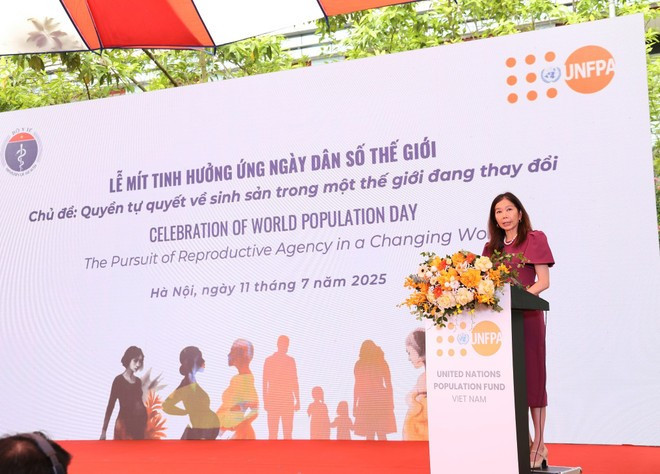
Speaking at the event, Pauline Fatima Tamesis, UN Resident Coordinator in Vietnam, affirmed that the UN remains committed to cooperating closely with the Vietnamese Government in ensuring universal access to quality reproductive health services, advancing comprehensive population policies, expanding age-appropriate and comprehensive sexuality education, providing youth-friendly services, and strengthening data systems for improved planning and investment.
Matt Jackson, UNFPA Representative in Vietnam, presented highlights from the State of World Population Report 2025, commending Vietnam’s efforts to uphold reproductive autonomy for all.
Jackson stressed that there can be no sustainable development without the right to reproductive autonomy. Ensuring every person’s right to choose means empowering families, promoting gender equality, and unlocking the potential of demographic change./.