Vietnam agrees 7.3-percent minimum wage increase
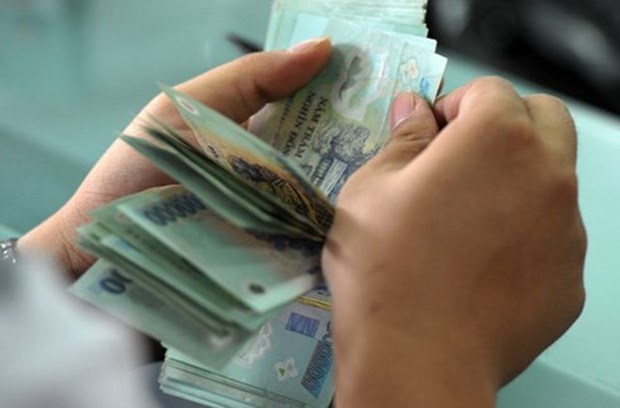 The monthly minimum wage will increase by an average of 7.3 percent next year (Photo: VNA)
Hanoi (VNA) – The monthly minimum wage will increase by an average of 7.3 percent next year.
Deputy Prime Minister Vuong Dinh Hue agreed with the National Salary Council’s proposal to adjust the monthly minimum wage for next year, as part of a conference on salary policy reform, social insurance and policies for people with special contribution to the nation held in Hanoi on September 7.
The minimum wage varies across the four zones, based on cost of living and location.
Under Hue’s agreement, the monthly minimum wage for four zones will increase by from 7.1 percent to 7.5 percent. It means that the monthly minimum wage will up about 180,000-250,000 VND (8-11 USD) per month depending on location.
Zone 1 covers urban Hanoi and HCM City, zone 2 covers rural Hanoi and HCM City along with urban Can Tho, Da Nang and Hai Phong cities, zone 3 applies to provincial cities and the districts of Bac Ninh, Bac Giang, Hai Duong and Vinh Phuc provinces, and Zone 4 takes care of the remaining localities.
Pham Minh Huan, Deputy Minister of Labour, Invalids and Social Affairs, said that the minimum wage bump was met with the strongest consensus ever reached between the Vietnam General Confederation of Labour (VGLC), which represents employees, and the Vietnam Chamber of Commerce and Industry (VCCI), which represents employers.
Huan said that rate was adjusted to offset currency depreciation and would be based on current socio-economic conditions, including basic living costs for workers and their families.
The minimum wage increase would not only meet labourers’ basic living costs, but also ensure enterprise development, he said.
Huan also mentioned a difficulty: enterprises’ expenditures will increase sharply, because they not only must adjust monthly salary for their workers but also must increase their contribution to social insurance. At the present, total social insurance takes up 32.5 percent of monthly salary, of which employers must pay 22 percent.
Many employers have called that portion too high, and some have proposed that they should pay only 18 percent.
Huan said that the National Salary Council will calculate and consider a reduction in employers social insurance payments.
Speaking at the conference, Deputy PM Vuong Dinh Hue asked the Ministry of Labour, Invalids and Social Affairs (MoLISA) to collect recommendations and ideas from concerned ministries and enterprise associations about the wage increase and submit their findings to Prime Minister Nguyen Xuan Phuc for approval within this month.
Hue asked the MoLISA to continue monitoring the minimum wage’s effect on enterprises’ work and workers’ lives, striving to harmonise employers’ and employees’ rights.
The minimum wage increase took a long time to finalise because the VGLC and the VCCI at first failed to reach an agreement.-VNA





You should also see

PM urges stronger cooperation between Vietnamese, Chinese Ministries of Justice



See more
 Society
Hanoi’s virtual monthly passes help commuters travel with ease
 Society
Overseas Vietnamese in Russia commemorate Hung Kings
 Society
Amended Land Law - breath of fresh air blown into real estate market: lawyer
 Society
Green growth – a pillar of Vietnam-Australia comprehensive strategic partnership
 Society
