Vietnam - bright spot in fight against HIV/AIDS

The Vietnamese Government remains committed to prioritising resources, developing synchronous policies, and implementing effective measures for HIV/AIDS prevention and control, Deputy Prime Minister Le Thanh Long said on November 29.

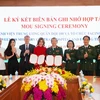
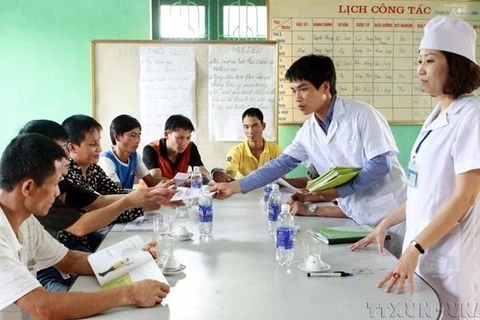
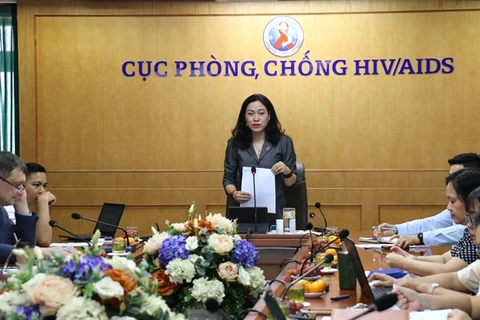
Participants at the event held in response to World AIDS Day (Photo: baochinhphu.vn)

Hanoi (VNA) – The Vietnamese Government remains committed to prioritising resources, developing synchronous policies, and implementing effective measures for HIV/AIDS prevention and control, Deputy Prime Minister Le Thanh Long said on November 29.

Speaking at a hybrid meeting organised by the Ministry of Health to mark World AIDS Day (December 1), Long, who is also Chairman of the National Committee for AIDS, Drugs, and Prostitution Prevention and Control, emphasised that this event calls on every individual, organisation, community, and nation to join hands, share responsibility, and demonstrate resilience to protect the health of themselves and their communities. He reaffirmed Vietnam's commitment to creating a society free from fear and stigma toward people living with HIV.

Vietnam has made notable strides in combating HIV/AIDS, with key milestones such as reducing new HIV infections and AIDS patients, lowering AIDS-related deaths, and curbing disease progression. However, Long acknowledged that challenges remain and the HIV/AIDS epidemic continues to threaten public health and socio-economic development, while stigma and discrimination against people living with HIV persist.

To meet the goal of ending AIDS in Vietnam by 2030, he urged ministries, central agencies, local authorities, and socio-political organisations to integrate HIV/AIDS prevention and control into broader economic and social development plans. He also called for the continued implementation of Party guidelines and State policies, along with increased investment and financial support for prevention efforts.

The health sector was tasked with mobilising and efficiently utilising all resources while leveraging advancements from the Fourth Industrial Revolution to combat HIV/AIDS. Efforts should prioritise high-risk areas and focus on specialised prevention and control measures.

“The health sector must ensure easy access to HIV/AIDS prevention services for the public, involve private healthcare providers in treatment, enhance professional capacities, and offer appropriate incentives for persons engaging in anti-HIV/AIDS work,” Long stressed.

He also expressed gratitude to international partners, urging them to continue supporting Vietnam with financial resources and technical expertise, and in the adoption of global best practices.

Minister of Health Dao Hong Lan highlighted Vietnam’s remarkable progress over nearly 35 years of implementing the anti-HIV/AIDS programme, which has positioned the country as a regional and global leader in HIV/AIDS prevention and control.

“Vietnam has implemented comprehensive strategies, providing services that range from prevention to testing and treatment, while significantly expanding programme coverage,” she said. By 2024, approximately 48,000 individuals are expected to receive opioid substitution therapy, and 70,000 access pre-exposure prophylaxis (PrEP).

In 2023, Vietnam led the Asia-Pacific region in PrEP treatment, preventing HIV transmissions in 97% of users. Each year, HIV testing and counseling programmes reach over 2 million people, with approximately 11,000 new cases detected.

Currently, around 183,000 HIV carriers in Vietnam are receiving antiretroviral (ARV) therapy, with over 97% achieving undetectable viral loads. This places Vietnam among the global leaders in HIV treatment quality.

Eamonn Murphy, UNAIDS Regional Director for Asia-Pacific, Eastern Europe, and Central Asia, emphasised that now is a critical moment for Vietnam to intensify its HIV response and achieve its national goals.

US Ambassador Marc E. Knapper hailed Vietnam as a global model for other nations, highlighting its leadership in maintaining a robust HIV/AIDS prevention and response strategy./.
VNA

See more

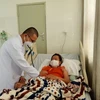
Medical staff at Cho Ray Hospital in Ho Chi Minh City cares for and treat the victim. (Photo published by VNA)

Last survivor of Phu Quoc boat capsize shows signs of recovery

The health condition of the last patient receiving treatment following the deadly boat capsize off the Phu Quoc special one in An Giang province has shown positive signs of improvement after three more days of intensive care, Cho Ray Hospital in Ho Chi Minh City said on July 16.

The number of foreign tourists coming to Ho Chi Minh City for travel combined with medical check-ups is increasing. (Photo: VNA)

Vietnam looks to unlock medical tourism potential with national strategy

The draft strategy aims to position Vietnam as a trusted healthcare destination in Southeast Asia by 2030 and eventually among Asia's leading medical tourism hubs. The plan marks a shift from viewing medical tourism as an untapped opportunity to making it a national development priority.

Delegates at the conference. (Photo: VNA)

Vietnam to produce first homegrown next-generation vaccines from 2028

Under the agreement, Sanofi will transfer technology to VNVC to manufacture selected high-demand vaccines for children and adults at VNVC Vaccine and Bioproduct Plant. The first next-generation vaccines produced in Vietnam are expected to roll off production lines in 2028.

Eric and Alysha joyfully welcome their baby through Mini IVF after more than 10 years of waiting. (Photo: Hong Ngoc Phuc Truong Minh General Hospital)

Vietnam - a destination for journeys to parenthood

An increasing number of international families are choosing Vietnam for infertility treatment, embarking on journeys to parenthood that transcend geographical distance and differences in nationality.

Prime Minister Le Minh Hung delivers remarks at the inauguration ceremony for Viet Duc University Hospital's second campus in Ninh Binh province. (Photo: VNA)

PM urges modern restructuring of healthcare network

The PM stressed that throughout the country’s development process, people have consistently been regarded as the centre, the driving force, the objective and the most important resource for national development. Sustainable and rapid development requires not only a healthy, knowledgeable and skilled population but also a modern, equitable, efficient, sustainable and accessible healthcare system.

Thu Duc General Hospital, with a capacity of 1,000 beds, was inaugurated and put into operation in April 2025 (Photo: VNA)

Ho Chi Minh City moves to expand robotic surgery to gateway hospitals

According to the municipal Department of Health, developing gateway hospitals is a key pillar of the city's strategy to establish a regional specialised healthcare system. The network is designed to permanently relieve overcrowding at major downtown hospitals while strengthening strong inter-regional emergency care and treatment network.

Doctors conduct health screenings for children in Tru Van Tho commune, Ho Chi Minh City. (Photo :VNA)

Ho Chi Minh City moves closer to universal health check-ups

Achieving universal health check-ups in 2026 will lay the foundation for a new healthcare model in which every resident has an electronic health record, receives regular screenings, benefits from lifelong health management and gains access to early intervention through primary healthcare services.