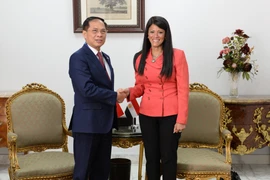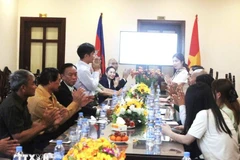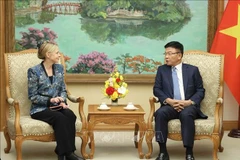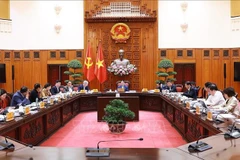
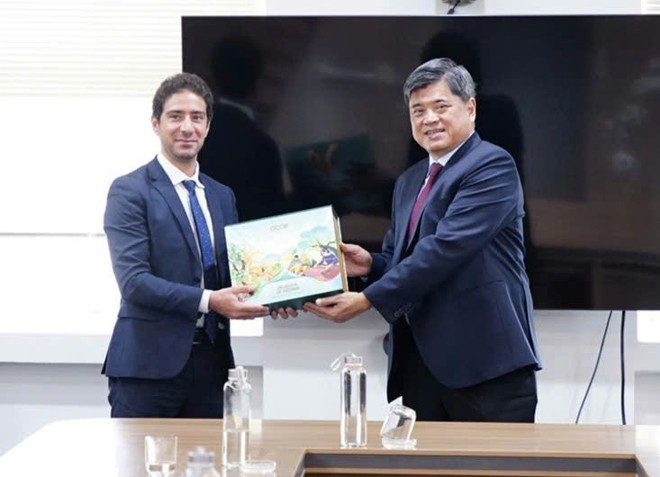
Hanoi (VNA) – Once Vietnam and Egypt reach consensus on trade cooperation, Vietnam will ensure stable and sufficient rice supply to meet Egypt’s demand, said Deputy Minister of Agriculture and Environment Tran Thanh Nam during a meeting with Adham Omar, Chargé d’Affaires of the Egyptian Embassy in Vietnam.
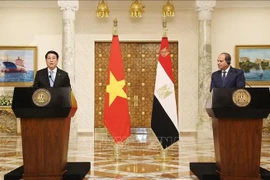
Nam noted that the recent state visit to Egypt by State President Luong Cuong yielded important outcomes, with agriculture highlighted as a key cooperation area. Following the visit, his ministry was tasked with studying and proposing ideas for a trade agreement on agricultural products with Egypt’s Ministry of Agriculture and Land Reclamation.
“We fully support this initiative,” Nam affirmed, stressing that the potential for agro-trade is significant though current agricultural trade stands at under 50 million USD, accounting for a small share of the total bilateral trade of more than 500 million USD.
Vietnam has strengths in fisheries, coffee, and rice, while Egypt is a major supplier of cotton and fertilisers. However, due to distance and similar climatic conditions—where Egypt also produces products such as mango and dragon fruit—fresh fruit is not a strong export item for Vietnam. Instead, Vietnam is working to open Egypt’s market for rice.
At the second meeting of the Vietnam–Egypt Sub-Committee on Trade and Industry Cooperation in 2021, Egypt requested market access for fertilisers, to which Vietnam responded by encouraging the use of organic fertilisers.
The two agriculture ministries have signed a memorandum of understanding on technical cooperation in fisheries and agriculture, but commercial aspects have yet to be addressed, Nam said, adding that they hope to focus on agricultural trade, particularly in key products where both sides have strengths and demand.
Prospects for rice trade
Omar said Egypt is implementing a green agriculture strategy and values long-term partnerships with reliable suppliers.
The diplomat praised Vietnam’s socio-economic achievements and its agricultural export capacity, particularly in rice and aquatic products.
He recalled that during the Egyptian President’s visit to Vietnam in 2018, the two sides signed an agriculture cooperation agreement, adding that conditions are now favourable for a new memorandum of understanding focusing on the rice trade.
Over the past decade, Egypt has expanded cultivated land by about one quarter and gradually increased production. While some products are now ready for export, the country continues to import rice to meet strong domestic demand. Omar emphasised that for agro-trade to develop, both sides must consider pricing, competitiveness, and tariff and non-tariff conditions.
He proposed establishing a joint working group with regular online meetings to resolve issues quickly and promote cooperation.
Agreeing with the proposal, Nam assigned the ministry’s International Cooperation Department to coordinate with the Egyptian side. He underlined the need to agree on the timing of a letter of intent and suggested considering a separate rice agreement.
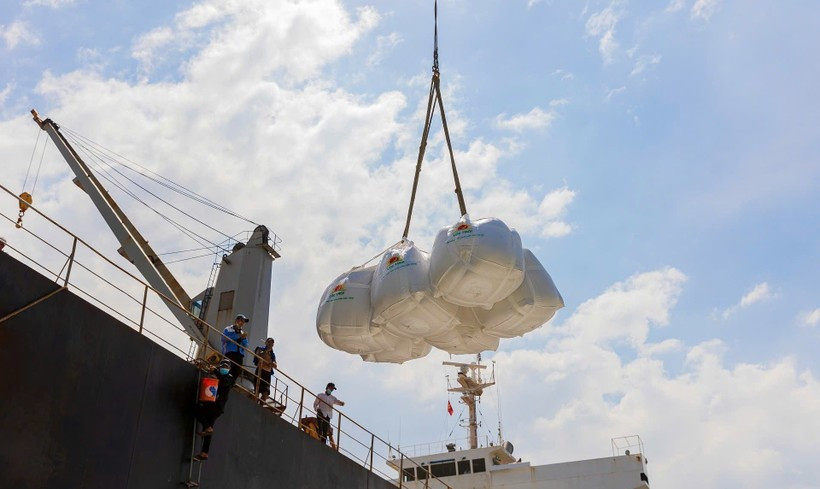
“Vietnamese rice quality is evident as it is now exported to more than 150 countries and territories,” Nam said, calling on Egypt to assess its annual rice import demand. “On that basis, once both sides agree on trade cooperation, Vietnam commits to ensuring sufficient supply.”
In the meantime, Nam suggested the Egyptian Embassy introduce interested importers to connect with Vietnamese partners, paving the way for a feasible agreement.
Alongside rice, Egypt expressed interest in importing more Vietnamese fruit. So far, fresh grapes from Egypt have been cleared for phytosanitary standards and are eligible for export to Vietnam. Egypt also asked Vietnam to consider opening market to potatoes, dates, and pomegranates. Nam suggested that Egypt provide an official priority list to facilitate procedures./.