Vietnam will continue to be prime destination for FDI: VinaCapital

The global corporate minimum tax is unlikely to impede Vietnam’s FDI inflows given the fact that tax incentives are not the primary attraction for setting up a factory in Vietnam, said Michael Kokalari, chief economist at investment fund VinaCapital.
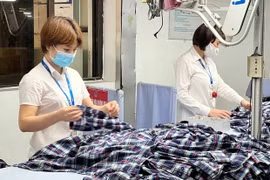
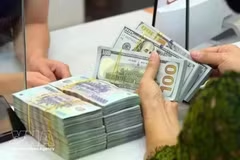
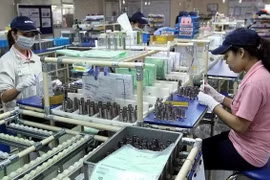
Vietnam will continue to be prime destination for FDI: VinaCapital ảnh 1Illustrative image (Photo: VNA)
HCM City (VNS/VNA) - The global corporate minimum taxis unlikely to impede Vietnam’s FDI inflows given the fact that tax incentivesare not the primary attraction for setting up a factory in Vietnam, said MichaelKokalari, chief economist at investment fund VinaCapital.

In his latest analysis, he said FDI had been one of Vietnam’s mostimportant economic growth drivers over the last decade. The country hadsignificantly outperformed its regional peers in attracting FDI since theUS-China trade war emerged, but there were two potential risks to its futureFDI inflows.

Firstly, Vietnam could be losing its competitiveness as an FDIdestination versus India, Malaysia and/or Indonesia, and secondly, a new globalcorporate minimum tax scheme would reduce Vietnam’s relative attractiveness asan FDI destination by limiting the tax incentives offered to prospectiveinvestors.

According to Kokalari, FDI companies that invest in Vietnamtypically enjoy tax breaks that may include a zero % tax rate during theinitial years of their operations, followed by a gradual increase up to a full20% corporate income tax rate over a period as long as 10 years.

In 2021, over 100 countries (including Vietnam) agreed to an OECDproposal for a global corporate minimum tax (GMT) that would impose a 15%minimum corporate tax rate on income for companies with consolidated incomesabove circa 850 million USD starting from 2023. The implementation of thisagreement was subsequently delayed to 2024, and it is not clear yet whether theUS, China, and India will participate in the scheme.

Vietnam has been preparing for the implementation of the new GMTsystem next year, and it has been reported that around 70 companies in thecountry could see their tax rates rise if it is imposed. Some of Vietnam’sregional emerging market peers are reportedly investigating alternative schemesin which some of the additional tax revenues would be channelled into a“business support fund” that would effectively offset companies’ higher taxburdens by subsidising some of those firms’ production costs (for example, withsubsidized electricity prices, spending on the construction of a new factory,worker housing, etc.).

More importantly, low tax rates are far from the most importantfactor in a company’s decision about where to establish a new factory,according to surveys from the World Bank and others. Considerations such aspolitical stability, ease-of-doing-business, workforce (quality and wages), andphysical infrastructure are all more important factors.

“The new GMT is unlikely to impede Vietnam’s FDI inflows given thefact that tax incentives are not the primary attraction for setting up afactory in Vietnam, and it seems likely that workarounds to the GMT are likelyto be put in place, if-and-when the scheme is actually implemented,” he said.

Regarding concern about Vietnam’s continued competitive advantageamid growing interest in India from firms such as search Apple and others,he said: “We are not overly concerned that India will affect FDI that wouldhave otherwise poured into Vietnam for any number of reasons.”

“Tim Cook’s visit to India in April spawned a plethora of articleson the intentions of search Apple and othersto build new factories in the country. But it is important to note that most ofthe products produced in those factories will be sold into the Indian market.In short, new investments to India are not being motivated by the “China 1”investment strategy that drove FDI inflows into Vietnam over the last decade,particularly at an accelerated pace since the start of the US-China trade war,”he said.

Some observers have also noted that planned FDI into Malaysia andIndonesia surged during the last two years, while Vietnam’s registered FDI wasessentially flat. However, investments into Malaysia and Indonesia were largelychannelled into the production of goods Vietnam does not make, includingelectric vehicle batteries.

Kokalari said Vietnam had attracted far more than its “fair” shareof FDI since the US-China trade war emerged in 2018, so some of its regionalcompetitors for FDI inflows are now experiencing some “catch up” investmentsafter having lagged Vietnam in recent years.

“We fully believe that Vietnam will continue to be a primedestination for FDI, particularly from multinationals looking to produce forexport and seeking an alternative and/or additional manufacturing base toChina, for the foreseeable future,” he said./.
VNA
See more

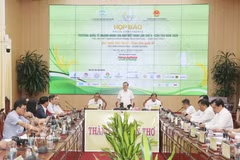
An overview of the press conference to announce the organisation of the second Vietnam International Rice Festival - Can Tho 2026. (Photo: VNA)

Festival to chart new course for rice industry

The second Vietnam International Rice Festival - Can Tho 2026 will take place from November 22 to 25, showcasing the achievements and potential of Vietnam’s rice industry while promoting Can Tho’s image, cultural identity and people, as well as the distinctive river culture of the Mekong Delta.

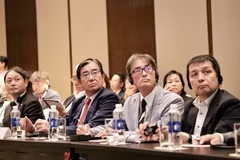
Japanese business representatives review Ho Chi Minh City’s investment project portfolio at the conference. (Photo: VNA)

Vietnam remains attractive destination for Japanese businesses

Fukai Akihiko, President and Representative Director at Gunma Bank and head of a business delegation from Japan’s Gunma prefecture, said cooperation between Gunma and Vietnam has continued to expand in recent years. Around 15,000 Vietnamese people currently live in Gunma, forming the largest foreign community in the prefecture.

A panoramic view of the site designated for the Ninh Thuan 1 nuclear power plant in Phuoc Dinh commune, Khanh Hoa province. (Photo published by VNA)

Vietnam to access MBIR reactor research capabilities, gradually master nuclear technology

As Vietnam develops its nuclear science and technology and prepares the necessary conditions in terms of human resources, research capacity, safety systems and technical infrastructure, participation in international research programmes and access to MBIR will enable the country to conduct experiments supporting its programme for the peaceful use of atomic energy.

Illustrative image (Photo: chinhphu.vn)

State secret list for financial sector issued

Top secret items include detailed submissions, reports, proposals, explanatory documents, and data concerning state financial and budgetary policies presented to the Party Central Committee, the Politburo, the National Assembly, the National Assembly Standing Committee, or the Government in the event of an emergency related to national defence, national security, social order and safety, or a war for the defence of the Fatherland.

At the 2026 Vietnam Food Forum (Photo: VNA)

Vietnamese food exporters see EU as major market amid stricter standards

The EU–Vietnam Free Trade Agreement (EVFTA) tariff cuts are opening doors. But the EU is also a market with a strict and frequently updated system of standards and regulations, especially in food safety, quarantine, traceability, environmental protection and sustainable development.

Laos accelerates 47 power projects for export to Vietnam

Laos accelerates 47 power projects for export to Vietnam

A notable project is the 600 MW Monsoon Wind Power Plant, located in Dakcheung district of Xekong province and Xanxay district of Attapeu province. Featuring 133 turbines, the project began commercial operations on August 22, 2025, and supplies electricity to Vietnam Electricity (EVN) under a 25-year power purchase agreement.

Minister of Industry and Trade Le Manh Hung holds working sessions with leaders of major Japanese corporations on November 10 to discuss investment cooperation opportunities in Vietnam’s mineral industry (Photo: Ministry of Industry and Trade)

Vietnam steps up cooperation with leading Japanese corporations

Minister of Industry and Trade Le Manh Hung spoke highly of economic, trade and investment ties between the two countries, highlighting the important role of Japanese businesses in developing production, transferring technology and strengthening supply chain linkages in Vietnam.

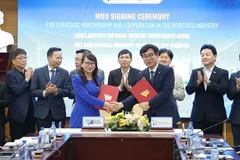
The MOU signing ceremony between Vietnam National University-Ho Chi Minh City and the Korea Institute for Robot Industry Advancement (KIRIA) on November 11, 2026 (Photo: tuoitre.vn)

Vietnam, RoK cooperate in robot industry

Vietnam National University-Ho Chi Minh City (VNU-HCM) and the Korea Institute for Robot Industry Advancement (KIRIA) will establish a cooperation framework based on their respective capabilities, strengths and networks in industry, academia, research and development (R&D).

The opening ceremony of the Vietnam International Food Industry Exhibition 2026 (Vietnam Foodexpo 2026) on November 11 (Photo: VNA)

Vietnam Foodexpo 2026 opens in Ho Chi Minh City

Vietnam Foodexpo 2026 brings together more than 500 leading enterprises from over 20 provinces and cities nationwide, alongside large national pavilions representing more than 20 countries and territories. Exhibitors are showcasing over 700 booths, creating a platform for leading technologies, products and solutions from the global food industry.

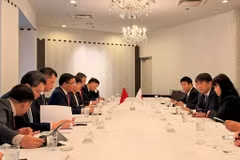
Vietnamese Finance Minister Ngo Van Tuan (right) meets with his Japanese counterpart Katayama Katsuki on November 10. (Photo: The Vietnamese Ministry of Finance)

Vietnam, Japan discuss cooperation in finance and strategic sectors

The two ministers exchanged views on the socio-economic development of their respective countries, as well as cooperation within the ASEAN-Japan framework and multilateral initiatives. They highlighted the importance of closer coordination to enhance their countries’ roles and voices at regional and international forums.