Vietnamese enterprises hold high expectation for 2014, with confidencethat the economy will flourish, said the Vietnam Business Forum - aweekly magazine of the Vietnam Chamber of Commerce and Industry (VCCI),adding that they are ready for a new stage of development.
As aperson in charge of Vietnam Business Annual Report, Pham Thi Thu Hang,General Secretary of VCCI, is not surprised at the bright results of thesurvey in late 2013. After 7 annual reports, it seems that thebusinesses feel more optimistic about the actual situation may seem. Thedifference is mainly more or less optimistic, said Hang.
While2013 saw a record number of bankrupcies or shut-downs of enterprises,2014 is expected to see a record number of revived enterprises. Thisbelief is built on the basis of expectation that the sales this yearwill have great improvement compared with 2013 and average sellingprices will also tend to rise.
Nguyen Tuan Hai, Chairman ofAlphanam, after a period of "silence", has decided to "churn" back onthe market with the projects that he viewed as a grasp of crowdpsychology. Although he had not revealed his specific investment areas,the move to recruit senior personnel from the retail groups shows thathe is looking to take advantage of rich land in big urban for abreakthrough target in the distribution market.
But what is heselling and distributing? He hinted that there will be Alphanam Foodproducing food and distributing goods for the No. 1 brand in the world.Only time will tell whether this investment in foods and beverages is awise decision or not, but clearly Hai is not the only one making biginvestment decisions at this point of time.
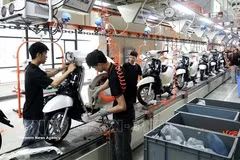
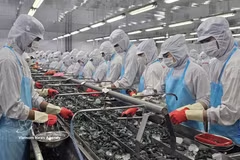
Hang also indicated amore optimistic view: many businesses are confident that the theirmachines’ capacity will be much better than 2013. Many businesses after aperiod of "hibernation”, start to accelerate restructuring and havemore confidence in the effective use of their resources. They expectthat the number of orders will increase compared with 2013. A lot ofbusinesses are confident with their plan to recruit more in 2014.
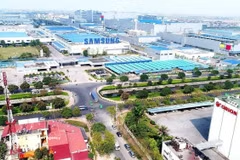
NguyenThi Nguyet Huong, Chairwoman of the Vietnam Investment DevelopmentGroup (VID), a firm specialising in the development of industrial parks,export processing zones, is confident that 2014 will see morebusinesses expanding their activities, so her group plans to expand theindustrial parks.
Naturally, businesses which want to developcannot be separated from the macro- economic environment. VCCI 's surveyshowed that businesses which decide to expand their business scale formany reasons.
In particular, the reason of favourable economicoutlook and availability of skilled labour with high competitive costsis chosen by many businesses, this ratio is 42.9 percent and 40.1percent, respectively.
Businesses hold high expectations onchanges in the labour market because this is the easiest time forbusinesses to recruit those who can immediately meet job requirementswithout being retrained, even for key positions. The second reason isthe opening of markets, tax incentives and improved ability to raisecapital. The third is improved infrastructure and support programmes.
Referringto the contents of the strategy of the socio-economic developmentperiod 2011 - 2020, the majority of businesses (64.6 percent) are awarethat the increase in domestic value, added value and competitiveness ofproducts are important objectives in strategy.
The rate of addedvalue on price of one product of respondent enterprises is estimated atan average of 19.5 percent. This index ranged as low as 0.05 percent andas high as 85 percent. Notably, there were 77.5 percent of the surveyedenterprises considered this a key issue and among these businesses, thesolution to improve the competitiveness of products is the most common(up to 74.3 percent enterprise applying the solution).
So far,Vietnam enterprises have not yet focused on research and development(R&D), only 32.5 percent of businesses choosing this method).Mentioning this problem, Economist Pham Chi Lan shared that she had justconducted the survey among enterprises in the southern region, throughthat, she felt the movement within the enterprises. Most of theenterprises recommended that the government promote industrialdevelopment to support businesses in raising the proportion of valueadded products.
Lan is happy to find that enterprises are nowchanging their mind, they do not just sit and wait for the state tosupport. They have changed the way of thinking and business strategiesto survive and thrive instead of just stopping at the surface reforms.
Despitehigh expectation for the economic performance in 2014, there are stilldifficulties that enterprises need to be ready to cope with. Nguyen DinhCung, Director of the Central Institute for Economic Management (CIEM),in a debate on amendments to the Law on Enterprises emphasized thatmore than ever, businesses need to get the positive support frominstitutional reforms to create a stable macroeconomic platform for"micro levels" to develop.-VNA