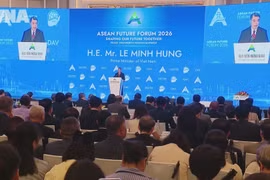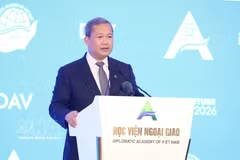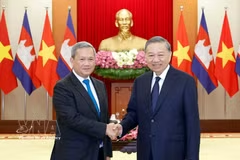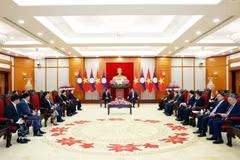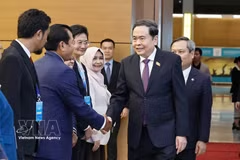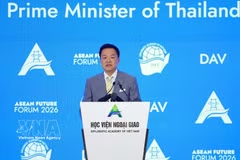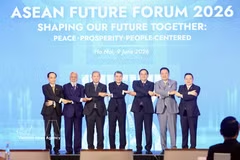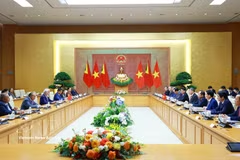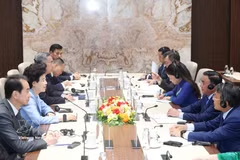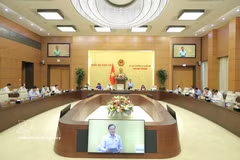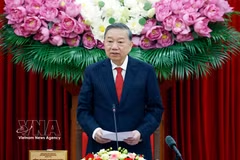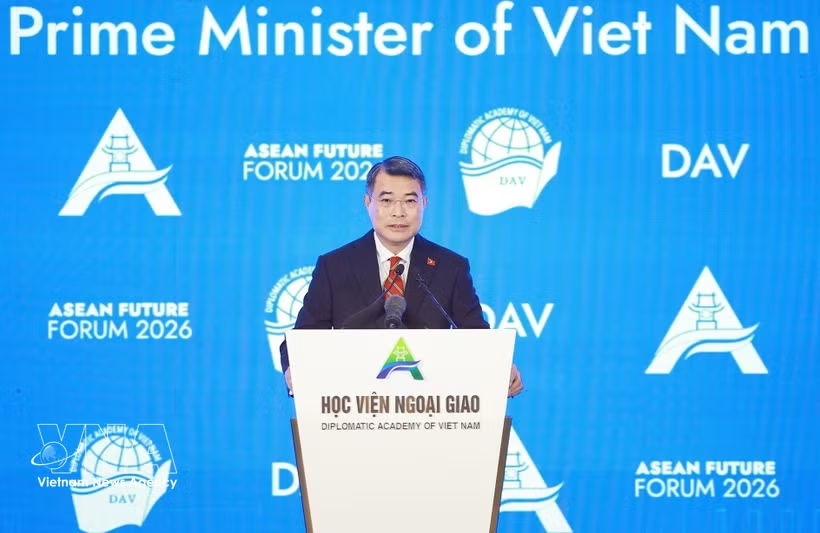
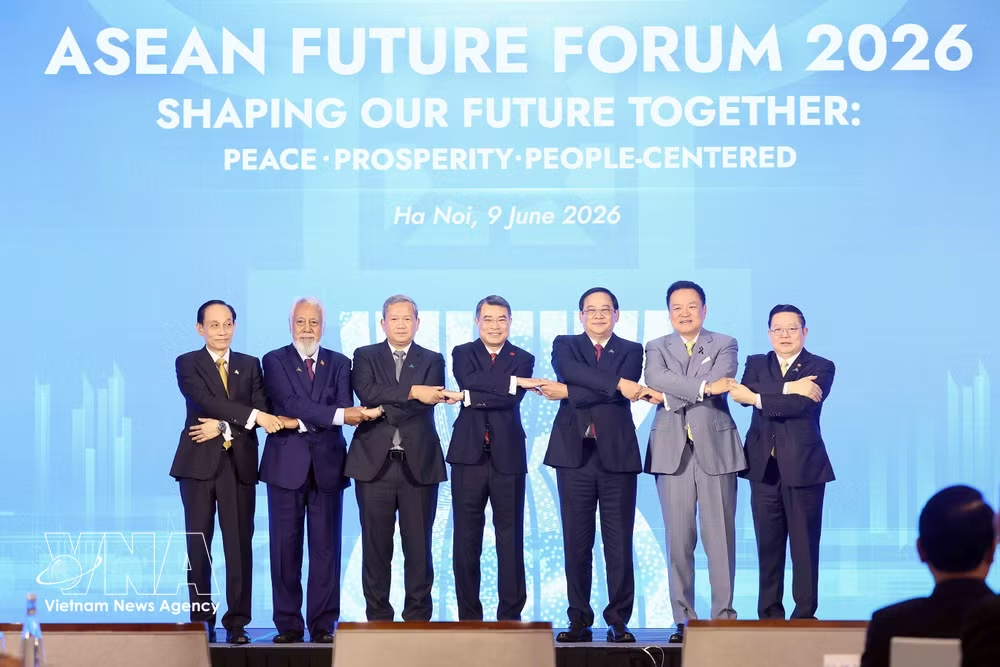
Hanoi (VNA) – Prime Minister of the Socialist Republic of Vietnam Le Minh Hung delivered a keynote address at the opening session of the third ASEAN Future Forum 2026 in Hanoi on June 9 morning.
The Vietnam News Agency (VNA) respectfully introduces a translation of the keynote address
ASEAN TOWARDS THE FUTURE: FROM ADAPTATION TO SHAPING
Your Excellencies
Leaders of ASEAN Member States,
Distinguished Guests,
Ladies and Gentlemen,
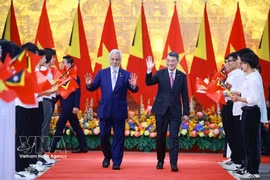
It is a great honour for me to address the third ASEAN Future Forum here in Hanoi. On behalf of the Government of Vietnam, I extend my warmest welcome and sincere appreciation to all distinguished participants. Your presence today is a vivid testament to the friendship, trust, and solidarity that bind us together in pursuit of a peaceful, stable and sustainably prosperous region. Allow me to convey my warmest greetings to His Excellency Sonexay Siphandone, Prime Minister of the Lao People's Democratic Republic; His Excellency Hun Manet, Prime Minister of the Kingdom of Cambodia; His Excellency Anutin Charnvirakul, Prime Minister of the Kingdom of Thailand; His Excellency Xanana Gusmão, Prime Minister of the Democratic Republic of Timor-Leste; and His Excellency Dr. Kao Kim Hourn, Secretary-General of ASEAN.
Excellencies, Distinguished Guests, Ladies and Gentlemen,
The ASEAN Future Forum 2026 carries special significance. Its theme not only reflects the core values that define ASEAN, but also points to the direction our Association should take in the years ahead. Allow me to begin with a question, a familiar one about the future. In a world undergoing profound changes, the question before us is not only how ASEAN can adapt; but how ASEAN can shape its own future in the 21st century?
Looking back at its 59 years of development, ASEAN's greatest achievement has not been its population of almost 700 million people, nor its position as one of the world's most dynamic economic engines. Its greatest achievement lies in its ability to transcend differences, build trust, expand cooperation, and thereby forging a Community of solidarity and resilience, celebrating unity in diversity.
If the past nearly six-decade journey was about building ASEAN's identity, the decades ahead must be about shaping ASEAN's future in a world where the foundations of economic strength, technological leadership, and global influence are being redefined. Technology is redefining competitiveness. Artificial intelligence is redefining productivity. Data is redefining power. And green transformation is redefining development models.
At such a pivotal moment, advantage will not belong solely to those with vast resources. It will also belong to those countries and regions with the capability to help shape the emerging rules and standards of our time. Vietnam believes that ASEAN can, and must, be an active player in this transformation: not merely adapting to global trends, but helping shape them.
To realise that aspiration, ASEAN must continue to draw strength from the very values that have underpinned its success: solidarity, resilience and unity in diversity, while embracing a more innovative approach: consensus on its values, yet dynamic in its actions; steadfast in its principles, yet creative in its approaches; preserve its identity, yet proactively foster opportunities from changes in the new era.
Excellencies, Distinguished Guests, Ladies and Gentlemen,
As we embark on the journey toward the ASEAN Community Vision 2045, I believe
ASEAN should aspire to three strategic horizons.
First, ASEAN should not merely participate in global trends, but help shape them.
For decades, ASEAN has been among the regions that benefited from peace, integration and open trade. Yet in an increasingly fragmented and competitive world, ASEAN must play a stronger role in shaping emerging norms, rules and frameworks for cooperation, and in addressing differences on the basis of international law.
ASEAN should become a centre for dialogue, a focal point for cooperation, and an anchor of trust. In doing so, ASEAN can make a distinctive contribution to peace, stability and development in our region and beyond.
Second, ASEAN should not only be a manufacturing hub but a hub of innovation.
Its workforce and strategic geography have made ASEAN an indispensable link in global supply chains. Yet in the digital age, the future will belong not only to economies that manufacture, but increasingly to those that innovate. ASEAN should not merely be a place where technology is consumed; it should become a place where technology is created. It should not merely be a corridor through which supply chains pass; it should become a place where value chains are built. This requires more robust investments from ASEAN in science and technology, innovation, digital economy, and high-quality human capital, aiming for an ASEAN technology and digital ecosystem that reflects our own values while contributing meaningfully to the evolution of global norms and standards.
Third, ASEAN should not only be a community of states, but a community truly centered on its people.
The ultimate measure of any development strategies is not economic statistics, but the quality of life enjoyed by our citizens. Innovation that widens
inequality cannot be considered progress. And, likewise, growth that lacks inclusiveness cannot be sustainable.
A successful ASEAN should be measured not only by GDP, but also by the opportunities it creates for young people, the empowerment it provides to women, the protection it affords to vulnerable groups, and the extent to which every citizen feels a genuine sense of belonging to our Community.
Excellencies, Distinguished Guests, Ladies and Gentlemen,
ASEAN's greatest achievement over the past six decades has been to demonstrate that differences need not lead to division, that unity does not exclude diversity, and that integration does not mean the loss of identity. Its greatest contribution in the decades ahead will be to demonstrate something equally important: that a Community united and resilient is thoroughly capable of actively shaping peace, cooperation, and prosperity for the region and the world.
On that journey, Vietnam will continue to stand shoulder to shoulder with fellow ASEAN member states, driven by a shared determination to shape the future together, and with all our hearts and minds, for the future of Vietnam is inseparable from the future of ASEAN, just as it is inseparable from the peace, stability, and prosperity of our region.
Thank you for your kind attention!