Vietnam’s manufacturing continues improving in November

The Vietnam Manufacturing Purchasing Managers' Index (PMI) ticked up to 52.2 in November from 52.1 in October, signalling a second successive modest improvement in business conditions following a period of decline caused by the fourth wave of the COVID-19 pandemic earlier in the year, according to IHS Markit.
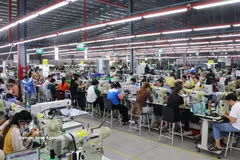
Vietnam’s manufacturing continues improving in November ảnh 1A production line at Ha Tay Chemical Weave Co Ltd. The Vietnam Manufacturing Purchasing Managers' Index (PMI) ticked up slightly to 52.2 in November. (Photo: VNA)
Hanoi (VNA) -  The VietnamManufacturing Purchasing Managers' Index (PMI) ticked up to 52.2 in Novemberfrom 52.1 in October, signalling a second successive modest improvement inbusiness conditions following a period of decline caused by the fourth wave ofthe COVID-19 pandemic earlier in the year, according to IHS Markit.

In a report releasedon December 1, IHS Markit said overall business conditions in the Vietnamesemanufacturing sector improved for the second month running in November, butrenewed worries about the COVID-19 pandemic and associated labour shortageslimited growth momentum. Meanwhile, inflationary pressures continued tostrengthen, with both input costs and output prices increasing to the greatestextents since April 2011.

According to thereport, new orders increased for the second month running as the easing ofpandemic restrictions in recent months helped raise demand in the sector.Moreover, the rate of expansion was solid and the sharpest since April. Newexport orders also increased again, but only modestly as COVID-19 continued toconstrain international trade.

Higher new orders anda lower level of restrictions than seen earlier in the year meant thatmanufacturers were able to expand their production volumes again in November.While new order growth accelerated, this was not the case for output whichincreased at a broadly similar pace to that seen in October.

A number of firmsindicated that labour shortages had restricted production. A number ofrespondents indicated that workers were concerned about the pandemic andtherefore were reluctant to return to work, thereby making it difficult formanufacturers to expand staffing levels in line with greater workloads.Employment continued to fall markedly, extending the current sequence ofreduction to six months. As a result, backlogs of work increased for the thirdmonth running.

Worries about thepandemic also impacted confidence among manufacturers, with sentiment droppingfrom October. That said, firms remained optimistic that output will increaseover the coming year amid hopes that the health situation will improve.

According to thereport, higher oil and transportation costs, as well as raw material shortages,contributed to a further increase in input prices in November. Moreover, therate of inflation accelerated for the third month running and was the steepestsince April 2011. The same was also true for output charges, which rose at amuch faster pace than in October as firms passed on higher costs to theircustomers.

Manufacturers expandedtheir purchasing activity for the second successive month in November, albeitat a reduced pace. Despite the increase in input buying, stocks of purchasesdeclined for the first time in four months. Respondents indicated that the useof inputs to support production and issues securing materials were behind thedrop.

The challenges insecuring inputs were highlighted by data signalling a further markedlengthening of suppliers' delivery times. Raw material shortages, a lack ofshipping capacity and issues with transportation due to the COVID-19 pandemicall contributed to delivery delays. That said, the latest deterioration was theleast marked in six months./.
VNA
See more

Prime Minister Le Minh Hung and delegates launch the digital platform of the Vietnam Association of Small and Medium Enterprises (August 2026). Photo: VNA

Vietnamese businesses, entrepreneurs make growing contributions to national development

Vietnam Entrepreneurs’ Day is an opportunity to recognise businesses’ contributions and reinforce the entrepreneurial spirit, the pursuit of legitimate prosperity and national responsibility. With stronger policies and greater innovation, Vietnamese enterprises are expected to play an increasingly important role in economic growth and the country’s ambition to become a strong, prosperous nation.

A view at a CO.OPMART supermarket in Bac Ninh city (Photo: bacninh.gov.vn)

Bac Ninh’s CPI up 4.07% in nine months

The consumer price index (CPI) in Bac Ninh city rose 4.07% year-on-year in the first nine months of 2026, with housing and construction materials, education and transport recording the sharpest increases, according to the municipal Statistics Office.

Vietnam's textile - garment and footwear industries are aiming to shift from processing and assembly to stages with higher added value, increasing technology content and competitiveness. (Photo: VNA)

Vietnam’s supporting industries seek stronger domestic links

As global supply chains undergo major changes and environmental standards and digital technology requirements become more demanding, developing supporting industries has become essential to improving the competitiveness of the economy. This requires coordinated efforts by the Government, multinational corporations and domestic businesses.

Prime Minister Le Minh Hung speaks at the meeting (Photo: VNA)

PM orders power plan overhaul to meet double-digit growth

Securing adequate power supply is an urgent priority and a prerequisite to successfully achieve socio-economic development goals 2026, a foundational year for accelerating progress, with breakthroughs to follow in 2027 and the goals for the full term to be delivered, said Prime Minister Le Minh Hung.

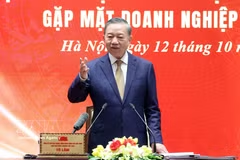
General Secretary of the Communist Party of Vietnam Central Committee and President To Lam speaks at the meeting (Photo: VNA)

Top leader pledges support for firms, presses tech self-reliance

The country needs more firms that master technologies, build trusted brands and run production networks able to compete globally. Progress over the next five to 10 years must show up in productivity, job quality and market position, said top leader To Lam.

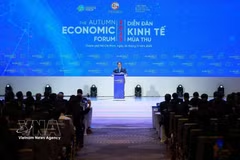
Then Prime Minister Pham Minh Chinh addresses the Autumn Economic Forum 2025 on November 26 last year. (Photo: VNA)

World Economic Forum to co-brand Autumn Economic Forum 2026 in Ho Chi Minh City

On October 27, the forum will host 16 thematic sessions across three parallel venues, focusing on AI – quantum, finance – digital economy – autonomy, and manufacturing – sustainability – next generation. Two sessions will be jointly organised with the WEF, addressing “Repositioning Vietnam and ASEAN in Global Value Chains” and “From AI Deployment to Future Manufacturing Workforce Readiness”.

Nguyen Dinh Kien, Secretary of the Sam Mun commune Party cell in Dien Bien province, builds wealth through spotted deer farming. (Photo: VNA)

📝OP-ED: Party Central Committee’s 4th plenum offers new thinking encouraging Party members to engage in business

Accordingly, the plenum reached a consensus on several key principles, including shifting from a mindset of “permission” to one of “encouragement and facilitation” for Party members engaging in the private sector; protecting their lawful economic activities; and maintaining strict oversight of those exercising control and benefiting from such activities.

AVAC ASF LIVE vaccine developed and manufactured by AVAC Vietnam Joint Stock Company. (Photo: avac.com.vn)

Vietnam ships first commercial ASF vaccine order to Philippines

Nguyen Van Diep, General Director of AVAC Vietnam, said this was the company’s first commercial export order following the Philippines’ approval of the vaccine for unrestricted circulation. The Philippine Department of Agriculture is expected to issue usage guidelines next week, paving the way for wider distribution and application.

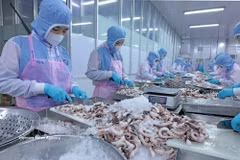
Workers process octopus for export to the Japanese market at Huy Nam Company in An Giang province. (Photo: VNA)

Fisheries sector strives for 12 billion USD in exports amid rising costs

The 12-billion-USD export target remains achievable given solid output growth and generally favourable market conditions. However, any fourth-quarter slowdown would not necessarily reflect raw material shortages but also impacts on economic efficiency amid rising material and fuel costs.